

民国三年袁大头黄铜试铸币:铜韵里的币制革新与铸币遗珍
发布时间:2025-12-29 来源:网络 作者:admin 【 字体:大 中 小 】
在中国近代机制币的发展脉络中,民国三年袁大头黄铜试铸币恰似一枚凝结着北洋政府币制改革与试铸工艺探索的珍稀币种。它以黄铜为材、以袁像为纹、以“壹圆”为值,将民国初年的货币标准化诉求与试铸币的工艺特征融为一体,在黄铜的斑驳包浆与币面的规整纹饰间,诉说着“币以试新,铜以证史”的时代逻辑,既是袁大头系列钱币的稀有变体,更是近代中国“银元改铸试错”货币进程的生动注脚。
In the development context of modern machine-made coins in China, the 1914 Yuan Datou brass pattern coin is like a rare currency that condenses the currency reform of the Beiyang government and the exploration of pattern coin craftsmanship. Made of brass, patterned with Yuan Shikai's portrait and valued at "One Yuan", it integrates the monetary standardization demands of the early Republic of China with the technical characteristics of pattern coins. Between the mottled patina of brass and the regular patterns on the coin surface, it tells the era logic of "coins test new systems, and copper testifies to history", serving as both a rare variant of the Yuan Datou coin series and a vivid footnote to the monetary process of "silver dollar recasting trial and error" in modern China.
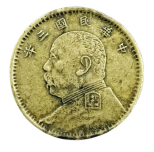
从形制与纹饰维度审视,这枚试铸币尽显“形承洋法,纹塑时代”的特质。钱币采用西方机制币的圆形无孔形制,币径与厚度严格遵循袁大头壹圆银币的制式规范,外郭的马齿纹规整排列,与流通版袁大头银币的形制高度一致,是民国初年“银本位货币标准化”理念的典型体现;正面铸袁世凯侧面戎装像,面部轮廓清晰、发丝与肩章的细节虽因试铸工艺略有简化,却精准复刻了袁大头银币“肖像写实,神态威严”的艺术特征,币缘环绕“中华民国三年”纪年文字,字体端正规整,与流通版的书体风格一脉相承;背面以嘉禾纹为地,中央竖铸“壹圆”二字,嘉禾的枝蔓舒展、颗粒饱满,既象征着“丰衣足食”的美好期许,又暗合民国货币“以嘉禾为饰”的设计传统。与流通版银质袁大头不同,这枚黄铜试铸币在纹饰细节的呈现上更具试铸币的实验性特征,每一处图案的冲压、每一个文字的铸造,都凝聚着对“民国机制币形制美学”的探索表达,成为解析近代试铸币工艺的物质纽带。
From the perspective of shape and decoration, this pattern coin fully demonstrates the characteristic of "shape inherits Western methods, patterns shape the era". The coin adopts the round holeless shape of Western machine-made coins, with the diameter and thickness strictly following the standard specifications of the Yuan Datou one-yuan silver coin. The dentil patterns on the outer rim are arranged regularly, highly consistent with the shape of the circulating Yuan Datou silver coin, being a typical embodiment of the concept of "silver standard monetary standardization" in the early Republic of China; the obverse is cast with a profile portrait of Yuan Shikai in military uniform, with a clear facial outline. Although the details of the hair and epaulets are slightly simplified due to the pattern coin craftsmanship, it accurately reproduces the artistic characteristics of the Yuan Datou silver coin of "realistic portrait and dignified manner". The coin edge is surrounded by the chronological text "the third year of the Republic of China", with neat and regular fonts, in the same vein as the calligraphic style of the circulating version; the reverse takes the Jiahe pattern as the background, with the two characters "One Yuan" cast vertically in the center. The branches and vines of Jiahe are stretched and the grains are plump, which not only symbolizes the good wish of "ample food and clothing", but also echoes the design tradition of "decorating with Jiahe" in the currency of the Republic of China. Different from the circulating silver Yuan Datou, this brass pattern coin has more experimental characteristics of pattern coins in the presentation of decorative details. Every stamping of the pattern and every casting of the character condense the exploratory expression of "the formal aesthetics of Republican machine-made coins", becoming a material link for analyzing modern pattern coin craftsmanship.
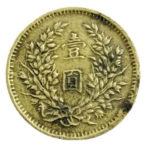
材质与工艺层面,这枚试铸币承载着“因材试铸,以工探新”的时代追求。其主材选用民国初年的优质黄铜,铜质细腻且合金比例经过调试,与流通币的红铜、白银材质形成鲜明差异,是北洋政府为探索“非银材质铸币可行性”所做的实验性尝试,成为近代货币材质多元化探索的典型物证;铸造工艺采用西方压力冲压法,币面的图案与文字由钢模一次冲压而成,线条的清晰度与纹饰的立体感虽略逊于银质流通币,却远胜同期的普通铜币,尽显试铸币“精工细作,务求精准”的工艺要求。尤为特殊的是,黄铜的材质特性使其表面形成了独特的暗黄色包浆,与银质袁大头的银白色泽截然不同,包浆的分布与厚度成为判断其试铸币属性的重要依据。每一层包浆的生成、每一次冲压的痕迹,都在无声诉说着民国铸币匠人对新型材质与工艺的调试与把控,使试铸币既具实验的技术价值,更显孤品的收藏意义。
In terms of material and craftsmanship, this pattern coin carries the era pursuit of "testing casting with materials, exploring new things with workmanship". Its main material is high-quality brass from the early Republic of China, with fine copper and a debugged alloy ratio, forming a sharp contrast with the red copper and silver materials of circulating coins. It is an experimental attempt by the Beiyang government to explore the "feasibility of coin casting with non-silver materials", becoming a typical material evidence of the exploration of monetary material diversification in modern times; the casting process adopts the Western pressure stamping method, and the patterns and characters on the coin surface are stamped in one time by steel molds. Although the clarity of lines and the three-dimensional sense of patterns are slightly inferior to those of silver circulating coins, they are far superior to ordinary copper coins of the same period, fully showing the technical requirement of pattern coins of "exquisite craftsmanship and striving for precision". What is particularly special is that the material characteristics of brass make its surface form a unique dark yellow patina, which is completely different from the silver-white luster of the silver Yuan Datou. The distribution and thickness of the patina become an important basis for judging its pattern coin attribute. Every generation of patina and every trace of stamping silently tell the debugging and control of new materials and craftsmanship by Republican coin craftsmen, making the pattern coin not only have the technical value of experiment, but also show the collection significance of a unique piece.
文化价值与时代意义维度看,这枚民国三年袁大头黄铜试铸币是近代中国货币制度变革的“微观镜像”。民国初年,北洋政府为统一全国货币体系,推行“袁大头”银元作为主币,同时开展多种材质的试铸实验以应对白银短缺问题,这枚试铸币便是这一历史背景的典型样本——它既保留了袁大头银币的制式传统,又因黄铜材质的使用呈现出实验性特征,是“近代中国货币材质革新”的直观体现。在当代收藏语境下,它不仅是一枚民国试铸币,更是解析北洋政府币制改革、铸币工艺史的关键标本:其价值不仅在于材质的稀缺与工艺的实验性,更在于它所承载的“民国货币改革记忆”,每一枚试铸币的铜质肌理、每一处纹饰的冲压,都在诉说着近代中国从银本位到多元材质铸币的探索脉络,成为连接民国货币改革与当代收藏视野的精神纽带。此外,袁大头黄铜试铸币的存世量极为稀少,使其成为近代机制币收藏领域的顶级珍品,其历史价值与收藏价值均不可估量。
From the perspective of cultural value and epochal significance, this 1914 Yuan Datou brass pattern coin is a "micro mirror" of the reform of modern Chinese monetary system. In the early years of the Republic of China, the Beiyang government promoted the "Yuan Datou" silver dollar as the main currency to unify the national monetary system, and carried out pattern casting experiments with various materials to cope with the silver shortage problem. This pattern coin is a typical sample of this historical background—it not only retains the standard tradition of the Yuan Datou silver coin, but also presents experimental characteristics due to the use of brass material, which is an intuitive embodiment of the "innovation of modern Chinese monetary materials". In the contemporary collection context, it is not only a Republican pattern coin, but also a key sample to analyze the currency reform of the Beiyang government and the history of coinage craftsmanship: its value lies not only in the scarcity of materials and the experimental nature of craftsmanship, but also in the "memory of Republican monetary reform" it carries. The copper texture of each pattern coin and the stamping of each pattern tell the exploration context of modern China from the silver standard to multi-material coin casting, becoming a spiritual link connecting Republican monetary reform with the contemporary collection vision. In addition, the extremely scarce quantity of surviving Yuan Datou brass pattern coins makes it a top treasure in the field of modern machine-made coin collection, and its historical and collection value are immeasurable.
当我们凝视这枚民国三年袁大头黄铜试铸币,黄铜的斑驳与纹饰的规整在眼前交融,民国初年的币制革新与铸币的实验匠心在方寸间碰撞,仿佛能触摸到北洋政府统一货币的历史脉搏,也能感受到近代中国铸币工艺的探索步伐。它不仅是一枚实验性试铸币,更是近代中国货币史的艺术结晶、币制改革的物质凝结,在时光的摩挲中静静散发着铜韵的古韵,以其独特的材质与文化内涵,让每一位收藏者都能读懂这份藏在铜币里的民国记忆,感受那份融于币面的历史传承与工艺革新。
When we gaze at this 1914 Yuan Datou brass pattern coin, the mottled brass and the regular patterns blend before our eyes, and the currency reform of the early Republic of China and the experimental ingenuity of coinage collide in the square inch. It seems that we can touch the historical pulse of the Beiyang government's currency unification, and also feel the exploration pace of modern Chinese coinage craftsmanship. It is not only an experimental pattern coin, but also an artistic crystallization of modern Chinese monetary history and a material condensation of currency reform, quietly exuding the ancient charm of copper in the touch of time. With its unique material and cultural connotation, it allows every collector to understand the Republican memory hidden in the copper coin and feel the historical inheritance and technological innovation integrated into the coin surface.

猜你喜欢

内蒙消防工程产业平台面向全国正在进行火热招商!
 189
【新奇特美食】西安惊现"空中月宫"!全国首家沉浸式美食太空舱惊艳亮相
91 2025 AutoEEA 下一代汽车电子电气架构峰会—7月10日-11日上海见
143 如何让消费者买得放心?东宝床垫给出答案
174 祝贺微漫春天顺利入围2024中国高端定制入户门十大品牌
150 四川浩冠科技:以技术创新驱动多领域智慧化升级
63 南码头路街道“艺企HIGH国潮寻风消费月-颐养潮集”点燃健康活力之夜,掀起养
107 被低估的“隐形健康炸弹”!专家齐聚南京共探偏头痛防治新路
188 新华保险北京分公司成功承保国家石油天然气管网集团公司2024-2027年人身保险统
126 奋力谱写世界一流企业建设新篇章,扬子江药业集团召开2025年年终工作会议
73