

成化年制款哥釉五彩人物纹盖罐:瓷痕里的仿古意趣与彩瓷风华
发布时间:2026-01-03 来源:网络 作者:admin 【 字体:大 中 小 】
在中国清代仿古瓷的艺术谱系中,这件成化年制款哥釉五彩人物纹盖罐,是凝萃着清代民窑仿古工艺与五彩瓷装饰美学的经典器物。它以哥釉为地、以五彩为饰、以“成化年制”为款,将明代成化瓷的款识传统与清代五彩瓷的工艺特征融为一体,在开片的哥釉与斑斓的人物纹饰间,诉说着“瓷以仿古,纹以叙事”的审美逻辑,既是清代仿古五彩瓷的代表性品类,更是中国古瓷“仿旧出新”工艺传统的生动注脚。
In the artistic genealogy of Qing Dynasty archaistic porcelain in China, this covered jar with Ge glaze and wucai figure patterns and the mark of "Made in Chenghua Period" is a classic vessel that embodies the archaistic craftsmanship of Qing Dynasty folk kilns and the decorative aesthetics of wucai porcelain. With Ge glaze as the background, wucai as the decoration, and "Made in Chenghua Period" as the mark, it integrates the mark tradition of Ming Dynasty Chenghua porcelain with the technical characteristics of Qing Dynasty wucai porcelain. Between the cracked Ge glaze and the gorgeous figure patterns, it tells the aesthetic logic of "porcelain imitates the ancient, patterns narrate stories", serving as both a representative category of Qing Dynasty archaistic wucai porcelain and a vivid footnote to the craft tradition of "imitating the old and creating the new" in ancient Chinese porcelain.
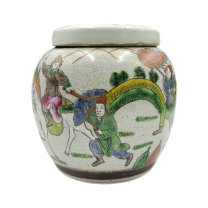
从形制与纹饰维度审视,这件盖罐尽显“形承明制,纹绘市井”的特质。罐体取经典的圆腹敛口形制,搭配平顶盖的设计,整体造型饱满圆润,既延续了明代成化时期小罐“器型秀雅,比例协调”的制式特征,又因清代民窑制瓷的审美倾向,在腹部线条上更显浑厚;罐身以五彩绘人物出行纹,人物的服饰、动作与场景的布景皆刻画细致,骑兽的主仆、随行的侍从与山水背景形成完整的叙事画面,尽显清代民窑五彩“以纹叙事,贴近市井”的艺术特征。盖面的折枝花卉纹与罐身的人物纹形成“一动一静”的视觉平衡,青花勾边、五彩填色的技法让纹饰层次分明,与明代官窑五彩的繁密风格形成鲜明对比。与清代官窑仿古瓷的规整不同,这件民窑盖罐的纹饰更具灵动的民间气息,每一处人物的勾勒、每一个场景的描绘,都凝聚着对“清代民窑五彩纹饰美学”的真实表达,成为解析清代民间仿古瓷工艺的物质纽带。
From the perspective of shape and decoration, this covered jar fully demonstrates the characteristic of "shape inherits the Ming system, patterns depict the market". The jar body adopts the classic shape of a round belly and a constricted mouth, paired with a flat top cover design. The overall shape is plump and round, which not only inherits the standard feature of "elegant shape and coordinated proportion" of small jars in the Ming Dynasty Chenghua period, but also shows more thickness in the abdominal lines due to the aesthetic tendency of Qing Dynasty folk kiln porcelain-making; the jar body is painted with wucai figure traveling patterns, with detailed depictions of the characters' costumes, movements and scene settings. The master and servant riding animals, the accompanying attendants and the landscape background form a complete narrative picture, fully showing the artistic characteristic of Qing Dynasty folk kiln wucai of "narrating stories through patterns, close to the market". The sprig flower pattern on the cover and the figure pattern on the jar body form a visual balance of "one movement and one stillness". The technique of outlining with blue and white and filling with wucai makes the patterns layered, forming a sharp contrast with the dense style of Ming Dynasty imperial kiln wucai. Different from the regularity of Qing Dynasty imperial kiln archaistic porcelain, the patterns of this folk kiln covered jar have a more vivid folk flavor. Every outline of the characters and every depiction of the scene condense the true expression of "the decorative aesthetics of Qing Dynasty folk kiln wucai", becoming a material link for analyzing the craftsmanship of Qing Dynasty folk archaistic porcelain.
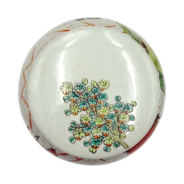
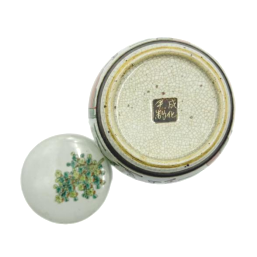
釉彩与工艺层面,这件盖罐承载着“哥釉为地,五彩为章”的创作追求。其胎体选用景德镇瓷土烧制,表面施仿哥窑开片釉,冰裂纹的开片疏密有致、深浅不一,自然的开片肌理为器物增添了古朴的岁月质感,是清代民窑仿哥釉工艺的典型体现;五彩装饰采用“釉上五彩”技法,以红、绿、黄、蓝、紫等矿物彩料绘制纹饰,色彩浓艳却不失协调,人物的衣纹用红彩勾边、绿彩填色,山石的纹理以墨彩皴擦、黄彩点染,尽显清代民窑五彩“设色大胆,技法灵活”的工艺特征。底款“成化年制”为四字楷书仿款,字体虽不及明代官窑款识的规整,却模仿了成化款的笔意特征,成为清代“寄托款”瓷的典型标识。尤为难得的是,器物的哥釉开片与五彩纹饰结合自然,彩料未因开片出现剥落,每一处釉面的开裂、每一次彩料的填绘,都在无声诉说着清代民窑匠人对仿古与创新工艺的把控,使盖罐既具仿古的审美价值,更显民窑的工艺智慧。
In terms of glazes and craftsmanship, this covered jar carries the creative pursuit of "Ge glaze as the background, wucai as the ornament". Its body is fired with Jingdezhen porcelain clay, and the surface is coated with imitated Ge kiln cracked glaze. The ice crack patterns are dense and sparse, deep and shallow, and the natural cracked texture adds a simple and ancient texture to the vessel, which is a typical embodiment of the imitated Ge glaze craftsmanship of Qing Dynasty folk kilns; the wucai decoration adopts the "overglaze wucai" technique, painting patterns with mineral color materials such as red, green, yellow, blue and purple. The colors are bright but coordinated. The clothing lines of the characters are outlined with red color and filled with green color, and the texture of the rocks is textured with ink color and dotted with yellow color, fully showing the technical characteristics of Qing Dynasty folk kiln wucai of "bold coloring and flexible techniques". The bottom mark "Made in Chenghua Period" is a four-character regular script imitated mark. Although the font is not as regular as the mark of Ming Dynasty imperial kilns, it imitates the brush stroke characteristics of Chenghua marks, becoming a typical symbol of Qing Dynasty "jitu mark" porcelain. What is particularly rare is that the combination of Ge glaze cracks and wucai patterns on the vessel is natural, and the color materials do not peel off due to cracking. Every crack of the glaze surface and every filling of color materials silently tell the Qing Dynasty folk kiln craftsmen's control over archaistic and innovative craftsmanship, making the covered jar not only have the aesthetic value of archaism, but also show the technical wisdom of folk kilns.
文化价值与时代意义维度看,这件成化年制款哥釉五彩人物纹盖罐是清代仿古瓷文化发展的“微观镜像”。清代是中国仿古瓷发展的鼎盛时期,民窑匠人因市场需求大量仿制明代名窑瓷器,成化瓷因工艺精湛成为主要仿制对象,这件盖罐便是这一市场趋势的典型样本——它既保留了明代成化瓷的款识与器型传统,又融入了清代五彩瓷的装饰技法与哥釉的工艺特征,是“清代民窑仿古瓷兼容并蓄”的直观体现。在当代收藏语境下,它不仅是一件清代民窑瓷,更是解析清代民间制瓷史、仿古工艺史的关键标本:其价值不仅在于工艺的巧思与形制的经典,更在于它所承载的“清代仿古瓷文化记忆”,每一寸哥釉的开片、每一处五彩的纹饰,都在诉说着清代民窑从单纯仿形到“仿旧出新”的工艺演变,成为连接清代民间制瓷与当代收藏视野的精神纽带。此外,带有成化寄托款的清代民窑五彩瓷,因兼具仿古意趣与民间艺术特色,在收藏市场中占据着独特的地位,成为研究清代民窑瓷发展的珍贵实物资料。
From the perspective of cultural value and epochal significance, this covered jar with Ge glaze and wucai figure patterns and the mark of "Made in Chenghua Period" is a "micro mirror" of the development of Qing Dynasty archaistic porcelain culture. The Qing Dynasty was the peak period of the development of Chinese archaistic porcelain. Folk kiln craftsmen imitated a large number of famous Ming Dynasty kiln porcelains due to market demand, and Chenghua porcelain became the main imitation object because of its exquisite craftsmanship. This covered jar is a typical sample of this market trend—it not only retains the mark and shape tradition of Ming Dynasty Chenghua porcelain, but also integrates the decorative techniques of Qing Dynasty wucai porcelain and the technical characteristics of Ge glaze, which is an intuitive embodiment of the "eclecticism of Qing Dynasty folk kiln archaistic porcelain". In the contemporary collection context, it is not only a Qing Dynasty folk kiln porcelain, but also a key sample to analyze the history of Qing Dynasty folk porcelain-making and archaistic craftsmanship: its value lies not only in the ingenuity of craftsmanship and the classic shape, but also in the "cultural memory of Qing Dynasty archaistic porcelain" it carries. Every crack of the Ge glaze and every wucai pattern tell the technological evolution of Qing Dynasty folk kilns from simple shape imitation to "imitating the old and creating the new", becoming a spiritual link connecting Qing Dynasty folk porcelain-making with the contemporary collection vision. In addition, Qing Dynasty folk kiln wucai porcelain with Chenghua jitu marks occupies a unique position in the collection market due to its combination of archaistic taste and folk artistic characteristics, becoming precious physical data for studying the development of Qing Dynasty folk kiln porcelain.
当我们凝视这件成化年制款哥釉五彩人物纹盖罐,哥釉的开片与五彩的斑斓在眼前交融,清代民窑的仿古匠心与民间的审美意趣在方寸间碰撞,仿佛能触摸到清代匠人制瓷时的巧思,也能感受到中国古瓷“仿旧出新”的工艺传统。它不仅是一件民间陈设瓷,更是清代民窑制瓷的艺术结晶、仿古文化的物质凝结,在时光的摩挲中静静散发着瓷韵的古韵,以其独特的形制与文化内涵,让每一位收藏者都能读懂这份藏在瓷罐里的清代记忆,感受那份融于釉彩的工艺传承与审美创新。
When we gaze at this covered jar with Ge glaze and wucai figure patterns and the mark of "Made in Chenghua Period", the cracks of Ge glaze and the gorgeousness of wucai blend before our eyes, and the archaistic ingenuity of Qing Dynasty folk kilns and the aesthetic taste of the people collide in the square inch. It seems that we can touch the ingenuity of Qing Dynasty craftsmen when making porcelain, and also feel the craft tradition of "imitating the old and creating the new" in ancient Chinese porcelain. It is not only a folk display porcelain, but also an artistic crystallization of Qing Dynasty folk kiln porcelain-making and a material condensation of archaistic culture, quietly exuding the ancient charm of porcelain in the touch of time. With its unique shape and cultural connotation, it allows every collector to understand the Qing Dynasty memory hidden in the porcelain jar and feel the craft inheritance and aesthetic innovation integrated into the glazes.

猜你喜欢

2025 AutoEEA 下一代汽车电子电气架构峰会—7月10日-11日上海见
 143
内蒙消防工程产业平台面向全国正在进行火热招商!
189 奋力谱写世界一流企业建设新篇章,扬子江药业集团召开2025年年终工作会议
73 新华保险北京分公司成功承保国家石油天然气管网集团公司2024-2027年人身保险统
126 被低估的“隐形健康炸弹”!专家齐聚南京共探偏头痛防治新路
188 南码头路街道“艺企HIGH国潮寻风消费月-颐养潮集”点燃健康活力之夜,掀起养
107 如何让消费者买得放心?东宝床垫给出答案
174 祝贺微漫春天顺利入围2024中国高端定制入户门十大品牌
150 四川浩冠科技:以技术创新驱动多领域智慧化升级
63 【新奇特美食】西安惊现"空中月宫"!全国首家沉浸式美食太空舱惊艳亮相
91