

宣德款五彩鱼藻纹绶带耳葫芦瓶
发布时间:2026-01-04 来源:网络 作者:admin 【 字体:大 中 小 】
当宣德年间的窑火在景德镇的瓷坊中渐次熄灭,一件以葫芦为形、以鱼藻为魂的瓷瓶,却将明代早期的审美意趣与工艺匠心凝作永恒。这件宣德款五彩鱼藻纹绶带耳葫芦瓶,既是洪武至宣德瓷业鼎盛期的缩影,亦是 “图必有意,意必吉祥” 的中式美学典范 —— 葫芦谐音 “福禄”,绶带暗喻 “绶禄”,鱼藻则藏 “年年有余” 的祈愿,器型、纹饰与釉色的交融,让这件瓷瓶成为物质与精神双重价值的载体。
When the kiln fires of the Xuande period gradually died out in the porcelain workshops of Jingdezhen, a porcelain vase shaped like a gourd and soulful with fish and algae patterns preserved the aesthetic charm and craftsmanship of the early Ming Dynasty for eternity. This Xuande-marked polychrome fish-and-algae pattern ribbon-handled gourd vase is both a microcosm of the porcelain heyday from the Hongwu to Xuande periods and a model of Chinese aesthetics where "every design has a meaning, and every meaning is auspicious" — the gourd homophones for "blessings and prosperity", the ribbon implies "official fortune", and the fish and algae hide the wish for "surplus year after year". The integration of shape, pattern and glaze makes this vase a carrier of both material and spiritual value.
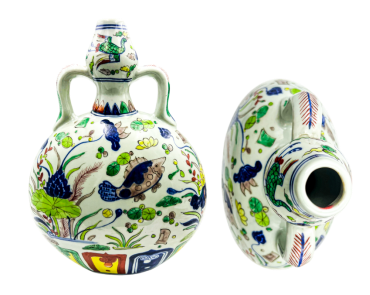
器型的设计,是宣德瓷 “仿生而超物” 的典型体现。瓶身取天然葫芦的上下双腹形态,线条从纤细的瓶颈自然过渡到饱满的扁圆腹身,既复刻了植物的舒展韵律,又以对称的绶带耳打破单调:双耳如轻柔的缎带环扣瓶颈与腹部,曲线流畅却不失力度,既强化了瓶身的平衡感,又让 “绶禄” 的吉祥寓意随器型具象化。这种将实用功能(便于握持)与象征意义结合的巧思,正是明代宫廷用瓷 “器以载道” 的缩影 —— 每一处轮廓的弧度、每一个部件的比例,都在实用与审美、物质与精神之间寻得精妙的平衡。
The shape design is a typical example of the Xuande porcelain's "bionic yet transcendent" style. The vase adopts the double-belly shape of a natural gourd, with lines smoothly transitioning from the slender neck to the plump oblate body, not only replicating the stretching rhythm of the plant but also breaking monotony with symmetrical ribbon handles: the two handles loop the neck and belly like soft satin ribbons, with smooth yet powerful curves that both enhance the balance of the vase and materialize the auspicious meaning of "official fortune" through the shape. This ingenuity that combines practical function (easy to hold) with symbolic meaning is a microcosm of the "vessel carrying Tao" concept of Ming court porcelain — every contour's curvature and every component's proportion strike a delicate balance between utility and aesthetics, material and spirit.
若说器型是瓷瓶的骨架,纹饰便是其鲜活的血肉。瓶身主纹以 “鱼藻” 为核心,这一题材自宋代便盛行于瓷绘,而宣德五彩的演绎则更添灵动:数尾游鱼或摆尾穿梭于莲叶之间,或探首轻触浮萍,鱼鳞以青花勾线、五彩填色,蓝紫相间的斑纹与翠绿的荷叶形成鲜明撞色,却在白釉的衬映下显得和谐舒展;莲叶的脉络以细劲的青花线条勾勒,再填以深浅不一的绿彩,叶脉的起伏与荷叶的卷舒都被刻画得层次分明;间杂的水草以赭红、浅黄点缀,柔曼的线条如流水般缠绕于鱼、莲之间,让静态的瓷面漾开动态的韵律。瓶颈处的禽鸟纹与腹部的鱼藻纹相呼应,翎羽的纹理以五彩细描,与绶带耳的装饰纹样形成视觉呼应,让整器的纹饰从颈至腹形成完整的叙事 —— 水生世界的生机与意趣,在方寸瓷面上铺展成一幅立体的 “鱼乐图”。
If the shape is the skeleton of the vase, the patterns are its vivid flesh and blood. The main pattern of the vase body centers on "fish and algae", a theme popular in porcelain painting since the Song Dynasty, and the Xuande polychrome interpretation adds more vitality: several fish swim through lotus leaves with wagging tails or peek at duckweed, their scales outlined in blue and filled with polychrome, the blue-purple spots contrasting sharply with the emerald lotus leaves yet appearing harmonious and confortable against the white glaze; the veins of the lotus leaves are outlined with delicate blue lines and filled with green colors of varying shades, with the undulations of the veins and the curling of the leaves depicted in distinct layers; the interspersed water plants are dotted with ochre red and light yellow, their soft lines winding between the fish and lotus like flowing water, turning the static porcelain surface into a dynamic rhythm. The bird patterns at the neck echo the fish and algae patterns on the belly, with the feather textures finely drawn in polychrome, visually echoing the decorative patterns of the ribbon handles, so that the patterns of the entire vessel form a complete narrative from neck to belly — the vitality and charm of the aquatic world spread into a three-dimensional "fish joy painting" on the small porcelain surface.
釉色的运用,是宣德五彩 “浓淡相宜,艳而不俗” 的技艺见证。这件瓷瓶以白釉为地,胎质细腻洁白,釉面莹润如凝脂,为五彩的敷设提供了纯净的基底;青花的发色浓艳深沉,是宣德 “苏泥勃青” 料的典型特征,蓝中泛紫的晕散感为纹饰增添了古朴的韵味;五彩则以红、绿、黄、赭为主色调,色彩浓郁却不刺眼,填色时遵循 “色不越线” 的规矩,线条的利落与色彩的晕染相得益彰。尤为精妙的是 “釉下青花与釉上五彩” 的结合:青花勾勒纹饰轮廓,五彩填充细节层次,两种工艺的叠加让画面既有青花的雅致,又有五彩的鲜妍,这种 “斗彩前身” 的装饰技法,正是宣德瓷在工艺史上的创新之处 —— 它打破了单一釉色的局限,让瓷绘的表现力迈向更丰富的维度。
The use of glaze is a testament to the Xuande polychrome's skill of "appropriate shades, bright but not vulgar". This vase uses white glaze as the base, with fine and white body, and the glaze surface is as smooth as congealed fat, providing a pure base for the polychrome application; the blue color is rich and deep, a typical feature of the Xuande "Suanni Boqing" material, and the purple halo in the blue adds a Simple and unadorned charm to the patterns; the polychrome mainly uses red, green, yellow and ochre as the main tones, the colors are rich but not dazzling, and the coloring follows the rule of "color not crossing the line", with neat lines and harmonious color rendering. Particularly exquisite is the combination of "underglaze blue and overglaze polychrome": the blue outlines the pattern contours, and the polychrome fills the detailed layers. The superposition of the two techniques gives the picture both the elegance of blue and the brightness of polychrome. This decorative technique, the predecessor of "doucai", is exactly the innovative feature of Xuande porcelain in the history of craftsmanship — it breaks the limitation of a single glaze color and takes the expressiveness of porcelain painting to a richer dimension.
当我们凝视这件瓷瓶底部的 “大明宣德年制” 款识,笔力遒劲的青花楷书不仅是年代的标识,更是宣德瓷 “官样御制” 的身份象征。在明代宫廷的用瓷体系中,宣德款瓷往往是 “选料必精、制器必良” 的代表,而这件五彩鱼藻纹瓶,更以器型、纹饰、釉色的三重完美,成为宣德瓷中 “雅俗共赏” 的典范:它既承载着宫廷的审美意趣,又将民间的吉祥祈愿熔于一器;既展现了当时顶尖的制瓷工艺,又传递着中式美学 “天人合一” 的内核 —— 葫芦是自然的馈赠,鱼藻是生命的欢歌,而瓷瓶则是人力与天工的对话,让转瞬即逝的窑火,化作跨越六百年的艺术传奇。
When we gaze at the "Made in the Xuande Reign of the Great Ming Dynasty" mark at the bottom of the vase, the powerful blue regular script is not only a mark of the era but also a status symbol of the "imperial design" of Xuande porcelain. In the porcelain system of the Ming court, Xuande-marked porcelain was often a representative of "selecting the finest materials and making the best vessels", and this polychrome fish-and-algae vase, with the triple perfection of shape, pattern and glaze, has become a model of "appealing to both refined and popular tastes" in Xuande porcelain: it carries the aesthetic charm of the court and integrates the auspicious wishes of the people into one vessel; it shows the top porcelain-making technology of the time and conveys the core of Chinese aesthetics of "harmony between man and nature" — the gourd is a gift from nature, the fish and algae are the song of life, and the vase is a dialogue between human effort and natural craftsmanship, turning the fleeting kiln fire into an artistic legend spanning six hundred years.

猜你喜欢

南码头路街道“艺企HIGH国潮寻风消费月-颐养潮集”点燃健康活力之夜,掀起养
 107
祝贺微漫春天顺利入围2024中国高端定制入户门十大品牌
150 四川浩冠科技:以技术创新驱动多领域智慧化升级
63 内蒙消防工程产业平台面向全国正在进行火热招商!
189 如何让消费者买得放心?东宝床垫给出答案
174 奋力谱写世界一流企业建设新篇章,扬子江药业集团召开2025年年终工作会议
73 被低估的“隐形健康炸弹”!专家齐聚南京共探偏头痛防治新路
188 2025 AutoEEA 下一代汽车电子电气架构峰会—7月10日-11日上海见
143 新华保险北京分公司成功承保国家石油天然气管网集团公司2024-2027年人身保险统
126 【新奇特美食】西安惊现"空中月宫"!全国首家沉浸式美食太空舱惊艳亮相
91 


