

汉代风格玉琥形佩:玉韵里的汉风虎纹与礼玉遗珍
发布时间:2026-01-04 来源:网络 作者:admin 【 字体:大 中 小 】
在中国古代玉雕瑞兽的艺术谱系中,这件汉代风格玉琥形佩恰似一枚凝结着汉代玉雕工艺与礼玉文化的经典器物。它以和田白玉为材、以虎形为塑、以卷云纹为饰,将汉代玉器的雄浑气韵与虎纹的祥瑞寓意融为一体,在玉质的温润与纹饰的灵动间,诉说着“玉以载礼,虎以喻威”的文化逻辑,既是汉代玉琥的代表性摹作,更是中国古代“虎纹玉雕与礼仪制度共生”的生动注脚。
In the artistic genealogy of ancient Chinese jade auspicious beasts, this Han Dynasty-style jade tiger pendant is like a classic vessel that condenses the jade carving craftsmanship and ritual jade culture of the Han Dynasty. Made of Hetian white jade, shaped as a tiger and decorated with cloud scroll patterns, it integrates the powerful charm of Han Dynasty jade artifacts with the auspicious implication of tiger patterns. Between the warmth of the jade and the vividness of the patterns, it tells the cultural logic of "jade carries rituals, and tigers symbolize power", serving as both a representative copy of Han Dynasty jade tigers and a vivid footnote to the "coexistence of tiger-patterned jade carvings and ritual systems" in ancient China.
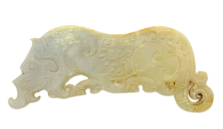
从形制与造型维度审视,这件玉琥形佩尽显“形承汉制,韵塑虎威”的特质。玉琥取猛虎奔行的姿态,身形矫健、四肢舒展,整体造型符合汉代玉琥“简约雄浑,形神兼备”的制式特征,头部的吻部前伸、耳尖上翘,虽经简化却仍能辨识出虎的典型生理特征,既保留了上古虎纹“威镇四方”的文化内涵,又融入了汉代玉雕“线条简练,气势张扬”的审美理念。体表浅雕卷云纹与涡旋纹,纹饰排布疏密有致、线条婉转流畅,与汉代青铜礼器的地纹装饰风格一脉相承,既强化了玉琥的威仪感,又暗合汉代“纹以彰势”的纹饰传统。与商代玉虎的具象风格不同,这件汉代风格玉琥更具写意的艺术张力,虎身的曲线与纹饰的弧线形成韵律感,每一处轮廓的雕琢、每一个纹饰的刻划,都凝聚着对“汉代玉琥形制美学”的精准表达,成为解析汉代瑞兽玉雕工艺的物质纽带。
From the perspective of shape and modeling, this jade tiger pendant fully demonstrates the characteristic of "shape inherits the Han system, charm shapes tiger power". The jade tiger adopts a running posture of a fierce tiger with a vigorous body and stretched limbs. The overall shape conforms to the standard feature of Han Dynasty jade tigers of "simplicity and power, both form and spirit". The snout of the head stretches forward and the ear tips tilt upward, which can still recognize the typical physiological characteristics of a tiger despite simplification, not only retaining the cultural connotation of ancient tiger patterns of "dominating the four directions", but also integrating the aesthetic concept of Han Dynasty jade carving of "concise lines and bold momentum". The body surface is lightly carved with cloud scroll patterns and vortex patterns, with regular arrangement of patterns and smooth and graceful lines, which is in the same vein as the background decoration style of Han Dynasty bronze ritual vessels, not only strengthening the majesty of the jade tiger, but also echoing the Han Dynasty's decorative tradition of "patterns manifest momentum". Different from the figurative style of Shang Dynasty jade tigers, this Han Dynasty-style jade tiger has more freehand artistic tension. The curves of the tiger's body and the arcs of the patterns form a sense of rhythm. Every carving of the outline and every incising of the pattern condense the precise expression of "the formal aesthetics of Han Dynasty jade tigers", becoming a material link for analyzing the craftsmanship of Han Dynasty auspicious beast jade carvings.
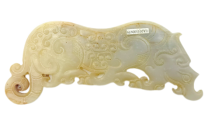
玉料与工艺层面,这件玉琥形佩承载着“因材施艺,以工显韵”的创作追求。其玉料选用和田白玉,质地温润细腻且色泽呈奶白色,表面的淡黄色沁色是岁月流转的直观印记,既为器物增添了古朴的历史质感,又与汉代古玉的沁色特征相呼应,是仿古汉玉“追摹古貌”的典型体现;工艺上融合透雕、浅浮雕与阴刻技法,玉琥的身形以透雕塑造出灵动的轮廓,虎身的肌肉起伏以浅浮雕表现,卷云纹的细节则以阴刻技法刻划,线条的深浅与纹饰的层次把控精准,无崩裂、毛糙的瑕疵,尽显治玉匠人对玉料与工具的娴熟运用。尤为精妙的是,匠人巧妙利用玉料的天然色泽与纹理,将浅色玉质雕为虎的躯干,沁色部分塑为虎的斑纹,形成“巧色玉雕”的独特美感,与汉代“天人合一”的审美理念不谋而合。每一处沁色的利用、每一刀雕琢的力度,都在无声诉说着治玉匠人对汉代玉琥工艺的复刻与创新,使玉琥既具礼玉的庄重感,更显玉雕工艺的艺术价值。
In terms of jade material and craftsmanship, this jade tiger pendant carries the creative pursuit of "applying craftsmanship according to the material, displaying charm through workmanship". Its jade material is Hetian white jade with a warm and delicate texture and milky white color. The pale yellow patina on the surface is an intuitive mark of the passage of time, which not only adds an ancient historical texture to the vessel, but also echoes the patina characteristics of Han Dynasty ancient jades, being a typical embodiment of archaistic Han jade's "pursuit of ancient appearance"; the craftsmanship integrates openwork carving, bas-relief and intaglio techniques. The body of the jade tiger is shaped into a vivid outline by openwork carving, the ups and downs of the tiger's muscles are expressed by bas-relief, and the details of cloud scroll patterns are incised by intaglio techniques. The depth of lines and the level of patterns are precisely controlled without cracks or roughness, fully showing the jade carver's skilled use of jade materials and tools. What is particularly exquisite is that the craftsman skillfully used the natural color and texture of the jade material, carving the light-colored jade into the tiger's trunk and the patinated part into the tiger's stripes, forming a unique beauty of "colorful jade carving", which coincides with the aesthetic concept of "harmony between man and nature" in the Han Dynasty. Every use of patina and every strength of the carving knife silently tell the jade carver's reproduction and innovation of the Han Dynasty jade tiger craftsmanship, making the jade tiger not only have the solemnity of ritual jade, but also show the artistic value of jade carving craftsmanship.
文化价值与时代意义维度看,这件汉代风格玉琥形佩是中国玉虎文化传承的“微观镜像”。汉代是中国玉虎发展的鼎盛阶段,虎纹玉雕作为礼玉与佩饰的重要品类,承载着古人对虎“镇邪驱凶”的精神诉求,这件仿古玉琥便是这一文化传统的延续——它既保留了汉代玉琥的造型与纹饰传统,又融入了后世治玉工艺的创新技法,是“玉虎文化代代相承”的直观体现。在当代收藏语境下,它不仅是一件玉雕佩饰,更是解析汉代玉文化、仿古玉雕工艺的关键标本:其价值不仅在于工艺的精湛与形制的经典,更在于它所承载的“汉代玉文化记忆”,每一寸玉质的肌理、每一处纹饰的刻划,都在诉说着中国玉虎从祭祀礼玉到随身佩饰的演变脉络,成为连接汉代玉文化与当代收藏视野的精神纽带。此外,汉代风格玉琥因兼具历史文化内涵与艺术审美价值,在收藏市场中占据着独特的地位,成为研究中国古代玉文化的珍贵实物资料。
From the perspective of cultural value and epochal significance, this Han Dynasty-style jade tiger pendant is a "micro mirror" of the inheritance of Chinese jade tiger culture. The Han Dynasty was the peak stage of the development of Chinese jade tigers. As an important category of ritual jade and ornaments, tiger-patterned jade carvings carried the ancients' spiritual appeal for tigers to "ward off evil and drive away misfortune". This archaistic jade tiger is a continuation of this cultural tradition—it not only retains the shape and pattern tradition of Han Dynasty jade tigers, but also integrates the innovative techniques of later jade carving craftsmanship, which is an intuitive embodiment of the "inheritance of jade tiger culture from generation to generation". In the contemporary collection context, it is not only a jade carving ornament, but also a key sample to analyze the Han Dynasty jade culture and archaistic jade carving craftsmanship: its value lies not only in the exquisite craftsmanship and classic shape, but also in the "Han Dynasty jade culture memory" it carries. Every inch of jade texture and every incising of patterns tell the evolution of Chinese jade tigers from sacrificial ritual jade to personal ornaments, becoming a spiritual link connecting Han Dynasty jade culture with the contemporary collection vision. In addition, Han Dynasty-style jade tigers occupy a unique position in the collection market due to their historical and cultural connotation and artistic aesthetic value, becoming precious physical data for studying ancient Chinese jade culture.
当我们凝视这件汉代风格玉琥形佩,玉质的温润与虎纹的灵动在眼前交融,汉代的礼仪制度与治玉的匠心工艺在方寸间碰撞,仿佛能触摸到汉代贵族佩玉的生活场景,也能感受到中国古代玉文化的深厚底蕴。它不仅是一件玉雕佩饰,更是汉代玉文化的艺术结晶、礼玉传统的物质凝结,在时光的摩挲中静静散发着玉韵的古韵,以其独特的形制与文化内涵,让每一位收藏者都能读懂这份藏在玉虎里的汉代记忆,感受那份融于玉质的文化传承与工艺革新。
When we gaze at this Han Dynasty-style jade tiger pendant, the warmth of the jade and the vividness of the tiger patterns blend before our eyes, and the ritual system of the Han Dynasty and the ingenuity of jade carving collide in the square inch. It seems that we can touch the living scene of Han Dynasty nobles wearing jade, and also feel the profound heritage of ancient Chinese jade culture. It is not only a jade carving ornament, but also an artistic crystallization of Han Dynasty jade culture and a material condensation of ritual jade traditions, quietly exuding the ancient charm of jade in the touch of time. With its unique shape and cultural connotation, it allows every collector to understand the Han Dynasty memory hidden in the jade tiger and feel the cultural inheritance and technological innovation integrated into the jade texture.

猜你喜欢

四川浩冠科技:以技术创新驱动多领域智慧化升级
 63
祝贺微漫春天顺利入围2024中国高端定制入户门十大品牌
150 南码头路街道“艺企HIGH国潮寻风消费月-颐养潮集”点燃健康活力之夜,掀起养
107 奋力谱写世界一流企业建设新篇章,扬子江药业集团召开2025年年终工作会议
73 被低估的“隐形健康炸弹”!专家齐聚南京共探偏头痛防治新路
188 新华保险北京分公司成功承保国家石油天然气管网集团公司2024-2027年人身保险统
126 2025 AutoEEA 下一代汽车电子电气架构峰会—7月10日-11日上海见
143 如何让消费者买得放心?东宝床垫给出答案
174 【新奇特美食】西安惊现"空中月宫"!全国首家沉浸式美食太空舱惊艳亮相
91 内蒙消防工程产业平台面向全国正在进行火热招商!
189