

范曾《无量寿》:纸韵里的文心墨骨与祥瑞意趣
发布时间:2026-01-24 来源:网络 作者:admin 【 字体:大 中 小 】
在中国现代人物画的发展谱系中,范曾的《无量寿》是凝萃着其“以诗为魂,以书为骨”艺术理念与传统祥瑞文化的经典之作。它以纸本为底、水墨为法、寿星童子为核心意象,将文人画的笔墨意趣与民间祈福的美好愿景融为一体,在灵动的线条与雅致的设色间,诉说着“画以载祥,笔以传情”的艺术逻辑,既是范曾人物创作的代表性作品,更是现代人物画“传统文脉与当代审美共生”的生动注脚。
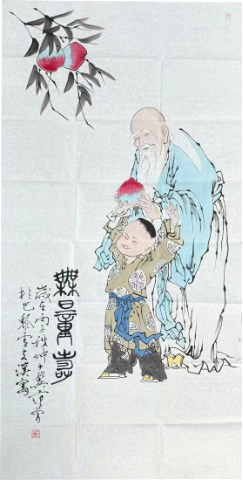
In the artistic pedigree of modern Chinese figure painting, Fan Zeng's Boundless Longevity is a classic work that embodies his artistic concept of "poetry as soul, calligraphy as bone" and traditional auspicious culture. With paper as the base, ink wash as the method, and the God of Longevity and child as the core images, it integrates the ink charm of literati painting with the beautiful wishes of folk blessing. Between the vivid lines and elegant coloring, it tells the artistic logic of "painting carries auspiciousness, brush conveys emotion", serving as both a representative work of Fan Zeng's figure creation and a vivid footnote to the "coexistence of traditional cultural context and contemporary aesthetics" in modern figure painting.
从构图与造型维度审视,《无量寿》尽显“形神兼备,韵藏文心”的特质。画面中,寿星身着宽袖蓝衫,身形颀长却神态慈和,童子抱桃仰首,憨态可掬却灵动鲜活,既延续了传统人物画“以形写神”的表达传统,又因范曾的“线描”笔法,在造型的精准度与笔墨的韵律感上更具现代性;左上角的双桃与墨竹以写意笔法绘就,桃实丹红饱满、竹叶苍劲飘逸,与人物形成“上下呼应,虚实相生”的视觉效果,打破了传统人物画“重人轻景”的局限。与古代工笔人物的精工细描不同,范曾以“骨法用笔”勾勒人物轮廓,线条如铁线般刚劲流畅,又蕴含行书般的韵律感,每一处衣纹的转折、每一个神态的刻画,都凝聚着对“现代人物形制美学”的精准表达,成为解析范曾人物技法的物质纽带。
From the perspective of composition and modeling, Boundless Longevity fully demonstrates the characteristic of "both form and spirit, charm hides literary heart". In the painting, the God of Longevity wears a wide-sleeved blue shirt, with a tall figure but a kind expression, while the child holds a peach and looks up, naive and lively. This not only inherits the expressive tradition of "depicting spirit through form" in traditional figure painting, but also has more modernity in the precision of modeling and the rhythm of brush and ink due to Fan Zeng's "line drawing" technique; the double peaches and ink bamboo in the upper left corner are painted with freehand brushwork, with plump crimson peaches and vigorous elegant bamboo leaves, forming a visual effect of "upper and lower echo, virtual and real interaction" with the figures, breaking the limitation of "valuing people over scenery" in traditional figure painting. Different from the exquisite depiction of ancient meticulous figure painting, Fan Zeng outlines the figure's outline with "bone method brush", the lines are as strong and smooth as iron wire, and contain the rhythm of running script. Every turn of clothing texture and every depiction of expression condense the accurate expression of "the formal aesthetics of modern figure painting", becoming a material link for analyzing Fan Zeng's figure techniques.
笔墨与设色层面,《无量寿》承载着“以书入画,以彩点睛”的创作追求。其以生宣为底,纸性温润且吸墨性佳,历经岁月仍保持着墨色的层次质感,既符合现代人物画“选材适配笔墨”的标准,又因时光的沉淀更添古雅之美;笔墨上融合书法的笔意与绘画的技法,人物的衣纹以“铁线描”勾勒,线条粗细变化丰富,墨色浓淡干湿层次分明,尽显“墨分五彩”的层次美感,与传统人物画的平涂设色形成鲜明对比。尤为精妙的是,范曾以朱砂点染桃实与寿星的耳垂,浓艳的红色与淡蓝的衣袍形成视觉对比,既点明“无量寿”的祥瑞寓意,又暗合“福寿双全”的文化内涵,与他“回归古典,回归自然”的创作理念不谋而合。画面左侧的题款“无量寿 岁在丙子秋仲十翼范曾于巴黎雪夫汉寓”笔墨苍劲,与画面的雅致气韵相得益彰,钤印的朱红与墨色的黑白形成色彩对比,更添“诗书画印”合一的中式审美意趣。每一处墨色的晕染、每一次色彩的点绘,都在无声诉说着范曾对笔墨技法的终极探索,使《无量寿》既具传统人物的意境,更显现代艺术的革新。
In terms of brush, ink and coloring, Boundless Longevity carries the creative pursuit of "integrating calligraphy into painting, using color to add finishing touches". It uses raw rice paper as the base, which is warm in texture and good in ink absorption, and still maintains the layered texture of ink color after years, which not only meets the standard of "material selection adapting to brush and ink" in modern figure painting, but also adds more elegant beauty due to the precipitation of time; in terms of brush and ink, it integrates the brush intention of calligraphy with painting techniques, the clothing texture of figures is outlined with "iron wire drawing", with rich changes in line thickness and distinct layers of ink shade, dryness and wetness, fully showing the layered beauty of "ink separated into five colors", forming a sharp contrast with the flat coloring of traditional figure painting. What is particularly exquisite is that Fan Zeng uses cinnabar to dot the peaches and the earlobes of the God of Longevity, and the bright red color forms a visual contrast with the light blue robe, which not only points out the auspicious implication of "boundless longevity", but also implies the cultural connotation of "both fortune and longevity", which coincides with his creative concept of "returning to the classical, returning to nature". The inscription on the left side of the painting, "Boundless Longevity, in the autumn of the Bingzi year, written by Fan Zeng in Xuefuhan's residence in Paris", has vigorous brush and ink, which complements the elegant charm of the painting. The vermilion of the seal and the black and white of the ink form a color contrast, adding the Chinese aesthetic interest of "the unity of poetry, calligraphy, painting and seal". Every rendering of ink color and every dot of color silently tell Fan Zeng's ultimate exploration of brush and ink techniques, making Boundless Longevity not only have the artistic conception of traditional figures, but also show the innovation of modern art.
文化价值与时代意义维度看,《无量寿》是现代人物画发展的“微观镜像”。范曾作为新文人画的代表人物,将传统文人画的文脉与现代审美需求结合,开创了“诗书画印一体化”的新范式,这幅作品便是这一艺术革新的典型样本——它既保留了传统人物画“以物喻志”的审美传统,又以寿星童子的题材展现当代人对福寿的精神诉求,是“范曾艺术现代性”的直观体现。在当代收藏语境下,它不仅是一幅范曾人物画作,更是解析现代人物画史、新文人画发展的关键标本:其价值不仅在于笔墨的精湛与构图的经典,更在于它所承载的“现代人物画文化记忆”,每一寸纸本的肌理、每一处人物的描绘,都在诉说着现代人物画从传统到现代的风格演变,成为连接传统文脉与当代收藏视野的精神纽带。此外,范曾真迹存世量虽较为可观,但兼具艺术水准与文化内涵的精品仍属难得,其历史与艺术价值均不可估量。
From the perspective of cultural value and epochal significance, Boundless Longevity is a "micro mirror" of the development of modern figure painting. As a representative figure of new literati painting, Fan Zeng combines the cultural context of traditional literati painting with modern aesthetic needs, creating a new paradigm of "integration of poetry, calligraphy, painting and seal". This work is a typical sample of this artistic innovation—it not only retains the aesthetic tradition of "using objects to metaphorize aspirations" in traditional figure painting, but also shows the contemporary people's spiritual pursuit of fortune and longevity with the theme of the God of Longevity and child, which is an intuitive embodiment of the "modernity of Fan Zeng's art". In the contemporary collection context, it is not only a figure painting by Fan Zeng, but also a key sample to analyze the history of modern figure painting and the development of new literati painting: its value lies not only in the exquisite brush and ink and classic composition, but also in the "cultural memory of modern figure painting" it carries. Every inch of paper texture and every depiction of the figure tell the style evolution of modern figure painting from traditional to modern, becoming a spiritual link connecting the traditional cultural context with the contemporary collection vision. In addition, although the surviving quantity of Fan Zeng's authentic works is relatively considerable, the fine works with both artistic level and cultural connotation are still rare, and their historical and artistic value are immeasurable.
当我们凝视范曾的《无量寿》,纸本的素净与墨色的苍劲在眼前交融,范曾的创作匠心与当代人的精神诉求在方寸间碰撞,仿佛能触摸到传统文脉的温度,也能感受到现代人物画“守正创新”的深厚底蕴。它不仅是一幅人物画作,更是新文人画的艺术结晶、祥瑞文化的物质凝结,在时光的摩挲中静静散发着纸韵的古韵,以其独特的笔墨与文化内涵,让每一位收藏者都能读懂这份藏在画卷里的范曾记忆,感受那份融于笔锋的历史传承与艺术革新。
When we gaze at Fan Zeng's Boundless Longevity, the plainness of the paper and the vigor of the ink blend before our eyes, and Fan Zeng's creative ingenuity and the spiritual demands of contemporary people collide in the square inch. It seems that we can touch the temperature of the traditional cultural context, and also feel the profound heritage of "upholding tradition and innovating" in modern figure painting. It is not only a figure painting, but also an artistic crystallization of new literati painting and a material condensation of auspicious culture, quietly exuding the ancient charm of paper in the touch of time. With its unique brush and ink and cultural connotation, it allows every collector to understand the memory of Fan Zeng hidden in the painting scroll and feel the historical inheritance and artistic innovation integrated into the brush tip.

猜你喜欢

祝贺微漫春天顺利入围2024中国高端定制入户门十大品牌
 150
新华保险北京分公司成功承保国家石油天然气管网集团公司2024-2027年人身保险统
126 【新奇特美食】西安惊现"空中月宫"!全国首家沉浸式美食太空舱惊艳亮相
91 南码头路街道“艺企HIGH国潮寻风消费月-颐养潮集”点燃健康活力之夜,掀起养
107 如何让消费者买得放心?东宝床垫给出答案
174 奋力谱写世界一流企业建设新篇章,扬子江药业集团召开2025年年终工作会议
73 被低估的“隐形健康炸弹”!专家齐聚南京共探偏头痛防治新路
188 四川浩冠科技:以技术创新驱动多领域智慧化升级
63 内蒙消防工程产业平台面向全国正在进行火热招商!
189 2025 AutoEEA 下一代汽车电子电气架构峰会—7月10日-11日上海见
143