

郎世宁珐琅彩诗文十二花神摇铃尊
发布时间:2026-02-13 来源:网络 作者:admin 【 字体:大 中 小 】
郎世宁珐琅彩诗文十二花神摇铃尊
当这套十二件珐琅彩诗文摇铃尊陈列眼前,仿佛推开了一座清代宫廷的微型花朝盛宴。作为郎世宁融合中西技法的艺术结晶,每一件摇铃尊都以 “十二花神” 为主题,将一月一花、一花一诗的中式浪漫,凝注在莹润的瓷胎之上。摇铃尊的造型源自清代宫廷御瓷,因器型似摇铃而得名,修长的瓶颈与圆润的瓶身形成优雅的曲线,既具皇家器物的庄重,又含文房清供的雅致。十二件器物各绘一种月令花卉,从正月的水仙到腊月的寒梅,搭配相应的咏花诗文,堪称 “一器藏一韵,一花见一诗”,完整呈现了传统花神文化的诗意与风雅。
When this set of twelve enamel-painted poem bell-shaped zun vases is displayed before us, it feels like opening a miniature flower festival of the Qing Dynasty court. As a crystallization of Lang Shining's integration of Chinese and Western techniques, each bell-shaped zun takes the "Twelve Flower Gods" as its theme, condensing the Chinese romance of "one flower per month, one poem per flower" onto the smooth porcelain body. The shape of the bell-shaped zun originates from the imperial porcelain of the Qing Dynasty, named for its resemblance to a handbell. The slender neck and rounded body form an elegant curve, which has both the solemnity of royal utensils and the elegance of study ornaments. Each of the twelve vessels is painted with a monthly flower, from the daffodil of the first lunar month to the plum blossom of the twelfth lunar month, paired with corresponding flower-ode poems, which can be called "one vessel contains one charm, one flower reveals one poem", fully presenting the poetry and elegance of the traditional flower god culture.
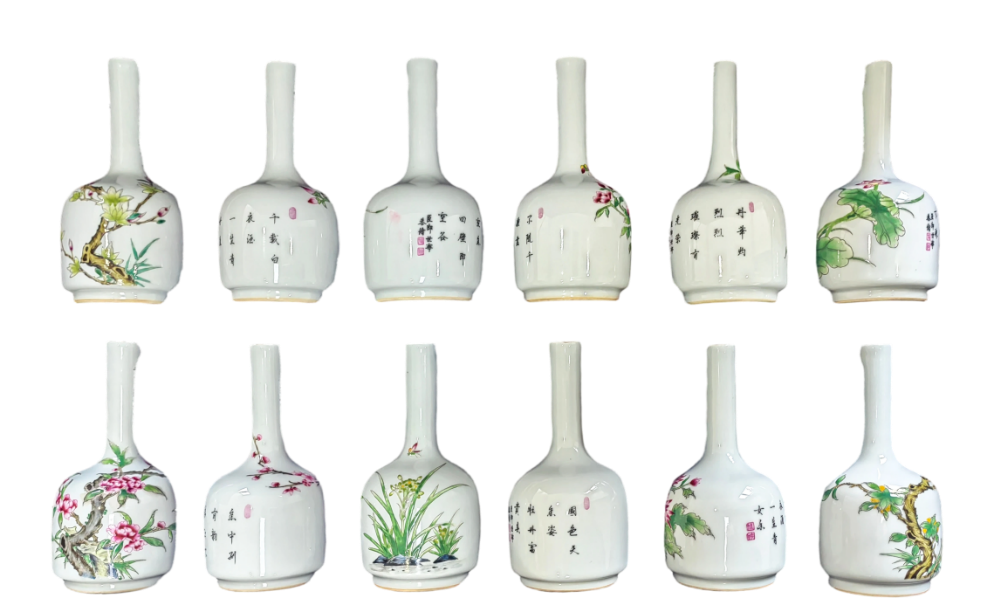
郎世宁作为供奉清廷的意大利画师,将西洋绘画的写实技法与中国工笔的细腻笔触完美融合,让这组花神摇铃尊兼具中西美学的精髓。在他的笔下,花卉的形态鲜活如生:二月杏花的娇柔、三月桃花的明艳、六月荷花的清雅,都通过珐琅彩的浓淡层次得以精准呈现。花瓣的脉络、叶片的纹理乃至花茎的绒毛,都刻画得细致入微,既保留了中式花鸟画的写意意境,又融入了西洋油画的光影质感。瓶身的诗文则以规整的小楷书写,字体娟秀雅致,与花卉图案相得益彰,让器物成为诗画交融的立体载体。这种 “诗、书、画、印” 一体的创作手法,正是清代宫廷艺术追求极致美学的典范。
As an Italian painter serving the Qing court, Lang Shining perfectly integrated the realistic techniques of Western painting with the delicate brushwork of Chinese meticulous painting, making this set of flower god bell-shaped zun embody the essence of both Chinese and Western aesthetics. Under his brush, the flowers take on vivid forms: the delicacy of February apricot blossoms, the brightness of March peach blossoms, and the elegance of June lotus flowers are all accurately presented through the shades of enamel colors. The veins of petals, the texture of leaves, and even the fuzz of flower stems are depicted in detail, retaining the freehand artistic conception of Chinese flower-and-bird painting while integrating the light and shadow texture of Western oil painting. The poems on the vase body are written in neat regular script, with elegant and refined fonts, which complement the flower patterns, making the vessel a three-dimensional carrier of the integration of poetry and painting. This creative method of integrating "poetry, calligraphy, painting, and seal" is a model of the Qing court's pursuit of ultimate aesthetics.
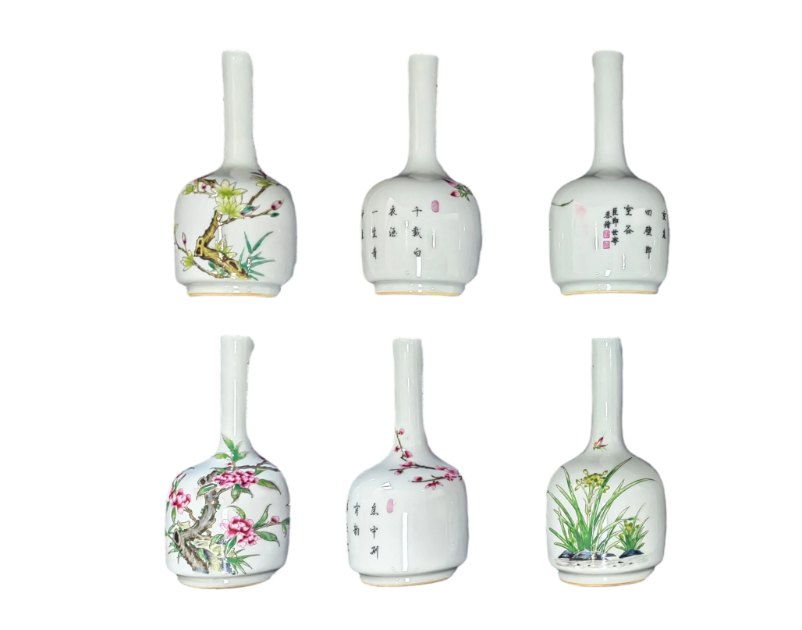
这套摇铃尊的工艺价值同样令人惊叹。珐琅彩作为清代宫廷御用的高端釉彩,烧制过程极为繁复,需在景德镇烧制素胎后运至京城,由宫廷画师在宫中施彩二次入窑。郎世宁亲自参与彩绘创作,每一件器物的花卉布局、诗文搭配都经过精心设计,确保十二件作品既统一协调又各具特色。摇铃尊的器型烧制难度极高,修长的瓶颈易在窑火中变形,而这套器物的胎体厚薄均匀、线条挺拔流畅,足见清代御窑厂的精湛技艺。底部的 “乾隆年制” 款识以青花篆书刻就,字体规整清晰,是宫廷御瓷的重要标识,也印证了这套器物的传世地位。
The craftsmanship value of this set of bell-shaped zun is also amazing. As a high-end glaze used exclusively by the Qing court, enamel color has an extremely complicated firing process: the blanks are fired in Jingdezhen, then transported to the capital, and painted by court painters in the palace before being fired again in the kiln. Lang Shining personally participated in the painting creation, and the flower layout and poem matching of each vessel were carefully designed to ensure that the twelve works are both unified and coordinated, yet each has its own characteristics. The firing of the bell-shaped zun is extremely difficult, as the slender neck is prone to deformation in the kiln fire. However, the body of this set of vessels has a uniform thickness and smooth lines, which fully demonstrates the exquisite craftsmanship of the imperial kiln factory in the Qing Dynasty. The "Made in the Qianlong Reign" mark at the bottom is carved in blue and white seal script, with neat and clear fonts, which is an important symbol of imperial court porcelain and also confirms the handed-down status of this set of vessels.
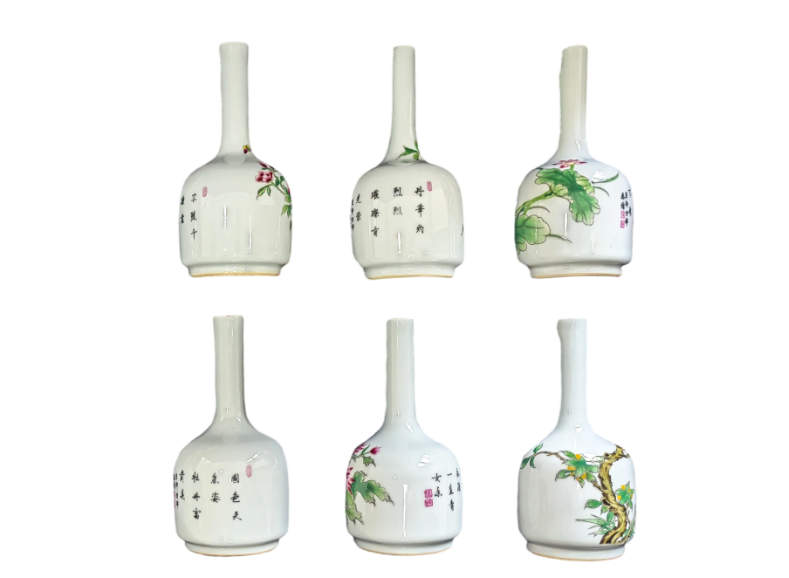
从宫廷御用到传世珍藏,这套郎世宁珐琅彩诗文十二花神摇铃尊不仅是清代中西文化交融的见证,更是传统花神文化的生动载体。它让我们在欣赏精湛工艺的同时,得以重温古人 “以花为信,以诗寄情” 的风雅生活。在当代收藏领域,这类融合中西技法的宫廷御瓷因其稀缺性与艺术价值备受珍视,而这套摇铃尊更是其中的翘楚。当我们凝视瓶身的花卉与诗文,仿佛能感受到郎世宁笔下的春意盎然,体会到清代宫廷美学的极致追求。它不仅是一组器物,更是一段凝固的时光,承载着千年花神文化的浪漫与清代宫廷艺术的辉煌,在岁月流转中始终散发着温润的光华。
From imperial court use to handed-down treasure, this set of Lang Shining enamel-painted poem Twelve Flower Gods bell-shaped zun is not only a witness to the integration of Chinese and Western cultures in the Qing Dynasty, but also a vivid carrier of the traditional flower god culture. While admiring the exquisite craftsmanship, it allows us to revisit the elegant life of the ancients who "took flowers as a promise and expressed their feelings through poetry". In the contemporary collection field, such imperial court porcelain integrating Chinese and Western techniques is highly valued for its scarcity and artistic value, and this set of bell-shaped zun is one of the best. When we gaze at the flowers and poems on the vase body, we can feel the vibrant spring in Lang Shining's brushwork and appreciate the ultimate pursuit of court aesthetics in the Qing Dynasty. It is not only a set of vessels, but also a frozen time, carrying the romance of the thousand-year flower god culture and the glory of Qing court art, and always exuding warm radiance in the passage of time.

猜你喜欢

内蒙消防工程产业平台面向全国正在进行火热招商!
 189
被低估的“隐形健康炸弹”!专家齐聚南京共探偏头痛防治新路
188 南码头路街道“艺企HIGH国潮寻风消费月-颐养潮集”点燃健康活力之夜,掀起养
107 祝贺微漫春天顺利入围2024中国高端定制入户门十大品牌
150 如何让消费者买得放心?东宝床垫给出答案
174 新华保险北京分公司成功承保国家石油天然气管网集团公司2024-2027年人身保险统
126 2025 AutoEEA 下一代汽车电子电气架构峰会—7月10日-11日上海见
143 【新奇特美食】西安惊现"空中月宫"!全国首家沉浸式美食太空舱惊艳亮相
91 奋力谱写世界一流企业建设新篇章,扬子江药业集团召开2025年年终工作会议
73 四川浩冠科技:以技术创新驱动多领域智慧化升级
63