

双旗币一组
发布时间:2026-02-13 来源:网络 作者:admin 【 字体:大 中 小 】
双旗币一组
在我的收藏柜里,静静躺着两枚民国时期的双旗铜币,它们没有黄金的夺目,也不如瓷器那般精致,却以斑驳的铜锈和温润的包浆,诉说着近百年前的风云变幻。这两枚钱币一枚呈深绿色铜锈,一枚泛着暗红包浆,虽历经磨损,币面的交叉旗帜图案仍依稀可辨,仿佛在无声讲述着那个新旧交替的特殊时代。
In my collection cabinet lie two copper coins from the Republic of China period, featuring the double flag design. They lack the brilliance of gold or the delicacy of porcelain, yet their mottled patina and warm luster whisper of the dramatic changes that unfolded nearly a century ago. One coin bears a dark green patina, while the other shows a reddish-brown tone. Though worn by time, the crossed flags on their surfaces remain faintly visible, silently telling the story of an era caught between old and new.
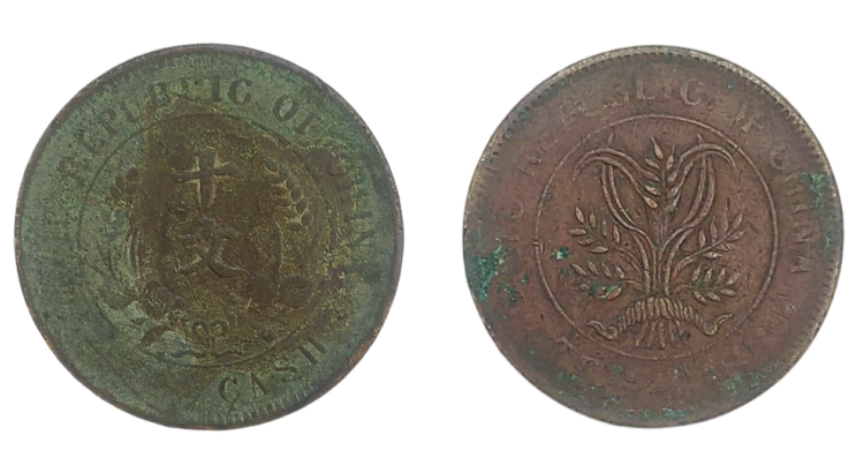
双旗币诞生于 1912 年民国建立之初,作为取代清代龙洋的流通货币,它的出现本身就是一场革命的延续。币面中央的铁血十八星旗与五色旗交叉而立,前者象征着团结关内十八省的铁血精神,后者则代表了汉满蒙回藏五族共和的建国理想。当指尖拂过币面粗糙的纹路,仿佛能触碰到民国肇始时人们对共和的热切期盼,也能感受到军阀割据年代百姓生活的颠沛流离。这两枚钱币的边缘已不再规整,币面文字也多有磨损,却恰恰印证了它们曾在市井间辗转流通的经历,每一道划痕都是一段被遗忘的生活片段。
The double flag coins were first minted in 1912, shortly after the founding of the Republic of China, serving as a replacement for the dragon silver coins of the Qing Dynasty. Their very existence was a continuation of the revolution. At the center of each coin, the Iron-Blooded Eighteen-Star Flag (symbolizing the unity of the eighteen provinces) crosses the Five-Color Flag (representing the republic of five ethnic groups: Han, Manchu, Mongol, Hui, and Tibetan). Running a fingertip over the rough patterns, one can almost feel the fervent hope for republicanism at the birth of the new nation, as well as the hardships endured by ordinary people during the warlord era. The irregular edges and worn inscriptions on these two coins bear witness to their circulation in daily life, with every scratch representing a forgotten moment in history.
与那些刻意保存的全新样币不同,这组双旗币最动人的地方,正在于它们的 “不完美”。绿锈覆盖的币面如同被时光尘封的信笺,暗红包浆则像岁月留下的吻痕。钱币背面的嘉禾图案虽已模糊,却依然能让人联想到民国初年农商并重的治国理念。我时常会将它们置于掌心,感受铜质在体温下缓缓升温的过程,这种跨越时空的温度传递,仿佛让我与百年前的钱币持有者产生了奇妙的共鸣。或许在某个动荡的清晨,它曾被小贩小心翼翼地收进钱袋;又或许在某个团圆的节日,它作为压岁钱被塞进孩童的棉袄。这些未曾被记录的故事,都沉淀在厚重的铜锈之中。
Unlike brand-new specimen coins preserved intentionally, what makes this set of double flag coins most captivating is their "imperfections." The green-patinated surface resembles a letter sealed by time, while the reddish-brown patina feels like a kiss left by years. Though the Jiahe (grain) pattern on the reverse has faded, it still evokes the early Republic's governing philosophy of balancing agriculture and commerce. I often hold them in my palm, feeling the copper slowly warm to my body temperature—a transfer of warmth across time that creates a subtle connection with those who once held these coins a century ago. Perhaps they were carefully tucked into a vendor's purse on a turbulent morning, or given as New Year's money to a child on a festive occasion. These unrecorded stories lie buried beneath the thick patina.
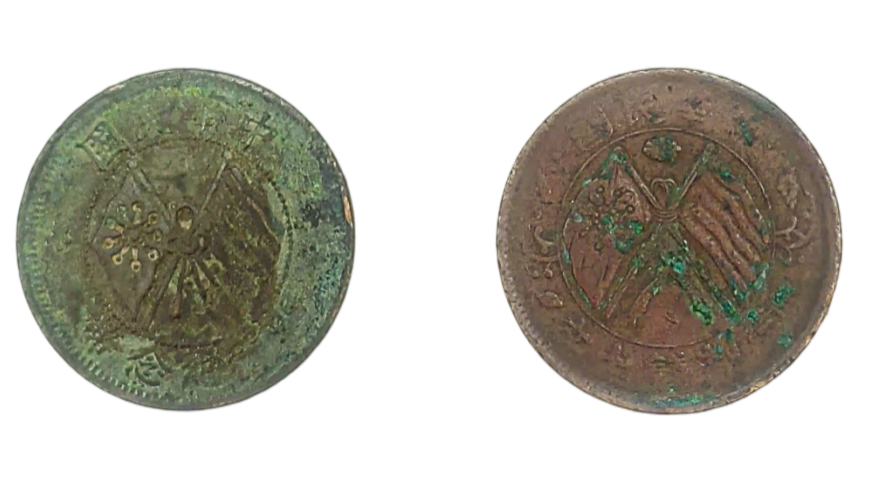
在当今的收藏市场中,双旗币因其存世量大常被视为普通藏品,但对我而言,这两枚钱币的价值远不止于市场标价。它们是历史的微缩档案,是触摸民国温度的媒介,更是连接过去与当下的情感纽带。每当凝视着币面模糊的旗帜图案,我仿佛能听见辛亥年武昌城的炮火,也能看见五四运动中青年们振臂高呼的身影。钱币虽小,却承载着一个民族追求共和的艰难历程。这组双旗币不仅是我收藏中的一部分,更成为我理解近代中国的一把钥匙,提醒着我们在飞速前行的今天,仍需回望来时的路。
In today's collector's market, double flag coins are often considered common due to their large surviving quantity. But to me, these two coins hold far more value than their market price. They are miniature archives of history, a medium to touch the pulse of the Republic of China, and an emotional bridge connecting past and present. Staring at the faded flags, I can almost hear the cannons of the Wuchang Uprising in 1911 and see the young activists of the May Fourth Movement raising their voices in protest. Though small, these coins carry a nation's arduous journey toward republicanism. This set of double flag coins is not just part of my collection; it is a key to understanding modern China, reminding us that as we move forward rapidly, we must still look back at the path we have taken.

猜你喜欢

祝贺微漫春天顺利入围2024中国高端定制入户门十大品牌
 150
2025 AutoEEA 下一代汽车电子电气架构峰会—7月10日-11日上海见
143 被低估的“隐形健康炸弹”!专家齐聚南京共探偏头痛防治新路
188 内蒙消防工程产业平台面向全国正在进行火热招商!
189 【新奇特美食】西安惊现"空中月宫"!全国首家沉浸式美食太空舱惊艳亮相
91 四川浩冠科技:以技术创新驱动多领域智慧化升级
63 新华保险北京分公司成功承保国家石油天然气管网集团公司2024-2027年人身保险统
126 南码头路街道“艺企HIGH国潮寻风消费月-颐养潮集”点燃健康活力之夜,掀起养
107 奋力谱写世界一流企业建设新篇章,扬子江药业集团召开2025年年终工作会议
73 如何让消费者买得放心?东宝床垫给出答案
174 


精品推荐 —— 四川铜币

你童年掰过的碎冰冰,现在被Z世代掰成了社交货币
精品推荐 ——湖南省造双旗币梅花错版(背逆30°)
中华人民共和国第三套人民币纯银同号纪念册:银韵里的时代印记与收藏匠心