

精品推荐 ——清·古医书手抄本
发布时间:2026-03-13 来源:网络 作者:adminf 【 字体:大 中 小 】
Premium Recommendation - Qing Dynasty · Ancient Medical Book Manuscrip
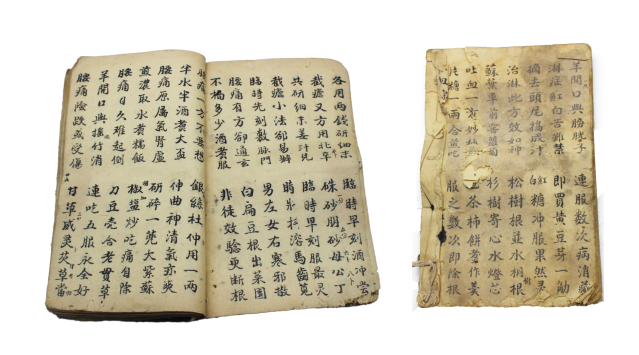
*本次藏品:清·古医书手抄本*
典藏尺寸:长:26cm宽:16cm
这本手抄本通长 26 厘米、宽 16 厘米,属于清代民间医籍中典型的 “中开本” 形制,既区别于官修医书的大开本(多为 30cm 以上),也不同于便携袖珍本(多为 12cm 以下),更符合乡村郎中 “案头翻阅、随身携带” 的实用需求。
从装帧来看,它采用传统线装工艺:以棉线或麻线穿订书脊,绳结尚存,虽有磨损断裂痕迹,但仍保留了清代民间书籍 “简易牢固” 的装帧逻辑。这种装帧方式无需复杂工艺,成本低廉,是晚清至民国时期民间手抄本的主流选择,与雕版印刷书籍的 “线装” 形制同源,但手工穿线更显粗糙质朴,反映出抄录者多为底层医者或识字乡民,而非专业书坊匠人。
纸张方面,书页呈现明显的黄脆老化特征,局部有虫蛀、霉斑与破损,边缘卷曲起毛,符合清代南方地区常用的竹纸或皮纸特征:竹纸以嫩竹为原料,质地轻薄、易吸水,适合毛笔书写,但耐候性差,易受潮虫蛀;皮纸以桑皮、楮皮为原料,质地稍坚韧,但长期存放仍会出现黄脆现象。纸张的纤维纹理与墨色渗透痕迹,也能佐证其为手工书写而非印刷品 —— 墨色浓淡不均,部分笔画有洇染,是毛笔蘸墨书写时的自然痕迹,而非雕版印刷的均匀墨色。
This manuscript measures 26 centimeters in length and 16 centimeters in width, fitting the typical 'medium folio' format among folk medical books of the Qing dynasty. It is distinct from the large folio official medical books (mostly over 30 cm) and the portable pocket-sized editions (mostly under 12 cm), better catering to the practical needs of rural doctors for 'desk consultation and carrying around.'
In terms of binding, it uses the traditional thread-bound technique: cotton or hemp threads stitch the spine, with knots still visible. Although there are signs of wear and breakage, it retains the 'simple and sturdy' binding logic of folk books from the Qing dynasty. This binding method requires no complex craftsmanship and is cost-effective, making it the mainstream choice for hand-copied folk manuscripts from the late Qing to the Republic of China period. While sharing its origins with the 'thread-bound' format of woodblock-printed books, the handcrafted stitching appears rougher and more rustic, reflecting that the copyists were mostly lower-class practitioners or literate villagers rather than professional bookbinders.
Regarding the paper, the pages show obvious yellowing and brittleness due to aging, with some areas affected by insect damage, mold spots, and wear, and edges are curled and frayed. These features are consistent with the bamboo paper or mulberry paper commonly used in southern China during the Qing dynasty: bamboo paper, made from young bamboo, is light and thin, absorbs ink easily, and is suitable for brush writing but has poor durability and is susceptible to moisture and pests; mulberry paper, made from mulberry or paper mulberry bark, is somewhat more resilient, but will also yellow and become brittle over time. The paper's fiber texture and ink penetration traces further support that it was hand-written rather than printed—the ink's unevenness and occasional blotches are natural results of brush writing and not the uniform ink of woodblock printing.
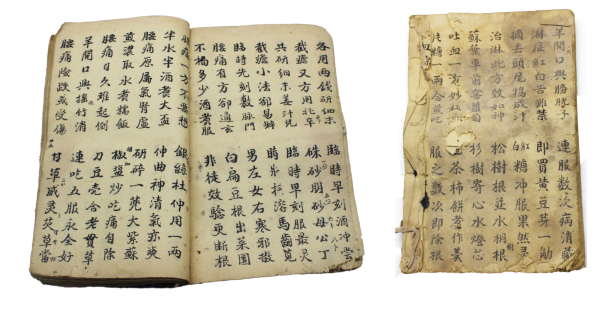
*本次藏品:清·古医书手抄本*
典藏尺寸:长:26cm宽:16cm
书中大量使用民间药名,如 “羊开口”“膀胱子”“杉树寄心”“水灯芯” 等,均非官修医书(如《本草纲目》《医宗金鉴》)中的标准药名,而是地方俗称。这种药名通俗化特征,反映出抄录者与使用者均为底层群体:他们不懂复杂的本草学名,只以药物的形态、功效或产地命名,便于记忆与传播。例如 “羊开口” 因果实成熟开裂形似羊嘴而得名,“膀胱子” 因形似膀胱、能利小便而得名,直观易懂,符合民间认知逻辑。
所有方药均以 “易得、廉价、有效” 为核心:草药多为南方山区随处可见的野生植物,食材(红糖、黄豆芽、茶叶、柿饼)更是日常饮食常见之物,无需昂贵的名贵药材。这种 “简便廉验” 的用药原则,是清代民间医学的核心特质 —— 面对底层民众 “没钱看病、缺医少药” 的困境,医者只能以最低成本的资源应对疾病,体现了 “以民为本” 的医疗伦理。
书中方药无复杂的理论阐释,仅以 “连服数次病消藏”“效如神”“即除根” 等直白语言描述疗效,反映出民间医学的 “经验驱动” 特征:方药并非基于系统的中医理论推导,而是代代相传的临床经验总结,更关注 “是否有效” 而非 “理论是否严谨”。这种经验性,使得民间验方更贴近实际医疗场景,成为官修医学之外的重要补充。
The book makes extensive use of folk names for medicines, such as “Yang Kaikou,” “Pangguangzi,” “Shanshu Jixin,” and “Shuidengxin,” none of which are standard drug names found in official medical texts (such as the *Compendium of Materia Medica* or the *Golden Mirror of Medicine*), but rather local colloquial terms. This feature of popularized drug names reflects that both the scribes and users belonged to lower social strata: they were not familiar with complex materia medica terminology and instead named medicines based on their appearance, effects, or place of origin to facilitate memory and dissemination. For example, “Yang Kaikou” is named for its fruit opening and splitting like a sheep's mouth when ripe, while “Pangguangzi” is named for its bladder-like shape and its effect in promoting urination—straightforward and easy to understand, consistent with popular cognitive logic.
All prescriptions and medicines are centered on being “easily obtainable, inexpensive, and effective”: herbs are mostly wild plants commonly found in the mountainous regions of southern China, and food ingredients (such as brown sugar, soybean sprouts, tea leaves, and dried persimmons) are common dietary items, requiring no costly or rare medicinal materials. This principle of “simple, convenient, and effective” medication is a core characteristic of Qing dynasty folk medicine — facing the difficulties of the lower-class population who “had no money for medical care and limited access to doctors or medicine,” practitioners had to address diseases using the lowest-cost resources, reflecting a medical ethic of “people-oriented care.”
The book’s prescriptions provide no complex theoretical explanations, describing efficacy in plain language, such as “take several times to cure hidden ailments,” “effects like magic,” or “eradicates the root instantly.” This reflects the “experience-driven” nature of folk medicine: the prescriptions are not derived from systematic traditional Chinese medicine theories but are summaries of clinical experiences passed down through generations, focusing more on “whether it works” rather than “whether the theory is rigorous.” This empirical approach makes folk remedies more closely aligned with practical medical scenarios, serving as an important supplement to officially compiled medicine.
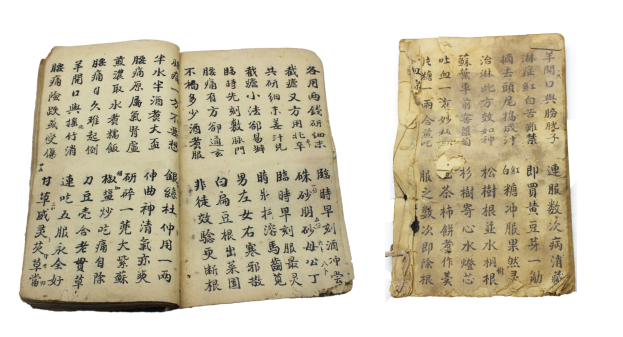
*本次藏品:清·古医书手抄本*
典藏尺寸:长:26cm宽:16cm
这本 26cm×16cm 的清代中医验方手抄本,看似只是一本破旧的线装小书,却承载了丰富的历史记忆与文化内涵:它是清代底层医者的 “临床手册”,是民间智慧的 “文字结晶”,是中国传统医学多元生态的 “活见证”。它没有官修医书的宏大理论,却用最质朴的文字记录了乡村民众对抗疾病的日常;它没有名贵的药材,却用最易得的资源诠释了 “简便廉验” 的医疗伦理;它没有精致的装帧,却用磨损的书页诉说着民间知识传播的艰辛。在今天,这本手抄本的价值早已超越了 “治病救人” 的实用功能,成为我们理解清代民间社会、传承传统医学文化的重要窗口。它提醒我们:中国的医学传统,不仅有《黄帝内经》《伤寒论》这样的经典巨著,更有无数像这本手抄本一样的民间文本 —— 它们扎根乡土,服务民众,是中国医学最鲜活、最温暖的底色。
This 26cm × 16cm Qing Dynasty handwritten compilation of traditional Chinese medical prescriptions, though seemingly just a worn-out thread-bound little book, carries rich historical memory and cultural significance: it is the 'clinical manual' of grassroots doctors in the Qing Dynasty, the 'crystallization of words' of folk wisdom, and a 'living testimony' of the diverse ecosystem of traditional Chinese medicine. It lacks the grand theories of officially compiled medical texts, yet it records in the simplest language the daily battles of rural people against illness; it does not contain precious medicinal materials, yet it illustrates the medical ethics of 'simplicity, affordability, and efficacy' using the most accessible resources; it has no exquisite binding, yet its worn pages recount the hardships of transmitting folk knowledge. Today, the value of this handwritten manuscript has long surpassed its practical function of 'curing and saving lives,' becoming an important window through which we can understand Qing Dynasty rural society and inherit the culture of traditional medicine. It reminds us that China's medical tradition not only includes monumental classics like the "Huangdi Neijing" and the "Shanghan Lun," but also countless folk texts like this manuscript — rooted in local communities, serving the people, and representing the most vibrant and humane foundation of Chinese medicine.
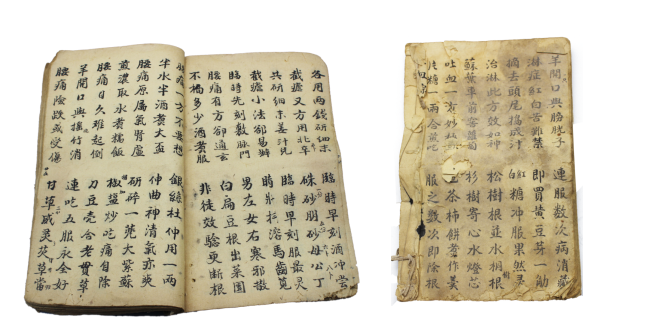
*本次藏品:清·古医书手抄本*
典藏尺寸:长:26cm宽:16cm
以上藏品相关信息请与:四川尚亿拍卖有限公司联系。
For information about the above collections, please contact: Sichuan Shangyi Auction Co., Ltd

猜你喜欢

南码头路街道“艺企HIGH国潮寻风消费月-颐养潮集”点燃健康活力之夜,掀起养
 107
内蒙消防工程产业平台面向全国正在进行火热招商!
189 祝贺微漫春天顺利入围2024中国高端定制入户门十大品牌
150 奋力谱写世界一流企业建设新篇章,扬子江药业集团召开2025年年终工作会议
73 新华保险北京分公司成功承保国家石油天然气管网集团公司2024-2027年人身保险统
126 如何让消费者买得放心?东宝床垫给出答案
174 四川浩冠科技:以技术创新驱动多领域智慧化升级
63 被低估的“隐形健康炸弹”!专家齐聚南京共探偏头痛防治新路
188 2025 AutoEEA 下一代汽车电子电气架构峰会—7月10日-11日上海见
143 【新奇特美食】西安惊现"空中月宫"!全国首家沉浸式美食太空舱惊艳亮相
91