

精品推荐 —— 吴佩孚书法
发布时间:2026-04-07 来源:网络 作者:adminf 【 字体:大 中 小 】
Premium Recommendation - Wu Peifu's Calligraphy
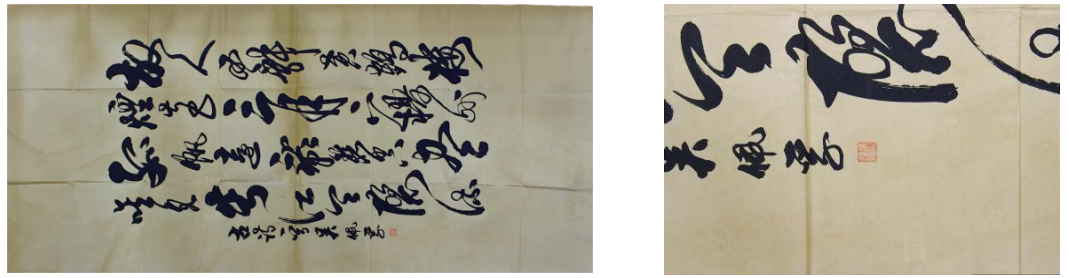
*本次藏品:吴佩孚书法*
典藏尺寸:长:135cm 宽62cm
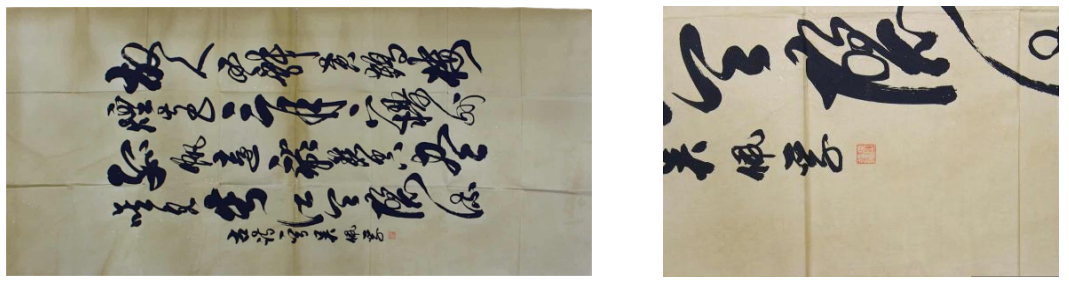
这幅吴佩孚草书作品,录唐代李白《黄鹤楼送孟浩然之广陵》,是民国军政巨擘与文人雅士双重身份的笔墨印证。作为北洋军阀中首屈一指的 “儒将”,吴佩孚(1874—1939)字子玉,山东蓬莱人,前清秀才出身,后成为直系军阀核心领袖,两度登上美国《时代周刊》封面,是民国史上极具争议却又无法绕开的人物。他一生戎马,却始终坚守 “上马提枪,下马挥毫” 的文人风骨,其书法熔铸颜体楷书的厚重与北碑的雄健,兼收篆隶笔意,形成 “笔有兵气、墨含文心” 的独特风貌。这幅草书立轴,以洒金仿古纸为底,墨色浓黑饱满,线条苍劲有力,款识 “吴佩孚” 与印章相得益彰,整体呈现出古朴庄重、气韵贯通的艺术格调。
This cursive calligraphy work by Wu Peifu records Li Bai's Tang Dynasty poem 'Farewell to Meng Haoran at Yellow Crane Tower, Bound for Guangling,' serving as a testament to his dual identity as a prominent military and political leader of the Republic of China and a refined literati. As the foremost 'Confucian general' among the Beiyang warlords, Wu Peifu (1874–1939), styled Ziyu, from Penglai, Shandong, started as a Qing dynasty scholar and later became a key leader of the Zhili clique, gracing the cover of Time magazine twice and becoming one of the most controversial yet unavoidable figures in Republic of China history. Though his life was spent in military campaigns, he consistently upheld the literati spirit of 'raising a spear on horseback, wielding a brush off it.' His calligraphy fuses the solidity of Yan-style regular script with the vigor of Northern stele script, also incorporating elements of seal script and clerical script, forming a unique style 'with the energy of a soldier in the brush and the literary sentiment in the ink.' This cursive hanging scroll is laid on gold-sprinkled antique-style paper, with ink that is thick and rich, and lines that are strong and vigorous. The inscription 'Wu Peifu' complements the seal, collectively presenting an artistic style that is both ancient and solemn, with a coherent and spirited aesthetic.
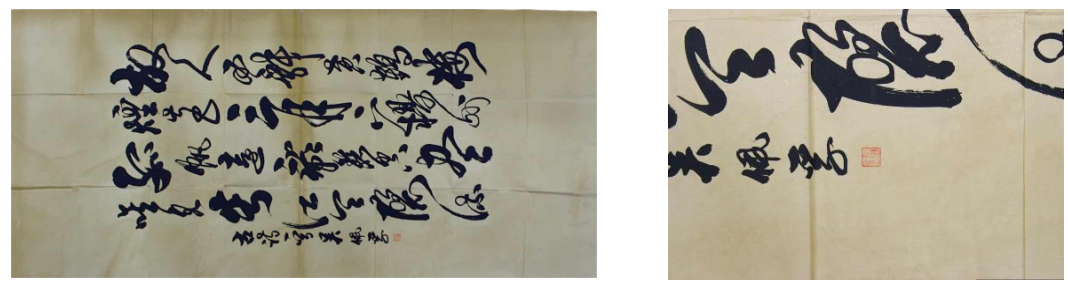
*本次藏品:吴佩孚书法*
典藏尺寸:长:135cm 宽62cm
作品所书为李白《黄鹤楼送孟浩然之广陵》:“故人西辞黄鹤楼,烟花三月下扬州。孤帆远影碧空尽,唯见长江天际流。” 这首七言绝句是唐代送别诗的巅峰之作,以极简的笔墨勾勒出送别友人的悠远意境。“黄鹤楼” 承载着江南千古文脉,“烟花三月” 绘尽春日盛景,“孤帆远影”“长江天际” 则将离别之情升华为对时空、对人生的哲思,既有文人雅士的洒脱,又暗含对前路的怅惘与期许。
吴佩孚选择此诗书写,绝非偶然。一方面,他出身山东蓬莱,自幼熟读唐诗,李白的浪漫主义与家国情怀深植其文化基因;另一方面,他一生历经仕途沉浮、战乱辗转,送别之意早已超越私人情谊,成为对时局、对人生聚散的隐喻。晚年的吴佩孚,退出政治舞台后拒任伪职,坚守民族气节,此时挥毫书写李白送别诗,既是对文人雅韵的追慕,也是对自身坚守初心的自勉。
The work contains Li Bai's poem 'Seeing Meng Haoran Off to Guangling at Yellow Crane Tower': 'My old friend bids farewell to the west at Yellow Crane Tower, in the third month, with mist and blossoms, he goes down to Yangzhou. The solitary sail is a distant shadow fading into the blue sky, only the Yangtze River flows to the horizon.' This seven-character quatrain represents the pinnacle of farewell poetry in the Tang Dynasty, using extremely simple brushstrokes to sketch the profound mood of parting friends. 'Yellow Crane Tower' carries the ancient literary lineage of Jiangnan, 'the mist and blossoms in the third month' depicts the full grandeur of spring, while 'the solitary sail's distant shadow' and 'the Yangtze flowing to the horizon' elevate the feeling of farewell into reflections on time, space, and life, combining the elegance of literati with the melancholy and hope for the road ahead.
Wu Peifu's choice to write this poem was by no means accidental. On one hand, he was born in Penglai, Shandong, and had read Tang poetry since childhood, with Li Bai's romanticism and patriotism deeply rooted in his cultural genes; on the other hand, having experienced the vicissitudes of officialdom and the turmoil of war throughout his life, the sentiment of farewell had long transcended personal friendship, becoming a metaphor for the state of affairs and the comings and goings of life. In his later years, after retiring from the political stage and refusing to accept positions in the puppet regime, firmly upholding his national integrity, at this time, writing Li Bai's farewell poem with the brush was both an admiration for literati elegance and a self-encouragement to remain true to his original aspiration.
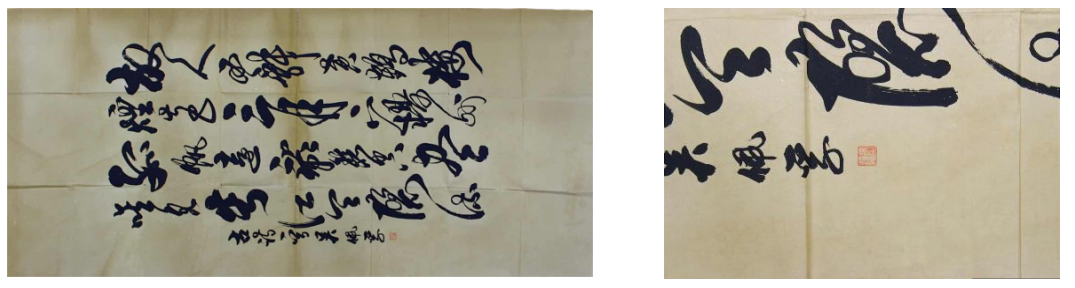
*本次藏品:吴佩孚书法*
典藏尺寸:长:135cm 宽62cm
这幅作品采用传统中式立轴装裱,形制规整,符合民国时期书画作品的主流装裱风格。立轴整体分为镶边、画心、轴头三部分:镶边选用浅棕色绫绢,纹理细腻,色泽温润,与洒金纸底形成柔和对比,既突出画心墨色,又增添古朴雅致的格调;画心为核心区域,四周留白适度,遵循 “计白当黑” 的传统书法章法,让墨色线条与空白形成呼应,营造出开阔的视觉空间;轴头为木质材质,色泽沉稳,与整体风格统一,体现了传统装裱的严谨与规范。
立轴装裱不仅是视觉呈现的保障,更是文化传承的载体。吴佩孚作为民国军政要员,其作品多以立轴形制传世,既便于悬挂陈设,又彰显庄重感,契合其 “孚威上将军” 的身份与文人雅士的审美追求。这幅立轴历经岁月留存,装裱虽有轻微磨损,但整体完好,无损作品的艺术价值与文化内涵。
This work is mounted in a traditional Chinese vertical scroll format, with a regular structure that aligns with the mainstream mounting style of calligraphy and paintings from the Republic of China period. The vertical scroll is generally divided into three parts: the border, the main painting, and the scroll head. The border is made of light brown silk with fine texture and a warm hue, creating a soft contrast with the sprinkled gold paper background, which not only highlights the ink of the main painting but also adds a sense of rustic elegance; the main painting is the core area, with appropriately reserved blank spaces around the edges, following the traditional calligraphy principle of 'white as black,' allowing the ink lines to interact with the void and creating a spacious visual effect; the scroll head is made of wood, with a steady color that harmonizes with the overall style, reflecting the rigor and standard of traditional mounting.
Vertical scroll mounting not only ensures a visual presentation but also serves as a carrier of cultural heritage. As a military and political figure of the Republic of China, Wu Peifu’s works were often preserved in the vertical scroll format, which is convenient for hanging and display while also conveying a sense of solemnity, aligning with his identity as 'General Fu Wei' and the aesthetic pursuits of a literati gentleman. This vertical scroll has endured the passage of time; although the mounting shows slight wear, it remains largely intact, without diminishing the artistic value and cultural connotation of the work.
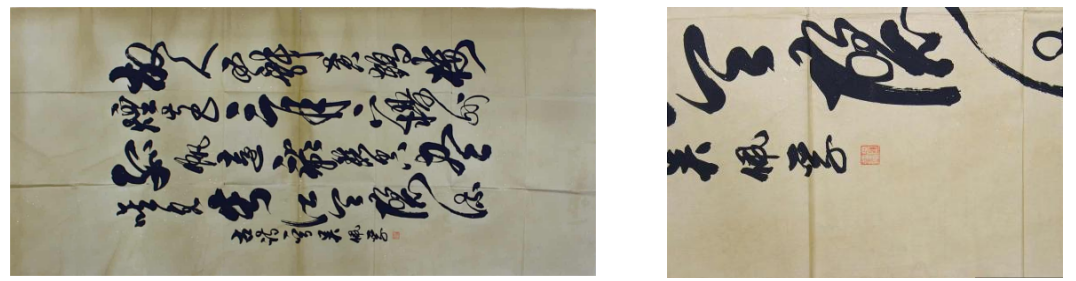
*本次藏品:吴佩孚书法*
典藏尺寸:长:135cm 宽62cm
这幅吴佩孚草书《黄鹤楼送孟浩然之广陵》,是笔墨与情感的融合,是艺术与历史的结晶,是个人与时代的共鸣。它以精湛的技法展现了传统书法的艺术魅力,以独特的风格诠释了儒将风骨,以真挚的情感传递了家国情怀,以厚重的历史承载了时代印记。
从墨色浓淡到线条粗细,从结字错落到位章法和谐,每一处细节都凝聚着吴佩孚的艺术匠心与精神追求;从李白诗境到吴佩孚心境,从民国乱世到民族精神,每一层内涵都展现了作品的文化价值与历史意义。这幅墨宝,不仅是一件书法艺术品,更是一面映照民国时代与人物精神的镜子,值得我们反复品读、深入研究、世代传承。
This cursive script by Wu Peifu, "Seeing Meng Haoran off to Guangling at Yellow Crane Tower," represents the fusion of brushwork and emotion, the crystallization of art and history, and the resonance between the individual and the era. It showcases the artistic charm of traditional calligraphy with exquisite technique, interprets the integrity and character of a Confucian general with a unique style, conveys patriotic sentiment with sincere emotion, and carries the imprint of the times through profound historical depth.
From variations in ink tone to the thickness of lines, from the staggered yet precise structure of characters to harmonious composition, every detail embodies Wu Peifu's artistic craftsmanship and spiritual pursuit; from the poetic realm of Li Bai to Wu Peifu's personal emotions, from the turbulent era of the Republic to the spirit of the nation, every layer of meaning reveals the cultural value and historical significance of the work. This treasured ink masterpiece is not merely a piece of calligraphic art, but also a mirror reflecting the Republic era and the spirit of its figures, meriting repeated appreciation, in-depth study, and generational inheritance.
*本次藏品:吴佩孚书法*
典藏尺寸:长:135cm 宽62cm
以上藏品相关信息请与:四川尚亿拍卖有限公司联系。
For information about the above collections, please contact: Sichuan Shangyi Auction Co., Ltd

猜你喜欢

《对话品牌》——从制造到智造的升级之路
 88
Mythical Beings:第八季即将回归,探索新的神话传承
108 长城汽车2030年将实现海外销售超百万辆
162 西安市临泽科技有限公司——以诚致远,助力动物药品原料贸易的领先企业
162 宾利控股(广东)助力国际模特大赛中国总决赛新闻发布会璀璨启幕
171 知产周·中佳全国行|郑州站:筑基“一带一路”知产防线
143 旅客突发疾病 众人及时救助
112 重塑汽配行业新生态:汽车配件资讯网与徐明成的互联网+创新探索!
60 全国第一!万师傅系家居安装维修平台全国规模第一
104 光绪银币丁未双龙一两
54 


精品推荐 —— 中国人民币贰分(一九五三年)中国人民币壹分(一九五三年)

精品推荐 —— 刺绣梅兰竹菊四条屏
精品推荐 —— 光绪银币丁未一两
精品推荐 —— 孙小头