

精品推荐 ——民国三年袁大头一组
发布时间:2026-04-13 来源:网络 作者:adminf 【 字体:大 中 小 】
Premium Collection Recommendation —— A Set of "Yuan Datou" Silver Dollars, 3rd Year of the Republic of China.
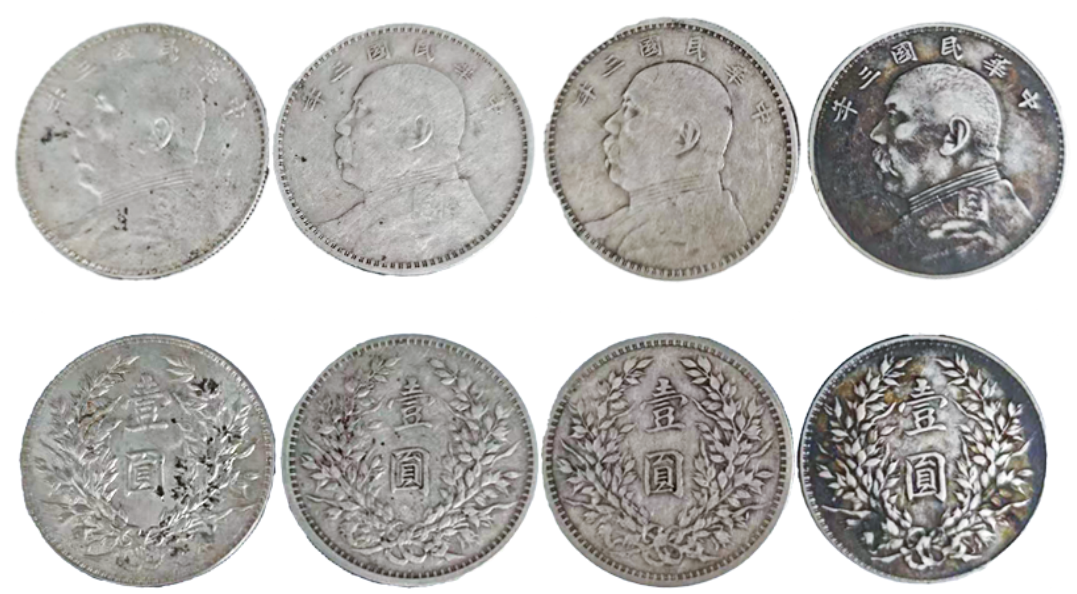
*本次藏品:民国三年袁大头一组*
典藏尺寸:三枚重:26.7g直径:39mm 一枚重:26.7g 直径:38.7mm
当四枚民国三年 “袁大头” 银元静静铺展在眼前,时光仿佛瞬间倒流回百年前的民国初年。这些承载着历史厚重感的银色钱币,每一枚都镌刻着时代的印记,每一道磨损都诉说着岁月的故事,它们不仅是近代中国币制改革的实物见证,更是无数藏家心中不可替代的收藏瑰宝,串联起一段波澜壮阔的近代金融史与社会变迁史。
袁大头:近代中国银元的 “标杆之作”
“袁大头”,正式名称为 “袁世凯像背嘉禾银币”,是民国初年北洋政府为统一币制、整顿金融而发行的法定货币。民国三年(1914 年),北洋政府颁布《国币条例》,规定以银为本位,由天津造币总厂及南京、广东、武昌等分厂铸造袁世凯像壹圆银币,因其正面镌刻袁世凯侧面像,背面铸嘉禾纹饰与 “壹圆” 字样,民间便俗称其为 “袁大头”。
此次展示的四枚,正是民国三年版袁大头的经典代表。从正面看,四枚钱币虽历经百年流转,呈现出截然不同的包浆与磨损状态:右上角与右下角两枚,袁世凯侧面像轮廓清晰,胡须、衣领纹路立体分明,“中华民国三年” 字样笔力遒劲,右下角一枚更是带着浓郁的老包浆,银面泛着温润的黑褐色氧化层,是岁月沉淀出的 “传世之美”;左上角与左下角两枚,虽因长期流通出现磨损,人像细节略有模糊,但整体形制规整,币面的历史沧桑感扑面而来,每一道划痕都是它在民间流转、见证市井烟火的印记。
从背面看,四枚钱币的嘉禾纹饰各有韵味:嘉禾枝叶舒展,穗粒饱满,环绕着中央的 “壹圆” 二字,既寓意着 “五谷丰登、国泰民安”,也彰显了货币的信用与权威。不同的流通痕迹,让每一枚都成为独一无二的 “历史孤品”:有的币面光洁,仅存轻微氧化,似是被妥善收藏的传世品;有的布满流通磨损,带着烟火气,是曾在市井间完成无数交易的 “实用货币”;有的包浆厚重,色泽深沉,是历经百年沉淀的 “时光印记”。
As these four "Yuan Datou" silver dollars from the 3rd Year of the Republic of China lie spread out before us, time seems to flow back instantly to the early years of the Republic of China a century ago. These silver coins, heavy with the weight of history, bear the imprint of an era on every surface, and every scratch tells a story of the passage of time. They are not only tangible witnesses to China's modern currency reform, but also irreplaceable treasures in the hearts of countless collectors, weaving together a magnificent chapter in modern Chinese financial and social history.
Yuan Datou: The Benchmark Silver Dollar of Modern China
Officially known as the "Yuan Shikai Portrait Jiahe Reverse Silver Dollar", "Yuan Datou" is the legal tender issued by the Beiyang Government in the early Republic of China to unify the currency system and rectify the financial order. In 1914 (the 3rd Year of the Republic of China), the Beiyang Government promulgated the National Currency Regulations, establishing a silver standard and authorizing the Tianjin General Mint, as well as branch mints in Nanjing, Guangdong, Wuchang and other cities, to strike one-yuan silver coins bearing the portrait of Yuan Shikai. With Yuan Shikai's profile engraved on the obverse and Jiahe (grain stalk) patterns alongside the characters "壹圆" (One Yuan) on the reverse, these coins became popularly known among the people as "Yuan Datou".
The four coins presented here are classic examples of the 3rd Year of the Republic of China "Yuan Datou" issue. Viewed from the obverse, after a century of circulation, the four coins exhibit distinctly different patina and wear: the two coins at the top-right and bottom-right feature a sharply defined profile of Yuan Shikai, with crisp, raised details of his mustache and collar, and the characters "中华民国三年" (3rd Year of the Republic of China) struck with powerful, bold strokes. The bottom-right coin, in particular, bears a rich, aged patina, with a warm, dark brown oxidation layer across its silver surface—a timeless beauty forged by centuries of history. The two coins at the top-left and bottom-left, while showing signs of wear from long-term circulation with slightly softened portrait details, remain perfectly formed, exuding an overwhelming sense of historical vicissitudes. Every scratch is a mark of their journey through the hands of the people, bearing witness to the daily life and commerce of old China.
Viewed from the reverse, the Jiahe grain patterns on each of the four coins possess their own unique charm: the stalks of grain spread gracefully, with plump ears of rice encircling the central characters "壹圆" (One Yuan). This design not only symbolizes "a bountiful harvest, a prosperous nation and a peaceful people", but also embodies the credit and authority of the currency. The varying traces of circulation make each coin a one-of-a-kind historical artifact: some remain bright with only minor oxidation, suggesting they were carefully preserved as heirlooms; others are heavily worn from use, brimming with the warmth of daily life, having served as a practical medium of exchange in countless market transactions; still others are coated in a thick, deep patina, a timeless imprint of a century of history.
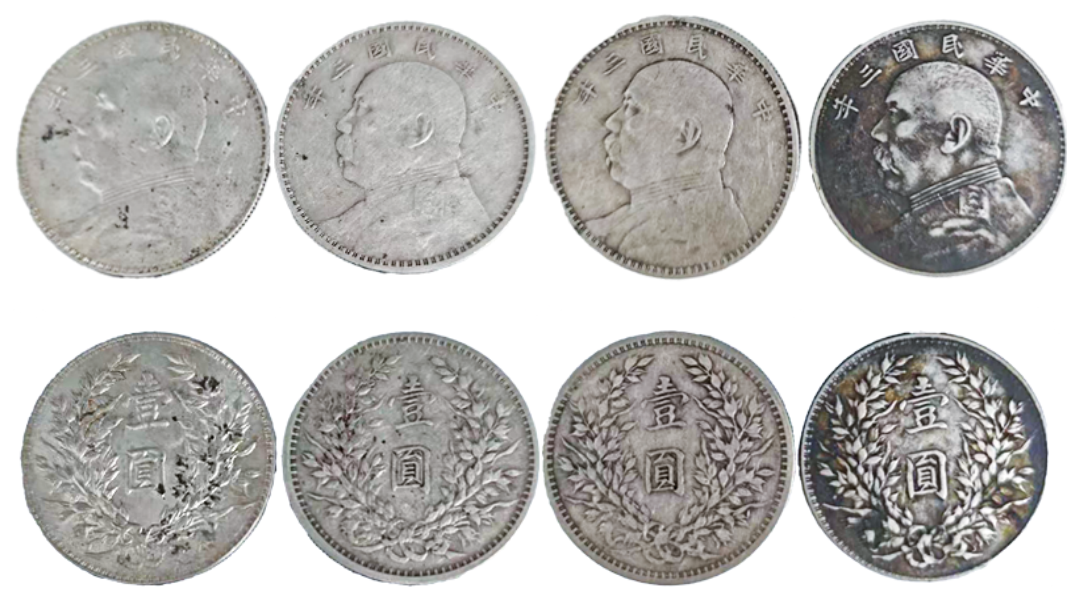
*本次藏品:民国三年袁大头一组*
典藏尺寸:三枚重:26.7g直径:39mm 一枚重:26.7g 直径:38.7mm
袁大头的诞生是近代中国币制混乱背景下的必然产物。清末民初,中国货币体系极度混乱,外国银元、本国旧银钱、铜元并行流通,成色、重量参差不齐,严重阻碍了商品经济发展与国家财政统一。北洋政府推出袁大头,正是为了终结这一乱象:其成色统一为含银量 89%,重量标准为库平七钱二分(约 26.6 克),形制规整、信用稳定,迅速成为全国通用的主流货币,甚至在偏远地区、边疆少数民族地区都广泛流通,成为近代中国流通最广、影响力最大的银元品种。
从民国三年到抗战时期,袁大头始终是中国市场的 “硬通货”,不仅在国内流通,甚至在东南亚、日本等地区也被广泛认可,成为近代中国货币的 “国际名片”。它见证了北洋政府的兴衰、民国的动荡,也见证了中国从封建帝制向近代社会转型的艰难历程:一枚袁大头,曾是普通百姓的养家之资,是商人的交易媒介,是军阀的军饷来源,更是无数人安身立命的财富象征。
此次展示的四枚民国三年袁大头,更是藏着不同的历史密码:民国三年版是袁大头的 “初铸版”,也是最具代表性的版本,相较于八年、九年、十年版,三年版铸造量最大、流通最广,是近代中国银元的 “标杆”。四枚钱币虽同为三年版,却因铸造分厂、流通环境、保存状态的不同,呈现出各异的风貌:有的是天津总厂铸造的标准版,工艺精湛、细节饱满;有的是地方分厂铸造的流通版,带着地域铸造的细微特征;有的是传世品,包浆温润;有的是出土品,银面带着岁月的氧化痕迹。每一枚,都是近代中国金融史的鲜活注脚。
在如今的收藏市场中,袁大头始终是银元收藏的 “基石品种”,而民国三年版更是藏家入门与进阶的核心标的。相较于其他版本,三年版袁大头存世量适中,既有普通流通品可供大众收藏,也有签字版、O 版、三角圆等稀有版别成为藏家追逐的珍品,是兼具收藏价值与历史价值的 “国民银元”。
对于藏家而言,收藏袁大头,收藏的从来不止是白银的价值,更是一段历史、一份情怀。当你指尖抚过这些百年银元,触摸到的是袁世凯像的轮廓、嘉禾纹的肌理,是民国初年的风云变幻,是普通百姓的市井生活,是中国近代化进程中的金融印记。四枚袁大头,四样风貌,却共同承载着同一个历史坐标:它们是近代中国币制统一的见证者,是百年中国社会变迁的亲历者,更是中华货币文化传承的载体。每一枚袁大头,都是一段可触摸的历史,一份可传承的财富,一种刻在民族记忆里的文化符号。
四枚民国三年袁大头,四幅百年历史的缩影。它们从民国初年的造币厂走出,在市井间流转,在岁月中沉淀,最终来到我们面前,带着百年的银辉与故事。它们是近代中国金融变革的实物见证,是中华货币文化的璀璨瑰宝,更是无数藏家心中的情怀寄托。袁大头的价值,早已不止于白银的价格,更在于它承载的历史、文化与情怀,在于它让我们能以一枚钱币为媒,穿越百年时光,触摸近代中国的脉搏。每一枚袁大头,都是时光的礼物,是历史的馈赠,是值得我们永远珍藏与传承的文化瑰宝。
The emergence of the Yuan Datou was an inevitable outcome amid the chaotic currency system of modern China. In the late Qing and early Republican eras, China’s monetary system was in extreme disarray. Foreign silver dollars, old domestic silver coins, and copper coins circulated side by side, with inconsistent fineness and weight, severely hindering the development of the commodity economy and the unification of national finance. The Beiyang Government introduced the Yuan Datou precisely to end this chaos: it had a unified silver content of 89%, a standard weight of 7.2 taels in Kuping scale (approximately 26.6 grams), a regular form, and stable credibility. It quickly became the mainstream currency nationwide, circulating widely even in remote areas and ethnic minority border regions, making it the most extensively circulated and influential silver dollar in modern China.
From the third year of the Republic of China to the War of Resistance against Japanese Aggression, the Yuan Datou remained a "hard currency" in the Chinese market. It was not only used domestically but also widely recognized in regions such as Southeast Asia and Japan, becoming an "international calling card" for modern Chinese currency. It witnessed the rise and fall of the Beiyang Government, the turbulence of the Republican period, and the arduous transformation of China from a feudal monarchy to a modern society. A single Yuan Datou once supported ordinary families, served as a medium of exchange for merchants, funded military pay for warlords, and stood as a symbol of security and wealth for countless people.
The four third-year Yuan Datou coins on display carry distinct historical codes. The third-year version was the first minted and most representative issue of the Yuan Datou series. Compared with the eighth, ninth, and tenth-year versions, it had the largest mintage and widest circulation, serving as the benchmark for modern Chinese silver dollars. Although all four coins belong to the third-year issue, they display varied appearances due to differences in mint branches, circulation environments, and preservation conditions. Some are standard versions struck at the Tianjin General Mint, featuring exquisite craftsmanship and full details; others are circulation pieces from local branch mints, bearing subtle regional casting characteristics. Some are heirloom coins with gentle patina; others are unearthed pieces showing traces of age-old oxidation on their silver surfaces. Each coin is a vivid footnote to modern China’s financial history.
In today’s collectibles market, the Yuan Datou remains a cornerstone of silver dollar collecting, with the third-year version as the core entry-level and advanced target for collectors. Compared with other editions, third-year Yuan Datou coins exist in moderate quantities. There are common circulation pieces for general collectors, as well as rare varieties such as the signature edition, O-mark edition, and triangular circle edition, which are highly sought after by enthusiasts. It is truly a "national silver dollar" combining both collectible and historical value.
For collectors, acquiring a Yuan Datou means far more than owning silver. It means possessing a piece of history and a heartfelt sentiment. Running your fingers over these century-old silver dollars, you feel the contours of Yuan Shikai’s portrait and the texture of the Jiahe patterns, sensing the turbulent changes of the early Republican era, the daily life of ordinary people, and the financial imprints of China’s modernization. Four Yuan Datou coins, four distinct appearances, yet they share the same historical position: they are witnesses to the unification of modern China’s currency system, participants in a century of social change, and carriers of China’s monetary cultural heritage. Each Yuan Datou is tangible history, inheritable wealth, and a cultural symbol engraved in national memory.
These four third-year Yuan Datou coins are four miniature portraits of a century of history. Issued from mints in the early Republican era, they circulated among the people, settled through time, and finally arrived before us, carrying a century of silver radiance and stories. They are physical witnesses to modern China’s financial reforms, brilliant treasures of Chinese monetary culture, and emotional anchors in the hearts of countless collectors. The value of the Yuan Datou extends far beyond the price of silver. It lies in the history, culture, and sentiment it embodies, allowing us to travel through a hundred years of time and touch the pulse of modern China through a single coin. Each Yuan Datou is a gift of time, a legacy of history, and a cultural treasure worthy of eternal preservation and inheritance.
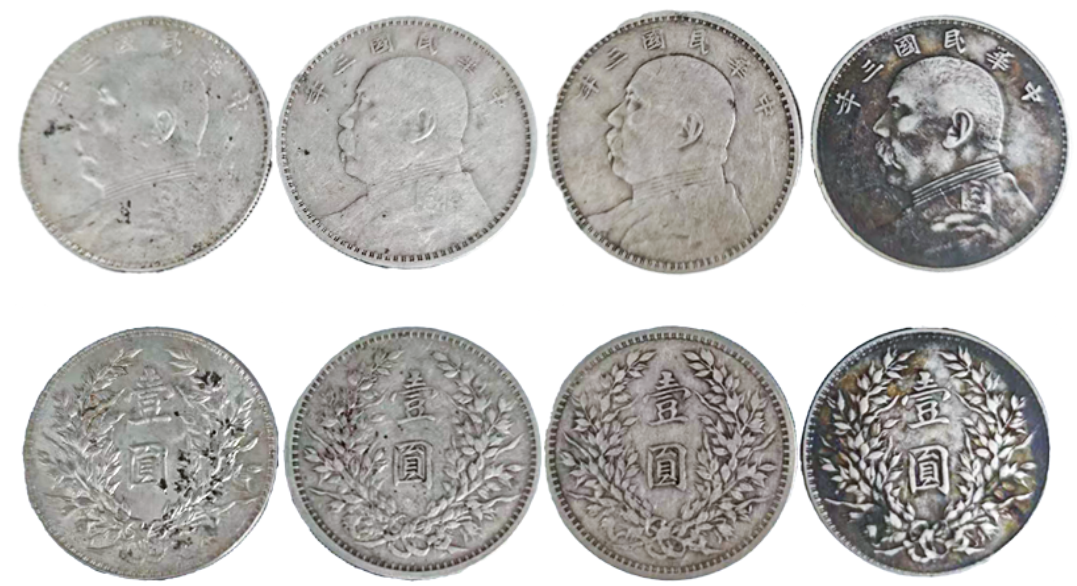
*本次藏品:民国三年袁大头一组*
典藏尺寸:三枚重:26.7g直径:39mm 一枚重:26.7g 直径:38.7mm
以上藏品相关信息请与四川极蕴拍卖有限公司联系,我们将为您提供一对一专业服务。
For more information about this collection, please contact Sichuan Jiyun Auction Co., Ltd. We will provide you with one-on-one professional service.

猜你喜欢

二郎庙镇扎实开展“人人持证 技能河南”培训
 69
别克至境E7等多款重磅新能源车型 别克品牌2026新车大爆料
144 引才聚智 筑巢赋能:沙坡头区文旅 迈入“主理人时代”
163 美美与共 智见未来 柏厨家居“寻美之旅·超越所见——智慧高定全国壹号店设
92 【2025五一劳动节特别报道】著名易学家张醒植中医发展之路复兴发展医道
179 AI金融创造财富、改善生活,AMCAP助力转型新机遇
73 传承典范! 2024中医药文化传承示范项目!
75 上海得莱图亮信息咨询有限公司:网络信息咨询行业的专业力量
171 90版水印倒置100元人民币(错版)
122 御光倍护 赋活修颜 THE GINZA御银座 防护隔离系列 焕新上市
100 


精品推荐 —— 中华民国三年袁大头壹元

精品推荐 —— 大清银币
以专业筑形象,用匠心赴使命——陕西达兰贸易有限公司,医疗品牌成长的全链

以专业筑形象,用匠心赴使命——陕西达兰贸易有限公司,医疗品牌成长的全链