

霁蓝釉暗刻留白龙纹梅瓶
发布时间:2026-06-03 来源:网络 作者:admin 【 字体:大 中 小 】
在中国陶瓷艺术的千年长河中,霁蓝釉暗刻留白龙纹梅瓶无疑是一抹令人心醉的深邃。它不似青花那般清丽,也不似粉彩那般浓艳,却以一种近乎偏执的蓝白对比,将元代的雄浑、匠人的巧思与皇家的威严凝于一身,成为中国陶瓷史上一座难以逾越的高峰。
In the thousand-year history of Chinese ceramic art, the Jilan glaze plum vase with undercut reserved white dragon pattern is undoubtedly a soul-stirring depth. Unlike the elegant blue and white porcelain or the rich famille rose, it embodies the grandeur of the Yuan Dynasty, the ingenuity of craftsmen, and the majesty of the imperial family through an almost obsessive contrast of blue and white, standing as an insurmountable peak in China's ceramic history.
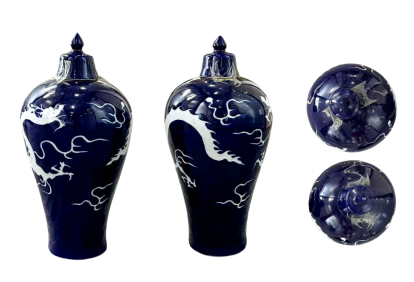
这件梅瓶的造型,是元代梅瓶制式的典范。小口短颈,丰肩收腹,线条从肩部缓缓向下收束,至圈足处微微外撇,整个器型如一位体态丰腴、亭亭玉立的贵妇,优雅而不失端庄。梅瓶最早出现于唐代,本为盛酒器,至宋元时期,其功能逐渐向陈设瓷过渡,造型也愈发挺拔秀丽。元代梅瓶的肩腹比例尤为讲究,丰肩与瘦底形成的张力,赋予了器物向上的动势,仿佛蕴藏着一股蓄势待发的力量,这正是游牧民族尚武精神在器物上的投射。
The shape of this plum vase is a model of the Yuan Dynasty plum vase form. It features a small mouth, short neck, plump shoulders, and a tapering abdomen, with lines gently narrowing from the shoulders to the slightly flared foot. The entire vessel resembles a graceful and dignified noble lady. Plum vases first appeared in the Tang Dynasty as wine containers, gradually evolving into decorative porcelain in the Song and Yuan dynasties, with their shapes becoming more upright and elegant. The proportion of shoulders to abdomen in Yuan Dynasty plum vases is particularly exquisite; the tension between plump shoulders and narrow base gives the vessel an upward momentum, as if containing pent-up power—a reflection of the martial spirit of the nomadic people on the vessel.
而最令人惊叹的,莫过于它的釉色与纹饰。通体施霁蓝釉,釉色深沉如深海,匀净似晴空,在光线下泛着宝石般的幽光。这种以钴为呈色剂的高温蓝釉,在元代景德镇被成功烧制,是制瓷技术的一次重大突破。不同于后世的霁蓝,元代霁蓝釉的发色更为浓郁厚重,带着一种未经雕琢的苍劲之气,完美契合了那个时代的审美。
What is most astonishing, however, is its glaze color and decoration. The entire body is covered with Jilan glaze, deep as the ocean and clear as the sky, shimmering with a gem-like luster under light. This high-temperature blue glaze, colored with cobalt, was successfully fired in Jingdezhen during the Yuan Dynasty, marking a major breakthrough in porcelain technology. Unlike later Jilan glazes, the Yuan Dynasty version has a richer, thicker color with an unrefined ruggedness that perfectly aligns with the aesthetic of the era.
在这一片如夜空般深邃的蓝釉之上,一条白龙破云而出,矫若游龙,身姿矫健。这并非简单的绘画,而是一套极为复杂的 “暗刻留白” 工艺。工匠需先在成型的胎体上,以细如发丝的刻刀,精心勾勒出龙纹与云纹的轮廓,再在龙纹区域施上一层青白釉,其余部分则通体厚施霁蓝釉。最后,器物需入窑经一次高温烧成,两种不同的釉色在窑火中同时熔融,最终形成蓝地白花的强烈对比。这种工艺的难度极高,稍有不慎,两种釉色便会流淌交融,功亏一篑。因此,每一件成功的作品,都是窑火与匠人的双重馈赠。
Against the deep blue glaze like a night sky, a white dragon emerges from the clouds, agile and powerful. This is not simple painting, but an extremely complex "undercut reserved white" technique. Craftsmen first meticulously outline the dragon and cloud patterns on the formed body with a hair-thin knife, then apply a layer of bluish-white glaze to the dragon area, while thickly applying Jilan glaze to the rest. Finally, the vessel is fired at high temperature once; the two different glazes melt simultaneously in the kiln, forming a striking contrast of white flowers on a blue background. This process is extremely difficult—any slight mistake could cause the two glazes to flow and blend, ruining the work. Thus, every successful piece is a double gift from the kiln fire and the craftsman.
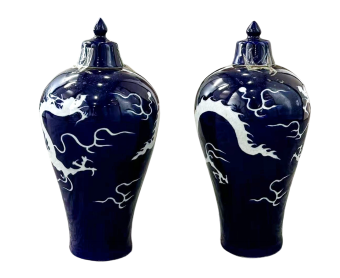
龙,是中国文化中至高无上的象征,代表着皇权、力量与祥瑞。瓶上的白龙,昂首挺胸,三爪有力,须发张扬,穿行于火焰与云气之间,充满了动感与张力。龙身的青白釉,在霁蓝的映衬下,显得格外莹润洁白,仿佛是月光凝结而成,更增添了几分神秘与圣洁。龙首的双目,巧妙地利用了蓝釉的底色,以蓝点睛,使龙目炯炯有神,呼之欲出。这种细节上的巧思,体现了元代工匠极高的艺术造诣与审美情趣。
The dragon is the supreme symbol in Chinese culture, representing imperial power, strength, and auspiciousness. The white dragon on the vase holds its head high, with powerful three claws, flaring whiskers, moving dynamically through flames and clouds. The bluish-white glaze on the dragon's body appears exceptionally glossy and white against the Jilan glaze, as if condensed from moonlight, adding mystery and sanctity. The dragon's eyes cleverly use the blue glaze background, with blue as the pupils, making them vivid and lifelike. Such detailed ingenuity reflects the Yuan craftsmen's superb artistic attainments and aesthetic taste.
霁蓝釉白龙纹梅瓶,存世极为稀少,已知完整器仅数件,分别收藏于国内外顶级博物馆中,每一件都被视为国宝级文物,禁止出境展览。它们不仅是元代制瓷业巅峰的见证,更是那个多元文化交融时代的缩影。元代,一个由游牧民族建立的王朝,却意外地将中国的陶瓷艺术推向了新的高度。蒙古贵族对蓝白两色的偏爱,催生了霁蓝釉与青花的诞生;而景德镇浮梁瓷局的设立,则为这些皇家瓷器的烧造提供了制度保障。
The Jilan glaze plum vase with white dragon pattern is extremely rare; only a few complete examples are known, housed in top museums at home and abroad, each regarded as a national treasure and prohibited from being exhibited abroad. They are not only witnesses to the peak of Yuan Dynasty porcelain making but also microcosms of that era of multicultural integration. The Yuan Dynasty, a dynasty established by nomadic people, unexpectedly pushed Chinese ceramic art to new heights. The Mongolian nobility's preference for blue and white gave birth to Jilan glaze and blue and white porcelain, while the establishment of the Fuliang Porcelain Bureau in Jingdezhen provided institutional guarantee for the firing of these imperial porcelains.
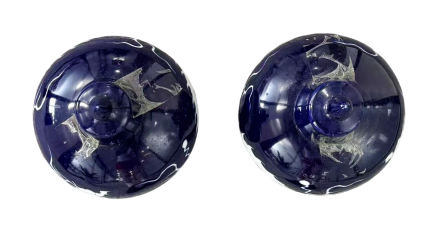
当我们凝视这件梅瓶时,看到的不仅仅是一件精美的瓷器,更是一个时代的精神。那深沉的霁蓝,是草原的夜空,是海洋的深邃;那矫健的白龙,是帝王的雄心,是民族的图腾。蓝与白,动与静,刚与柔,在这件器物上完美地交融,构成了一首无声的史诗,向我们诉说着七百多年前,那个波澜壮阔的时代。它历经战火、迁徙与岁月的洗礼,依然完好如初,釉色如新,这本身就是一个奇迹,也正是它之所以成为 “盛世瑰宝” 的原因所在。
When we gaze at this plum vase, we see not just an exquisite porcelain, but the spirit of an era. The deep Jilan blue is the night sky of the grassland, the depth of the ocean; the agile white dragon is the emperor's ambition, the totem of the nation. Blue and white, movement and stillness, strength and softness blend perfectly on this vessel, forming a silent epic that tells us of that magnificent era over years ago. Having withstood wars, migrations, and the passage of time, it remains intact with glaze as bright as new—a miracle in itself, and precisely why it is hailed as a "treasure of the prosperous age."

猜你喜欢

吴冠中《江南水乡》
 180
引领科技未来,助力产业发展——成都远川科技有限公司
82 荣耀登场,与您共筑商业新生态——荣耀.商城平台,诚邀实力伙伴入驻启航!
163 邮储银行眉山市分行多维度开展2025年“金融教育宣传周”活动
112 从欧洲到中国:DRL®角膜塑形镜的全球创新与近视防控实践
82 当医美机构拓客盯上大学生,现存医美相关企业超18.7万家
156 曹操出行加持耀出行:解析高端出行服务的“四季酒店”壁垒
60 易趣CBB蝶变之夜群星演唱会 唱响数字经济最强音
156 TCO优势构筑核心壁垒,曹操出行定制车战略驱动良性循环
120 深耕数字化 全场景赋能商业升级 —— 上海鸣德科技引领系统集成新征程
188