

精品推荐 —— 乾隆钧釉窑变象鼻双耳尊
发布时间:2026-08-04 来源:网络 作者:adminf 【 字体:大 中 小 】
Premium Recommendation — Qianlong Jun Glaze Flambé Elephant-Handled Zun Vase
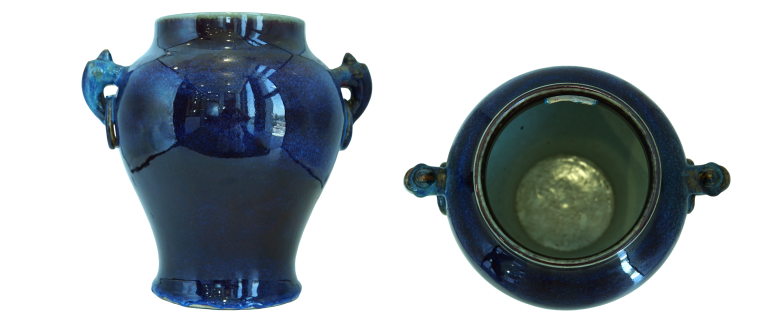
* 本次藏品:乾隆钧釉窑变象鼻双耳尊*
典藏尺寸:上口径:15.8cm 高:28.5cm
钧瓷素有 “入窑一色,出窑万彩” 的传世美誉,自宋代起便位列五大名窑,是历代皇室追捧的珍稀御瓷品类。发展至清乾隆一朝,宫廷造办处复刻改良宋代钧窑工艺,创烧出窑变釉陈设重器,兼具宋钧窑变的奇幻釉色与清代官窑规整大气的器型,存世精品寥寥无几,是官窑瓷器收藏赛道公认的高端硬通货。这件典藏御瓷珍品 —— 清乾隆钧釉窑变象鼻双耳尊,实测上口径 15.8cm,通高 28.5cm,器型端庄雄浑,窑变釉色绮丽梦幻,象鼻活环双耳工艺精巧,内外釉层完整无瑕,集御制工艺、奇幻窑变、吉祥礼制寓意于一身。
钧窑诞生于北宋河南禹州,凭借独一无二的铜红窑变釉打破古代瓷器单色釉局限,宋代宫廷设立官窑专门烧制,专供皇家礼佛、陈设使用,自古流传 “黄金有价钧无价” 的收藏俗语。宋代钧瓷以小型花盆、洗、奁为主,器型小巧简约;元代钧瓷工艺衰退,釉色浑浊单一;明代钧窑烧制规模萎缩,精品存量稀少;直至清代乾隆时期,乾隆皇帝极度痴迷宋钧窑变之美,下旨景德镇御窑厂、河南钧州官窑双轨复刻宋代钧釉工艺,投入大量人力物力改良釉料配方、精准把控窑火温度,打造出制式宏大、窑变层次丰富的宫廷陈设重器,将钧瓷烧制技艺推至封建王朝最后的工艺巅峰。
乾隆朝钧釉窑变器区别于宋钧:宋代钧瓷釉面流淌随性,器型简约朴素;乾隆官窑钧釉在复刻宋钧窑变肌理的基础上,融入清代宫廷审美,器型雄浑饱满、对称规整,釉色蓝紫交融、流霞层次可控,同时大量运用象耳、龙耳、鹿耳等礼制化仿生双耳,赋予瓷器吉祥寓意,既是陈设赏器,也是宫廷礼仪重器。其中象鼻双耳尊属于乾隆官窑高端陈设品类,专供皇宫大殿、御花园、王爷府邸陈列,民间极少流通,历经两百余年战火动荡,完整保存、无冲无磕、窑变完好的传世器存世量极度稀缺,是官窑单色釉收藏中炙手可热的细分珍品。
这件清乾隆钧釉窑变象鼻双耳尊,实测上口径 15.8cm,通高 28.5cm,整体器型遵循清代宫廷陈设器黄金比例,线条雄浑流畅,尽显皇家大气格局。瓶口外撇,口沿微微收束,短束颈向内收拢,丰肩阔腹,器腹圆润饱满,自肩部向下缓缓收敛,底部外撇圈足,稳重大气,放置于厅堂、展馆极具视觉气场,尺寸适配现代中式大宅、私人收藏馆陈列,不会因体量过大难以收纳,也不会因小巧失去官窑重器的磅礴气韵。
器物肩部对称塑造一对立体象鼻活环双耳,是整件藏品的礼制点睛之笔。象首贴合器肩,象鼻自然向下卷曲,鼻端套铸可活动空心圆环,仿生雕刻细腻写实,象首眉眼、象牙、皮肤褶皱刻画清晰立体,无敷衍简化的粗劣痕迹。在清代宫廷礼制文化中,“象” 谐音 “祥”,自古有 “太平有象” 的至高吉祥寓意,象征国运昌盛、天下太平;双象对称相守,寓意万象更新、吉祥成双;活环双耳寓意环环相扣、福运连绵、家业代代传承。乾隆皇帝偏爱象纹瓷器,每逢万寿、节庆,宫廷大殿必陈设象耳礼器,祈求江山稳固、福寿安康,因此象鼻尊不只是单纯赏瓷,更是承载皇家祈福文化的礼制重器,文化底蕴远超普通单色釉瓶罐。
整件器物胎骨为乾隆官窑标准高岭土,胎质细密厚重,胎釉结合紧实,无脱釉、开片崩裂隐患;内外分施两层钧窑窑变釉,外釉绮丽绚烂,内釉温润素净,严格遵循清代官窑 “外繁内简” 的烧制规范,是标准宫廷御用陈设器制式,绝非民间窑厂仿制的民用粗瓷。
Jun porcelain has long been celebrated by the timeless adage, “One color into the kiln, ten thousand hues out of it”. Ranking among China’s Five Great Imperial Kilns since the Song Dynasty, it remained a rare imperial porcelain treasured by royal houses across successive dynasties. By the Qianlong reign of the Qing Dynasty, the Imperial Workshop replicated and refined Song Jun kiln techniques to create monumental display wares with flambé glaze. These pieces blend the magical flowing glaze effects of Song Jun porcelain with the stately, symmetrical silhouettes characteristic of Qing imperial kilns. Surviving fine examples are extremely scarce, universally recognized as high-tier hard assets within imperial porcelain collecting circles. This imperial treasure, the Qing Qianlong Jun Glaze Flambé Elephant-Trunk Double-Ear Zun, measures 15.8 cm across the upper mouth and 28.5 cm in overall height. It boasts a dignified, powerful silhouette, dreamy iridescent flambé glaze, exquisitely crafted movable rings set within elephant-trunk handles, and flawless inner and outer glaze layers. It unites imperial craftsmanship, one-of-a-kind kiln-transformed coloration, and auspicious ritual symbolism in a single vessel.
The Jun Kiln originated in Yuzhou, Henan Province, during the Northern Song Dynasty. Its groundbreaking copper-red flambé glaze broke the limitations of monochrome porcelain prevalent in ancient China. The Song imperial court established a dedicated Jun imperial kiln exclusively for royal worship and interior display, giving rise to the enduring collector’s maxim: “Gold has a price, but Jun porcelain is priceless”. Song Jun wares mostly took the form of small flower pots, brush washers and shallow basins with compact, unadorned shapes. Jun craftsmanship declined in the Yuan Dynasty, producing turbid, monotonous glazes, while kiln output shrank drastically in the Ming Dynasty, leaving very few fine specimens extant. It was not until the Qianlong reign that the emperor, utterly captivated by the allure of Song Jun flambé glaze, issued an imperial edict ordering dual replication programs at both the Jingdezhen Imperial Kiln and the Junzhou official kiln in Henan. Vast human and material resources were invested to reform glaze formulas and precisely regulate kiln firing temperatures, yielding grand-scale court display vessels with richly layered flambé glazes and elevating Jun ceramic craftsmanship to its ultimate peak under China’s feudal dynasties.
Qianlong-era Jun flambé wares differ distinctly from their Song predecessors. Song Jun glazes flowed freely and unpredictably, paired with plain, minimalist vessel shapes. By contrast, Qianlong imperial Jun porcelain retains the natural texture of Song flambé glaze while integrating Qing imperial aesthetic tastes: silhouettes are robust, full and perfectly symmetrical, glazes blend deep cobalt blue and violet purple with controlled, layered streaks of cloud-like coloration. Craftsmen widely adopted ritualized sculpted handles such as elephant heads, dragon heads and deer heads to infuse each vessel with auspicious meaning, rendering them both ornamental display pieces and formal court ritual wares. Among these, the elephant-trunk double-ear zun occupied the highest tier of Qianlong imperial display wares, reserved exclusively for the grand halls, imperial gardens and princely mansions of the palace, rarely circulating among common folk. After over two centuries of warfare and social upheaval, intact surviving specimens free from cracks, chips or glaze damage are extraordinarily rare, highly sought-after niche treasures within monochrome imperial porcelain collecting.
This Qing Qianlong Jun Glaze Flambé Elephant-Trunk Double-Ear Zun has a measured mouth diameter of 15.8 cm and overall height of 28.5 cm. Its proportions follow the golden standard for Qing court display vessels, with powerful, fluid contours embodying regal grandeur. The mouth flares outward with a gently constricted rim, tapering inward to a short narrow neck before expanding into broad, full shoulders and a plump rounded belly that tapers gradually down to a flared circular foot ring. Stable and imposing, it commands striking visual presence when displayed in halls or galleries. Its moderate dimensions suit both modern Chinese luxury residences and private collection museums, avoiding the unwieldy bulk of oversized monumental wares and the lack of gravitas of miniature ornaments.
A pair of three-dimensional sculpted elephant-trunk handles symmetrically adorns the vessel’s shoulders, serving as the ritualistic focal point of the entire artifact. Elephant heads attach seamlessly to the shoulder, their trunks curling naturally downward with freely movable hollow rings cast onto the tip of each trunk. The lifelike sculpting captures fine detail including facial features, tusks and skin folds without crude oversimplification. Within Qing court ritual culture, the Chinese character for “elephant” is a homophone for “auspiciousness”, giving rise to the supreme auspicious motif “Peace under the Elephants”, symbolizing prosperous governance and universal peace. The paired symmetric elephants embody renewal and double blessings, while the interlocking movable rings signify unbroken fortune and generational prosperity for the family. The Qianlong Emperor held elephant-motif porcelain in high regard; elephant-handled ritual vessels were mandatory displays in palace halls for imperial birthdays and festivals, praying for stable reigns and enduring longevity. Far more than a decorative ornament, this elephant-trunk zun is a ritual vessel embodying royal prayers and cultural heritage, bearing far deeper cultural connotations than ordinary monochrome vases and jars.
The vessel’s body is crafted from standard imperial Qianlong kaolin clay, dense and substantial with an airtight bond between ceramic body and glaze, eliminating risks of glaze shedding or crazing cracks. Two distinct layers of Jun flambé glaze are applied internally and externally: the exterior boasts rich, dramatic color streaks, while the interior bears a subdued, uniform pale glaze. This strictly adheres to the Qing imperial kiln production standard of “ornate exterior, restrained interior”, confirming its status as an exclusive palace display vessel, distinct from crude civilian imitations fired at folk kilns.
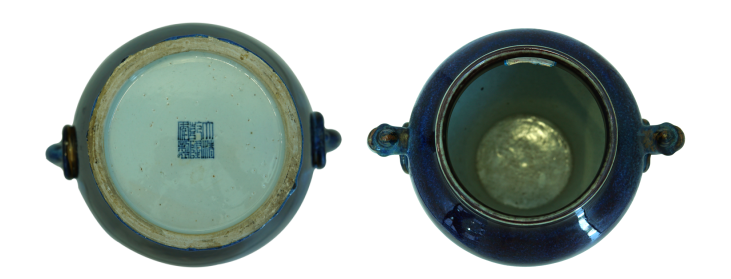
* 本次藏品:乾隆钧釉窑变象鼻双耳尊*
典藏尺寸:上口径:15.8cm 高:28.5cm
乾隆官窑钧窑变釉是古代单色釉工艺的天花板,这件象鼻尊完整留存乾隆成熟钧釉烧制的全部工艺特征,釉色层次、流淌肌理极具研究与观赏价值。 钧釉核心奥秘在于釉料中添加微量氧化铜金属着色剂,窑内高温还原焰烧制时,铜元素随釉水自然流淌交融,随机形成蓝、紫、霞红、月白交织的奇幻纹路,每一件器物窑变纹路独一无二,不存在两件釉色完全相同的钧瓷,天然自带不可复制的稀缺属性。
此尊外壁通体施厚层窑变钧釉,基底为深邃幽蓝,如同深海凝墨,釉层之上遍布流云般的紫霞窑变,蓝紫相互交融渗透,釉水自上而下自然垂淌,形成层层叠叠的流纹肌理,部分区域晕染出淡月白絮状光斑,如同漫天晚霞落于瓷身。釉面玻璃光泽温润透亮,光泽柔和不刺眼,是官窑厚釉独有的油脂光,区别于现代仿品刺眼的浮光;釉层肥厚饱满,触手温润顺滑,自然形成细微橘皮釉肌理,是两百余年传世老瓷天然釉面特征。
口沿、象鼻双耳、活环边角釉层薄处,微微透出浅月白釉边,为烧制时釉水自然垂落形成,是乾隆钧釉标志性特征;器物内部通体施匀净天青钧釉,釉面干净素雅,无杂乱窑变,内外釉色一繁一简形成鲜明对比,完美契合宫廷瓷器内外分釉的烧制标准。
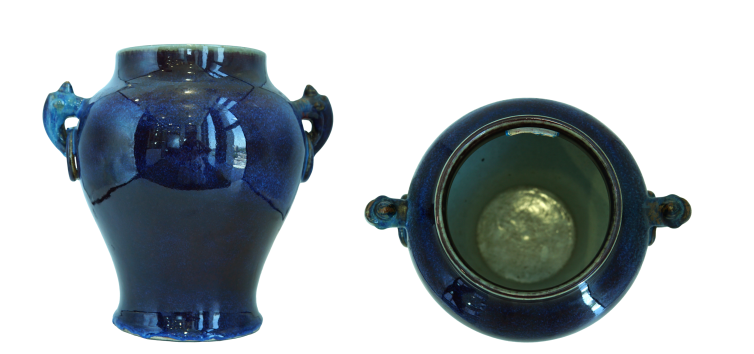
正面全貌视角:器型、双耳、外壁窑变完整无损
器物整体轮廓无变形歪斜,两侧象鼻活环双耳立体完整,象首、卷鼻、空心活环无磕碰残缺、无补塑修复痕迹;外壁窑变釉层完整覆盖全身,无大面积脱釉、剥釉、冲线裂纹;釉面仅存自然细微岁月开片,属于钧瓷百年自然老化特征,无外力磕碰产生的崩裂、炸纹;圈足打磨规整,底足釉层保存完好,无严重磨损露胎,传世包浆柔和均匀,无人工酸洗、打磨翻新痕迹。
底心青花篆书六字款---大清乾隆年制,“大清乾隆年制” 六字篆书款是清代宫廷御窑专属标识,字体布局均匀规整,线条粗细统一,青花发色沉稳纯正,蓝料沉于白釉之下,无漂浮感,是乾隆官窑典型篆书款书写范式,画面左右两侧露出器物象鼻活环双耳底部,双耳根部与器身一体铸造成型,外侧通体施同款钧窑窑变蓝釉,釉层垂流自然,与器身外壁釉色、烧制工艺完全统一。
俯视瓶口内膛视角:内釉洁净,无后世污损
俯视瓶口可见口沿釉边完整,无崩口、磕损;器内天青钧釉均匀光洁,无后世烟熏、污渍、修补填釉;内膛底部釉层厚实,自然釉泡肌理清晰可见,是高温一次烧制原生釉面,无现代后施釉改造痕迹;双耳俯视轮廓对称均衡,铸造工艺规整,彰显官窑严谨制瓷标准。
整体风格庄重大气,蓝紫窑变釉色高级内敛,不似粉彩彩瓷浓艳张扬,适配新中式、古典中式、轻奢中式各类家居空间。茶室摆放静心养气,客厅摆放彰显世家格调,书房摆放助力文思仕途,展馆陈列可作为核心官窑展品,观赏价值与风水寓意兼备。这件带完整制式的乾隆官窑钧釉象鼻尊,是研究清代御窑钧瓷复刻工艺、宫廷陈设礼制、乾隆朝色彩审美、仿生双耳铸造工艺不可替代的实物史料。从釉料配方、窑火控制、高岭土胎土配比到宫廷礼器器型规范,都能在这件器物上找到完整佐证,具备地方博物馆馆藏级学术参考价值,私人收藏等同于保存一件两百余年官窑工艺标本,兼具历史科普、文化传承双重意义。
The flambé Jun glaze of Qianlong imperial kilns represents the pinnacle of ancient Chinese monochrome glaze craftsmanship. This elephant-trunk zun fully preserves all mature firing technical hallmarks of Qianlong-period Jun glaze, with its multi-tiered color gradations and fluid flowing textures holding immense academic research and aesthetic appreciation value.
The core secret of Jun glaze lies in trace copper oxide metallic colorants blended into the glaze slip. During firing under high-temperature reducing flame inside the kiln, copper ions flow and intermingle freely within the molten glaze, randomly generating dreamy interwoven streaks of sapphire blue, violet purple, rosy crimson and pale moon white. Every single Jun porcelain vessel bears one-of-a-kind flambé patterns; no two pieces feature identical glaze coloration, granting each an innate, irreproducible scarcity.
The exterior of this zun is entirely coated with a thick layer of flambé Jun glaze, set against a profound, abyssal blue base akin to ink settled in deep ocean waters. Wispy cloud-like violet-red kiln transformations spread across the glaze surface, with blue and purple hues seeping and merging into one another. Molten glaze naturally drips downwards to form overlapping layered flow textures, and faint cotton-like moon-white cloud flecks diffuse across sections of the glaze, resembling sunset glow draped over the porcelain body. The glaze carries a mild, luminous vitreous sheen, soft rather than harsh to the eye — a distinctive oily luster exclusive to thick imperial kiln glazes, entirely distinct from the gaudy superficial shine of modern counterfeits. The voluminous, plump glaze layer feels smooth and velvety to the touch, naturally developing subtle orange-peel glaze texture, an inherent surface characteristic formed over more than two centuries of inheritance as an antique.
Where the glaze thins along the mouth rim, elephant-trunk handles and the edges of movable rings, faint pale moon-white glaze margins emerge, formed by natural glaze runoff during firing — an iconic identifying feature of Qianlong Jun glaze. The vessel’s interior is fully covered with uniform, pure sky-blue Jun glaze, clean and restrained without chaotic flambé streaks. The striking contrast between the ornate exterior glaze and subdued interior glaze strictly complies with the imperial kiln firing standard of differentiated interior and exterior glazing for court porcelain.
Front Full View: Intact Form, Handles and Exterior Flambé Glaze
The vessel’s overall silhouette shows no deformation or warpage. The paired three-dimensional elephant-trunk movable-ring handles remain fully intact, with no chips, dents or sculptural repair work to the elephant heads, curling trunks or hollow movable rings. The flambé glaze completely covers the exterior body, free from large-scale glaze peeling, spalling or hairline cracks. Only faint natural age crazing appears across the glaze surface, a natural aging trait of Jun porcelain over a century, with no splitting or shattering cracks caused by physical impact. The circular foot ring is smoothly trimmed, with its base glaze well-preserved without heavy wear exposing the biscuit body. Soft, even inherited patina covers the entire piece, with no traces of artificial acid cleaning or abrasive refinishing.
A six-character underglaze blue seal script reign mark — Da Qing Qian Long Nian Zhi (Made in the Qianlong Reign of the Great Qing Dynasty) — is inscribed at the center of the base. This six-character seal script mark served as an exclusive identifier for Qing imperial court kilns. The characters are evenly and neatly arranged with consistent stroke thickness, the cobalt blue pigment rendering steady and pure, sinking beneath the transparent white glaze rather than floating atop it, embodying the canonical seal script marking style of Qianlong imperial wares. The base sections of the elephant-trunk movable-ring handles are visible on the left and right sides of the frame; each handle is cast integrally with the vessel body, its outer surface covered in the identical blue flambé Jun glaze. The glaze flows naturally down the handles, matching the exterior glaze composition and firing techniques of the main body perfectly.
Top-Down Mouth & Interior View: Clean Interior Glaze Free of Post-Generation Stains
Viewed from above, the mouth rim’s glaze margin remains complete without rim chips or dents. The interior sky-blue Jun glaze is even and smooth, unmarred by later smoke stains, dirt or fill-in glaze repairs. The thick glaze layer at the bottom of the interior cavity displays distinct natural kiln bubble textures, confirming a single high-temperature primary firing with no secondary artificial glazing alterations. The paired elephant handles exhibit symmetrical, balanced contours when viewed from overhead, their precise casting craftsmanship demonstrating the rigorous production standards of imperial kilns.
Boasting a solemn, grand overall aesthetic, the restrained, sophisticated blue-purple flambé glaze palette avoids the loud ostentation of famille rose polychrome porcelain, harmonizing seamlessly with neo-Chinese, classical traditional Chinese and light luxury Chinese interior styles. Displayed in a tea room, it fosters calm contemplation; placed in a living room, it exudes the refined taste of an established clan; set within a study, it inspires literary creativity and official advancement. As a core imperial kiln exhibit for gallery display, it delivers both outstanding ornamental value and auspicious feng shui connotations.
This fully formatted Qianlong imperial Jun glaze elephant-trunk zun stands as an irreplaceable physical archival artifact for researching the replication techniques of Jun porcelain at Qing imperial kilns, court display ritual systems, aesthetic color preferences of the Qianlong era, and sculptural casting methods for figurative handles. Complete evidence covering glaze formula development, kiln temperature regulation, kaolin body proportioning and ritual vessel silhouette specifications can all be studied through this single piece, granting it museum-grade academic reference value for local cultural institutions. Private ownership preserves a two-hundred-year-old specimen of imperial kiln craftsmanship, carrying dual significance for historical popular science and intergenerational cultural inheritance.
* 本次藏品:乾隆钧釉窑变象鼻双耳尊*
典藏尺寸:上口径:15.8cm 高:28.5cm
以上藏品相关信息请与四川极蕴拍卖有限公司联系,我们将为您提供一对一专业服务。
For more information about this collection, please contact Sichuan Jiyun Auction Co., Ltd. We will provide you with one-on-one professional service.

猜你喜欢

曹操出行的护城河!吉利生态才是核心底气
 104
暴雨夜归的安全命题:与众06电池安全体系的技术应答
148 2027年3月意大利国际可再生能源展
102 研华助力万东医疗打造AI全维超能矩阵 共筑智慧医疗影像新未来
171 精品推荐 —— 天德重宝
96 平安产险湖北分公司:开展防范非法金融宣传活动
165 李奥国际聚焦“精准健康三位一体”战略推动AI医疗发展
67 “达仁堂速效救心公益行动走进新华社”正式启动
88 康兰朵以自然科技赋能女性健康美学新纪元
136 中国胶原产业或迈入“三足鼎立”新阶段:如凤凰仿生胶原登顶年度创新奖,与
145 



