

汝釉腰形洗
发布时间:2026-03-19 来源:网络 作者:admin 【 字体:大 中 小 】
汝釉腰形洗
这件汝釉腰形洗,是宋代汝窑瓷器中兼具实用与审美价值的经典器物,它以温润如玉的天青釉色、流畅灵动的腰形轮廓,承载着宋代文人 “尚简尚雅” 的审美追求,成为中国古代制瓷工艺的杰出代表。器物整体呈腰形(椭圆形),口沿微微外撇,器壁由口至底缓缓收窄,底部承以四枚云形矮足,既保证了器物的稳定放置,又以轻盈的造型消解了瓷质的厚重感,让整体线条如流水般自然舒展,尽显宋代器物 “瘦硬中见温润” 的美学特质。釉色是这件腰形洗最动人的语言,纯正的天青色如雨后初晴的天空,在光线流转中泛着细腻的光泽,釉面虽偶有细微气泡与棕眼,却恰好印证了汝窑 “原气原烧” 的本真工艺,没有刻意的粉饰,却在质朴中透出直击人心的雅致。
This Ru-glazed waist-shaped washer is a classic artifact in Song Dynasty Ru kiln porcelain that combines practical and aesthetic value. With its warm jade-like sky-blue glaze and smooth, flexible waist-shaped outline, it embodies the literati's aesthetic pursuit of "simplicity and elegance" in the Song Dynasty, becoming an outstanding representative of ancient Chinese porcelain craftsmanship. The vessel is entirely waist-shaped (oval), with a slightly flared rim. The wall tapers gently from the rim to the bottom, supported by four cloud-shaped short feet. This not only ensures stable placement but also dissolves the heaviness of the porcelain with a light shape, making the overall lines stretch naturally like flowing water, fully embodying the aesthetic trait of "warmth in leanness" in Song Dynasty artifacts. The glaze color is the most touching language of this waist-shaped washer. The pure sky-blue color is like the sky after a sudden rain, glowing with a delicate luster as light flows. Although there are occasional tiny bubbles and brown eyes on the glaze surface, they just confirm the authentic craftsmanship of Ru kiln's "original firing". Without deliberate embellishment, it reveals a straightforward elegance in simplicity.
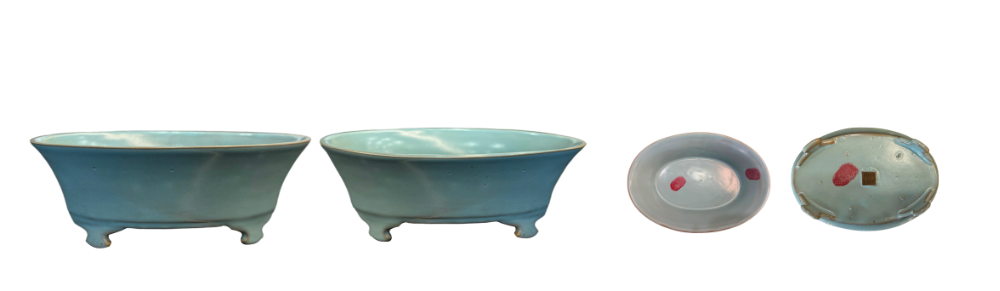
汝窑作为宋代五大名窑之首,其天青釉色的烧制工艺堪称中国陶瓷史上的巅峰,这件腰形洗便是汝釉工艺的生动注脚。天青釉的呈现,源于匠人对釉料配比与窑火温度的极致把控,在还原焰氛围中,铁元素被精准还原为亚铁离子,最终形成这种介于蓝与绿之间的温润色调,既无青花瓷的明艳,也无白瓷的冷冽,恰如宋代文人内敛含蓄的性格。釉面的开片纹路细密如蝉翼,深浅交错的裂纹在天青底色上勾勒出自然的肌理,这种 “冰裂纹” 并非工艺瑕疵,而是胎釉膨胀系数差异在冷却过程中自然形成的美学效果,是宋人 “师法自然” 的生动体现 —— 他们从不刻意追求完美,而是在残缺与变化中感悟天地造化的诗意。腰形洗的器型设计同样暗藏巧思,椭圆形的轮廓既区别于圆形洗的规整,又避免了方形洗的生硬,在实用功能上更便于文房清洗笔砚时的操作,同时以柔和的线条传递出 “和而不同” 的处世哲学。
As the first of the five famous kilns in the Song Dynasty, the firing craftsmanship of Ru kiln's sky-blue glaze is a peak in the history of Chinese ceramics, and this waist-shaped washer is a vivid footnote to Ru glaze craftsmanship. The appearance of the sky-blue glaze stems from the craftsmen's extreme control over glaze formulation and kiln temperature. In a reducing flame atmosphere, iron elements are precisely reduced to ferrous ions, finally forming this warm tone between blue and green. It is neither as bright as blue and white porcelain nor as cold as white porcelain, just like the introverted and reserved character of Song literati. The crack patterns on the glaze surface are as fine as cicada wings, and the staggered deep and shallow cracks outline natural textures on the sky-blue background. This "ice crack pattern" is not a craftsmanship flaw, but an aesthetic effect naturally formed by the difference in expansion coefficients between the body and glaze during the cooling process, a vivid reflection of the Song people's "learning from nature"—they never deliberately pursue perfection, but perceive the poetry of natural creation in imperfection and change. The shape design of the waist-shaped washer also hides ingenuity. The oval outline is different from the regularity of round washers and avoids the stiffness of square washers. In practical function, it is more convenient for cleaning brushes and inkstones in the study, while conveying the philosophy of "harmony but difference" with soft lines.
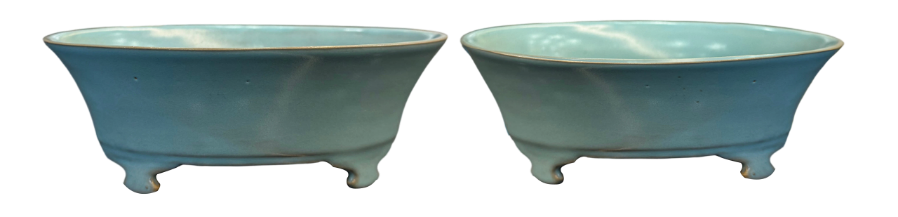
从工艺细节来看,这件汝釉腰形洗处处彰显着宋代制瓷的严谨与匠心。底部的四枚云形足,造型小巧圆润,既起到支撑作用,又避免了器底与桌面的直接接触,有效防止釉面磨损,这种设计在汝窑传世器物中并不多见,更显其独特性。足底露胎处呈现淡淡的香灰色,是汝窑胎土 “香灰胎” 的典型特征,细腻的胎质为釉色的温润呈现提供了坚实基础。器底可见的细小支钉痕,是汝窑 “裹足支烧” 工艺的直接遗存,匠人将器物用细小的支钉托举于窑中,使器身与足底均能被釉料均匀覆盖,最终形成 “满釉支烧” 的效果,这一工艺不仅要求极高的烧制技巧,更体现了宋代匠人对器物完整性的极致追求。釉面中隐约可见的细微气泡与棕眼,是高温烧制过程中釉料自然排气的痕迹,这些看似 “不完美” 的细节,恰恰成为鉴别汝窑真品的重要依据,也让器物多了几分烟火气与生命力。
From the perspective of craftsmanship details, this Ru-glazed waist-shaped washer demonstrates the rigor and ingenuity of Song Dynasty porcelain making everywhere. The four cloud-shaped feet at the bottom are small and rounded, not only supporting the vessel but also preventing direct contact between the bottom and the table, effectively avoiding glaze wear. This design is rare among handed-down Ru kiln artifacts, making it even more unique. The exposed part of the foot shows a light incense ash color, a typical feature of Ru kiln's "incense ash body". The delicate body provides a solid foundation for the warm presentation of the glaze color. The tiny nail marks visible on the bottom are direct relics of Ru kiln's "foot-wrapped supported firing" craftsmanship. Craftsmen supported the vessel with small nails in the kiln, so that both the body and the foot could be evenly covered with glaze, finally forming the effect of "full-glaze supported firing". This process not only requires extremely high firing skills but also reflects the Song craftsmen's extreme pursuit of the integrity of the vessel. The tiny bubbles and brown eyes faintly visible on the glaze surface are traces of natural exhaust of the glaze during high-temperature firing. These seemingly "imperfect" details have become important basis for identifying genuine Ru kiln products, and also add a bit of and vitality to the vessel.
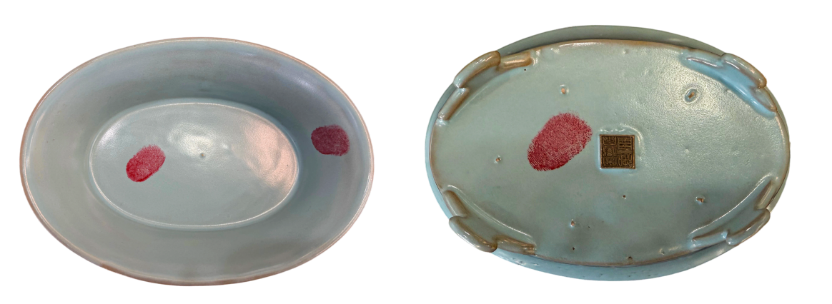
在文化层面,这件汝釉腰形洗是宋代文人生活与精神世界的物质缩影。文房洗作为 “文房四宝” 之外的重要辅助器具,承载着文人日常清洗笔砚、涵养心性的功能,而汝窑洗更因釉色的雅致与工艺的精湛,成为文人案头的审美寄托。天青釉色暗合道家 “天人合一” 的思想,不事张扬却自有风骨,与宋代士大夫 “淡泊明志,宁静致远” 的人生追求高度契合;腰形的灵动轮廓则呼应了宋代文人对自然山水的向往,在案头方寸之间,便可窥见 “远山含黛,流水含情” 的诗意意境。历经近千年的岁月沉淀,这件腰形洗依然釉色莹润、器型完整,那些细密的开片纹路与细微的支钉痕,不仅是工艺的印记,更是时光的馈赠,它们默默诉说着宋代制瓷工艺的辉煌与文人审美意趣的传承,让我们得以在一器之中,触摸到那个崇尚简约、追求极致的宋瓷时代,感受中国传统文化中 “雅俗共赏” 的永恒魅力。
At the cultural level, this Ru-glazed waist-shaped washer is a material microcosm of the life and spiritual world of Song literati. As an important auxiliary tool beyond the "Four Treasures of the Study", the study washer carries the literati's daily function of cleaning brushes and inkstones and cultivating their minds. Ru kiln washers, due to their elegant glaze color and exquisite craftsmanship, have become an aesthetic sustenance on the literati's desk. The sky-blue glaze subtly embodies the Taoist thought of "harmony between man and nature", not ostentatious but with its own integrity, highly consistent with the life pursuit of Song scholar-officials to "live simply to express one's aspirations and remain tranquil to achieve far-reaching goals". The flexible outline of the waist shape echoes the Song literati's yearning for natural landscapes. In the square inch of the desk, one can glimpse the poetic mood of "distant mountains with dark green and flowing water with affection". After nearly a thousand years of precipitation, this waist-shaped washer still has a lustrous glaze and a complete shape. Those fine crack patterns and tiny nail marks are not only marks of craftsmanship but also gifts of time. They silently tell the brilliance of Song Dynasty porcelain craftsmanship and the inheritance of literati aesthetic interests, allowing us to touch the Song porcelain era that advocated simplicity and pursued perfection in one vessel, and feel the eternal charm of "appreciated by both refined and popular tastes" in traditional Chinese culture.

猜你喜欢

邮储银行南部县支行积极参加6·15防非集中宣传活动
 168
翰迪(天津)科技有限公司
151 玄坛遗韵:峨眉山与华夏正财神的不解之缘
155 【健步楼梯】关于实木楼梯你不得不知道的知识
111 蒙自源2024六城联动,爆城爆店爆品,全网曝光破10亿
97 郑州市女企业家协会"对话新时代 智启她未来" 三届三次会员大会圆满召开!
186 中世研投荣登“中国第三方金融服务十佳平台”榜单
103 文卓公会的历程
81 金银花产业铺就乡村振兴路
54 视觉中国助力汽车文化盛宴 “驭·鉴——中法汽车文化交融之旅”开展
177