

王綦款《田园诗画》:墨韵里的江南闲意与晚明文人风骨
发布时间:2026-03-28 来源:网络 作者:admin 【 字体:大 中 小 】
王綦款《田园诗画》:墨韵里的江南闲意与晚明文人风骨
在中国明代文人山水画的谱系中,王綦款《田园诗画》是凝萃着晚明文人审美与江南田园意趣的经典之作。它以水墨为骨、浅绛为韵、田园为形,将中国传统山水画“以形写神”的美学追求、文人“归园田居”的隐逸理想与晚明“尚意重趣”的艺术风格融为一体,在疏朗的笔墨与恬淡的景致间,诉说着“以画为诗,以景寄情”的艺术逻辑,既是晚明文人山水画的代表性作品,更是中华山水文化“从庙堂到田园”转型的生动注脚。
In the pedigree of Ming Dynasty literati landscape painting, this Idyllic Poetry and Painting attributed to Wang Qi is a classic work that embodies the late Ming literati aesthetic and Jiangnan idyllic charm. With ink wash as the framework, light crimson as the charm, and pastoral scenery as the form, it integrates the aesthetic pursuit of "depicting spirit through form" in traditional Chinese landscape painting, the hermit ideal of "returning to the countryside" of literati, and the artistic style of "advocating meaning and emphasizing interest" in the late Ming Dynasty. Between the sparse brushstrokes and tranquil scenery, it conveys the artistic logic of "taking painting as poetry, expressing emotions through scenery", serving as both a representative work of late Ming literati landscape painting and a vivid footnote to the transformation of Chinese landscape culture from court to countryside.
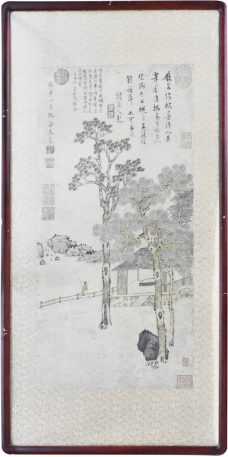
从造型与构图维度审视,这幅《田园诗画》尽显“删繁就简,以境动人”的特质。画面以江南田园为核心,近处茅舍临溪、古树参天,中景木栏横亘、渔翁垂钓,远景山石隐现、水天一色,既延续了元代文人画“留白写意”的空间营造,又吸收了明代院体画的写实细节,将田园的静谧与生活的烟火气完美融合;构图上采用“近实远虚”的散点透视,以茅舍为视觉中心,古树为骨架,渔翁为点睛之笔,形成疏密有致、开合有度的视觉节奏,与北宋全景山水的雄浑风格形成鲜明对比。每一根线条的顿挫、每一块墨色的晕染,都凝聚着对“江南田园之神韵”的精准捕捉,成为解析晚明文人山水语言的物质纽带。
From the perspective of modeling and composition, this Idyllic Poetry and Painting fully demonstrates the characteristic of "simplifying complexity, moving people with artistic conception". The picture takes Jiangnan countryside as the core, with thatched cottages by the stream and ancient trees reaching the sky in the foreground, wooden fences and fishing anglers in the middle view, and distant mountains and rivers in the background. It not only inherits the "blank and freehand" space creation of Yuan Dynasty literati painting but also absorbs the realistic details of Ming Dynasty court painting, perfectly integrating the tranquility of the countryside and the vitality of daily life; in composition, it adopts the "near reality and far emptiness" scattered perspective, taking the thatched cottage as the visual focus, ancient trees as the framework, and the fisherman as the finishing touch, forming a visual rhythm with density and openness, forming a sharp contrast with the majestic style of Northern Song panoramic landscape. Every pause of the line and every smudge of ink condenses the precise capture of "the charm of Jiangnan countryside", becoming a material link for analyzing the language of late Ming literati landscape.
笔墨与色彩层面,这幅作品承载着“水墨为骨,浅绛为韵,隐逸为魂”的创作追求。其笔墨语言极具晚明文人画特色:以淡墨勾勒茅舍、木栏与渔翁的轮廓,笔触细腻灵动、干湿并用,尽显“笔意苍润”的水墨张力;以浓墨点染树叶与山石,层次丰富、虚实相生,营造出田园的葱郁与深远;同时以浅绛淡彩晕染树干与茅舍,在水墨基调中增添温润与暖意,既保留了传统水墨的雅致,又传递出田园生活的清新与恬淡。尤为精妙的是,画家在画面上方题以长篇行书,字体洒脱飘逸、错落有致,与田园景致形成呼应,将诗、书、画、印融为一体,与中国传统“书画同源”的理念不谋而合。画面左侧落款“庚申八月既望王綦”,并钤盖多方印章,是明代文人画“诗书画印”一体的典型范例。每一处墨色的浓淡变化、每一道线条的转折起伏,都在无声诉说着画家对“归园田居”隐逸理想的极致表达,使作品既具视觉的恬淡意境,更显晚明文人的精神风骨。
In terms of brush and ink and color, this work embodies the creative pursuit of "ink wash as bone, light crimson as charm, and seclusion as soul". Its brush and ink language is highly characteristic of late Ming literati painting: light ink is used to outline the contours of thatched cottages, wooden fences and fishermen, with delicate and vivid strokes, wet and dry used together, showing the ink tension of "vigorous and moist brushwork"; thick ink is used to dot leaves and rocks, with rich layers and interaction between virtual and real, creating the lushness and depth of the countryside; at the same time, light crimson is used to smudge tree trunks and thatched cottages, adding warmth and warmth to the ink tone, which not only retains the elegance of traditional ink wash but also conveys the freshness and tranquility of rural life. What is particularly exquisite is that the painter inscribed a long running script at the top of the picture, with a free and elegant font, scattered and orderly, echoing the rural scenery, integrating poetry, calligraphy, painting and seals, which coincides with the traditional Chinese concept of "calligraphy and painting sharing the same origin". The inscription "Wang Qi, the 15th day of the eighth lunar month in the Gengshen Year" on the left side of the picture, with multiple seals stamped, is a typical example of the integration of "poetry, calligraphy, painting and seal" in Ming Dynasty literati painting. Every shade change of ink and every turn and rise of the line silently tells the painter's ultimate expression of the hermit ideal of "returning to the countryside", making the work not only have a tranquil visual artistic conception but also show the spiritual character of late Ming literati.
文化价值与时代意义维度看,王綦款《田园诗画》是晚明文人隐逸文化的“微观镜像”。晚明时期是中国古代文人山水画的转型阶段,文人画从宋元时期的“逸笔草草”,逐渐转变为“诗画一体、情景交融”的田园题材,这幅作品便是这一文化潮流的典型样本——它既保留了元代文人画的隐逸精神,又以江南田园的写实题材展现了晚明“尚俗重趣”的市民审美,是“明代文人画从隐逸到世俗”转型的直观体现。在当代艺术语境下,它不仅是一幅山水画作品,更是解析晚明文人生活史、艺术史的关键标本:其价值不仅在于笔墨的精湛与意境的恬淡,更在于它所承载的“晚明文人隐逸文化记忆”,每一座茅舍的静谧、每一缕渔舟的悠然,都在诉说着中国文人画从宋元到明清的风格演变,成为连接晚明江南文化与当代收藏视野的精神纽带。此外,王綦的传世作品存世量极为稀少,尤其是这类兼具笔墨功力与文化内涵的田园题材精品,更成为古代书画收藏领域的珍贵瑰宝,其历史与艺术价值均不可估量。
From the perspective of cultural value and epochal significance, this Idyllic Poetry and Painting attributed to Wang Qi is a "micro mirror" of late Ming literati hermit culture. The late Ming period was a transitional stage of ancient Chinese literati landscape painting. Literati painting gradually transformed from the "casual brushwork" of the Song and Yuan dynasties to the idyllic theme of "integration of poetry and painting, integration of emotion and scenery". This work is a typical sample of this cultural trend—it not only retains the hermit spirit of Yuan Dynasty literati painting but also reflects the "advocating vulgarity and emphasizing interest" civic aesthetic of the late Ming Dynasty with the realistic theme of Jiangnan countryside, which is an intuitive embodiment of "the transformation of Ming literati painting from seclusion to secularity". In the context of contemporary art, it is not only a landscape painting work but also a key specimen for analyzing late Ming literati life history and art history: its value lies not only in the exquisite brush and ink and tranquil artistic conception but also in the "late Ming literati hermit cultural memory" it carries. The tranquility of each thatched cottage and the leisure of each fishing boat tell the stylistic evolution of Chinese literati painting from Song and Yuan to Ming and Qing, becoming a spiritual link connecting late Ming Jiangnan culture and contemporary collection vision. In addition, the number of surviving works by Wang Qi is extremely scarce, especially such fine works of idyllic theme with both brushwork skill and cultural connotation, which have become precious treasures in the field of ancient calligraphy and painting collection, with immeasurable historical and artistic value.
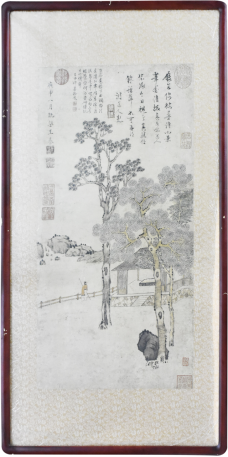
当我们凝视王綦款《田园诗画》,疏朗的笔墨与恬淡的田园在眼前交融,晚明文人的隐逸理想与江南生活的烟火气在方寸间碰撞,仿佛能触摸到茅舍的静谧、渔舟的悠然,也能感受到中华文人画“以画为诗,以景寄情”的深厚底蕴。它不仅是一幅描绘田园的水墨作品,更是晚明文人画创作的结晶、江南隐逸文化的物质凝结,在时光的摩挲中静静散发着艺术的魅力,以其独特的形制与文化内涵,让每一位观者都能读懂这份藏在田园里的晚明记忆,感受那份融于笔墨的文人风骨与生活温度。
When we gaze at this Idyllic Poetry and Painting attributed to Wang Qi, the sparse brushstrokes and tranquil countryside blend before our eyes, and the hermit ideal of late Ming literati and the vitality of Jiangnan life collide in a small space. It is as if we can touch the tranquility of the thatched cottage and the leisure of the fishing boat, and feel the profound heritage of Chinese literati painting of "taking painting as poetry, expressing emotions through scenery". It is not only an ink wash work depicting the countryside but also a crystallization of late Ming literati painting creation and a material condensation of Jiangnan hermit culture, quietly exuding the charm of art in the touch of time. With its unique shape and cultural connotation, it allows every viewer to understand the late Ming memory hidden in the countryside and feel the literati character and life temperature integrated into the brush and ink.

猜你喜欢

2025年“3.15”中国人寿财险河南省 分公司践行“保障金融权益 助力美好生活
 93
菲斯曼2025春季新品发布--总裁直播开启舒适科技未来式
194 口碑好的泸州种植牙机构
191 稳外贸促消费 助力小家电企业扬帆出海
132 春尽处,木生万象 |福湘板材2025长沙建博会圆满收官!木的温度,未完待续…
117 日月同辉慈慧之光 和谐共生迎接辉煌
76 乡村基:用“现炒温度”重塑中式快餐价值标杆
189 决心不用激素药治皮肤病的省名中医——夏先斗
186 精品推荐 —— 雍正通宝一组
98 聚焦!2026第三届中国江西国际绿色矿业博览会
150 




