

清代站洋币:晚清通商口岸的货币印记与中西交融见证
发布时间:2026-04-18 来源:网络 作者:admin 【 字体:大 中 小 】
清代站洋币:晚清通商口岸的货币印记与中西交融见证
在晚清中西贸易的历史长河中,外国银币作为列强经济渗透的载体,深刻影响了中国的货币流通格局,而英国贸易银元“站洋”,便是其中流通最广、影响最深的品类之一。这枚1911年版站洋币,以银为质,以不列颠女神像与寿字纹为饰,将大英帝国的殖民扩张、晚清通商口岸的贸易繁荣与中西货币文化的交融融为一体,在银辉流转间诉说着“以币载商、以纹传融、以质彰史”的近代贸易货币文化逻辑,既是晚清中西贸易史的重要遗存,更是近代中国经济变迁与国际货币交流的生动注脚。
In the long river of Sino-Western trade history in the late Qing Dynasty, foreign silver coins, as carriers of economic penetration by foreign powers, profoundly influenced the currency circulation pattern in China. The British trade silver dollar "Standing Britannia Dollar" is one of the most widely circulated and influential categories. This 1911 Standing Britannia Dollar, made of silver and decorated with the statue of Britannia and longevity patterns, integrates the colonial expansion of the British Empire, the prosperity of trade in treaty ports in the late Qing Dynasty, and the integration of Chinese and Western monetary cultures. Between the flowing silver light, it conveys the cultural logic of modern trade currency culture of "carrying trade with coins, conveying integration through patterns, and highlighting history through quality". It is not only an important relic of the history of Sino-Western trade in the late Qing Dynasty, but also a vivid footnote to the economic changes in modern China and international monetary exchanges.
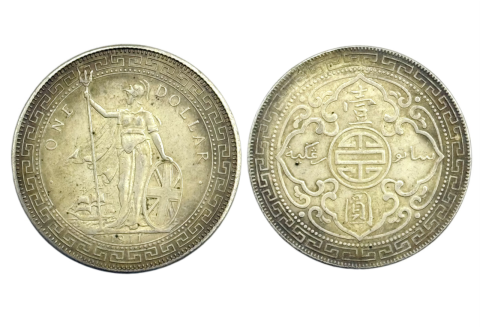
从形制与纹饰维度审视,这枚站洋币尽显“中西合璧、商贸印记”的殖民贸易货币特质。银元采用标准一元形制,直径、厚度、重量均严格遵循英国贸易银元标准,形制规整、边齿清晰,尽显西方铸币工艺的严谨规范。币面正面为不列颠女神站像,女神头戴盔甲,右手持三叉戟,左手扶英国国旗盾牌,背景绘有帆船,象征大英帝国的海上霸权与殖民贸易扩张,币面环绕英文“ONE DOLLAR”,下方标注铸造年份“1911”,是站洋币的标志性特征;币背中央为“寿”字纹,两侧饰马来文“壹圆”,边缘辅以中式回纹边饰,纹饰布局对称规整,寓意“吉祥如意、财源广进”,这种中西合璧的设计,是英国为适应中国及东南亚市场流通需求而特意打造的,既保留了西方殖民货币的特征,又融入了东方文化元素,尽显贸易银元的实用主义设计理念。边齿采用直齿与齿形间隔设计,齿形均匀、深浅一致,是判断站洋币真伪与版别的重要依据,也体现了当时英国铸币技术的成熟。整体币面包浆温润,银质氧化形成的浅褐色包浆自然均匀,为银元增添了古朴的岁月韵味,每一处纹饰的刻画、每一条边齿的铸造,都凝聚着英国造币厂工匠的极致匠心,成为解析近代殖民贸易货币工艺的核心物质纽带。
From the perspective of form and pattern, this Standing Britannia Dollar fully demonstrates the characteristics of "Chinese and Western integration and trade marks" of colonial trade currency. The silver dollar adopts the standard one-yuan form, with diameter, thickness and weight strictly following the British trade silver dollar standards. The form is regular and the side teeth are clear, fully showing the rigorous norms of Western coin casting craftsmanship. The front of the coin is the standing statue of Britannia. The goddess wears armor, holds a trident in her right hand, supports the British flag shield with her left hand, and a sailing ship is painted in the background, symbolizing the maritime hegemony and colonial trade expansion of the British Empire. The coin surface is surrounded by the English "ONE DOLLAR", and the casting year "1911" is marked below, which is a landmark feature of the Standing Britannia Dollar; the center of the coin back is a "longevity" character pattern, with the Malay "One Yuan" on both sides, supplemented by Chinese Hui patterns on the edge. The pattern layout is symmetrical and regular, implying "auspicious wishes and abundant financial resources". This Chinese-Western integrated design was specially created by Britain to adapt to the circulation needs of the Chinese and Southeast Asian markets, retaining the characteristics of Western colonial currency while integrating Eastern cultural elements, fully showing the pragmatic design concept of trade silver dollars. The side teeth adopt a design of alternating straight teeth and tooth shapes, with uniform tooth shape and consistent depth, which is an important basis for judging the authenticity and edition of the Standing Britannia Dollar, and also reflects the maturity of British coin casting technology at that time. The overall coin surface has warm patina, and the light brown patina formed by silver oxidation is natural and uniform, adding a simple charm of time to the silver dollar. Every depiction of patterns and every casting of side teeth condense the ultimate ingenuity of British mint craftsmen, becoming a core material link for analyzing the craftsmanship of modern colonial trade currency.
铸造工艺与流通背景层面,站洋币承载着“银质为骨、商贸为魂、中西为韵”的创作追求。站洋币以银为主要材质,含银量约89%,辅以铜质合金,银质细腻、色泽温润,由英国伯明翰、伦敦等造币厂铸造,工艺成熟,版别多样,铸造年份从1895年至1935年,其中1911年版是流通量较大、工艺成熟的版别之一。此枚站洋币币面压力充足,女神像线条清晰,帆船与盾牌细节分明,背面寿字纹与马来文字样铸造清晰,无明显流铜、弱打等缺陷,尽显英国铸币工艺的精湛水准。包浆自然温润,无人工做旧痕迹,是流通使用过程中自然氧化形成的岁月印记,为银元增添了历史厚重感。站洋币自1895年发行后,大量流入中国通商口岸,取代了墨西哥鹰洋等其他外国银币,成为晚清至民国初年中国市场上的主要流通货币之一,广泛用于中英贸易及民间交易,深刻影响了晚清的货币体系与经济格局。每一处铸造细节、每一丝银质光泽,都在无声诉说着晚清中西贸易的繁荣与殖民经济的渗透,使站洋币兼具历史、经济与收藏的多重价值。
In terms of casting craftsmanship and circulation background, the Standing Britannia Dollar embodies the creative pursuit of "silver quality as the bone, trade as the soul, and Chinese and Western integration as the charm". The Standing Britannia Dollar is mainly made of silver, with a silver content of about 89%, supplemented by copper alloy. The silver is delicate and the color is warm. It was cast by mints in Birmingham, London and other places in Britain with mature craftsmanship and various editions. The casting years range from 1895 to 1935, among which the 1911 edition is one of the editions with large circulation and mature craftsmanship. The coin surface of this Standing Britannia Dollar has sufficient pressure, the lines of the goddess statue are clear, the details of the sailing ship and shield are distinct, and the longevity character patterns and Malay characters on the back are clearly cast without obvious casting defects such as copper flow and weak strike, fully showing the exquisite level of British coin casting craftsmanship. The patina is natural and warm without artificial aging traces, which is the mark of time formed by natural oxidation during circulation and use, adding a sense of historical heaviness to the silver dollar. After its issuance in 1895, the Standing Britannia Dollar flowed into Chinese treaty ports in large quantities, replacing other foreign silver coins such as the Mexican Eagle Dollar, and became one of the main circulating currencies in the Chinese market from the late Qing Dynasty to the early Republic of China, widely used in Sino-British trade and folk transactions, profoundly affecting the currency system and economic pattern of the late Qing Dynasty. Every casting detail and every trace of silver luster silently tells the prosperity of Sino-Western trade and the penetration of colonial economy in the late Qing Dynasty, making the Standing Britannia Dollar have multiple values of history, economy and collection.
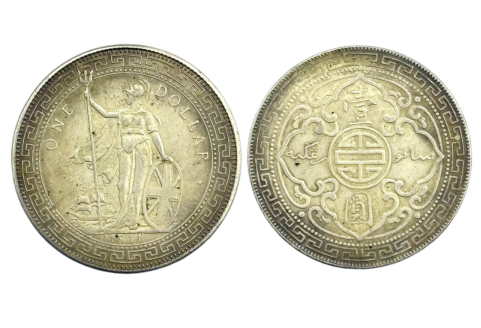
历史与收藏价值维度看,站洋币是晚清中西贸易史与近代货币文化交流的“微观镜像”。站洋币的发行,是英国为争夺中国市场货币主导权、扩大殖民贸易而采取的经济手段,它的广泛流通,反映了晚清中国经济的半殖民地化进程,也见证了中西贸易的繁荣与冲突;币面的中西合璧设计,是近代东西方文化交流的缩影,体现了英国为适应东方市场而做出的文化妥协与融合。在当代收藏语境下,站洋币是钱币收藏领域的热门品类,其中1911年版以其铸造量适中、工艺成熟、流通痕迹清晰的特点,兼具历史价值与市场价值,尤其是品相完好、包浆自然的版别,更是收藏界竞相追逐的目标,其市场价值随着铸造年份、品相与稀有度的不同而差异显著。此外,站洋币作为近代外国贸易银元的代表,承载着晚清通商口岸的贸易记忆与国际货币交流的历史,是研究近代中国经济史、中外贸易史的重要实物资料,每一枚银元的流通与沉淀,都是一段晚清中西贸易变迁的缩影,成为钱币收藏领域兼具历史意义与投资潜力的经典藏品。
From the perspective of historical and collection value, the Standing Britannia Dollar is a "micro mirror" of the history of Sino-Western trade in the late Qing Dynasty and modern monetary cultural exchanges. The issuance of the Standing Britannia Dollar was an economic means adopted by Britain to compete for the dominance of currency in the Chinese market and expand colonial trade. Its wide circulation reflects the semi-colonialization process of the Chinese economy in the late Qing Dynasty and also witnesses the prosperity and conflict of Sino-Western trade; the Chinese-Western integrated design on the coin surface is a microcosm of modern Eastern and Western cultural exchanges, reflecting the cultural compromise and integration made by Britain to adapt to the Eastern market. In the contemporary collection context, the Standing Britannia Dollar is a popular category in the field of coin collection. Among them, the 1911 edition, with its moderate casting volume, mature craftsmanship and clear circulation traces, has both historical value and market value. Especially the editions with good condition and natural patina are the targets pursued by collectors, and its market value varies significantly with different casting years, conditions and rarity. In addition, as a representative of modern foreign trade silver dollars, the Standing Britannia Dollar bears the trade memories of treaty ports in the late Qing Dynasty and the history of international monetary exchanges, and is an important physical data for studying the economic history of modern China and the history of Sino-foreign trade. The circulation and precipitation of each silver dollar is a microcosm of the changes in Sino-Western trade in the late Qing Dynasty, making it a classic collection with both historical significance and investment potential in the field of coin collection.
当我们凝视这枚1911年版站洋币,温润的银质包浆与清晰的币面纹饰在眼前交融,晚清通商口岸的贸易风云与中西货币文化的碰撞在方寸间碰撞,仿佛能触摸到清末广州、上海等口岸的市井喧嚣、中外商人的交易往来,也能感受到近代中国经济半殖民地化的历史进程。站洋币不仅是一枚贸易银元,更是一段中西交流史的见证者、一种殖民经济的载体,它承载着大英帝国的贸易扩张野心与晚清中国的被动开放,也寄托着人们对近代中外贸易变迁的记忆与回望,是钱币收藏领域兼具历史厚重感与艺术美感的稀世藏品。
When we gaze at this 1911 Standing Britannia Dollar, the warm silver patina and clear coin patterns blend before our eyes, and the trade situation in treaty ports in the late Qing Dynasty and the collision of Chinese and Western monetary cultures collide in a small space. It is as if we can touch the hustle and bustle of cities like Guangzhou and Shanghai in the late Qing Dynasty and the transactions between Chinese and foreign merchants, and feel the historical process of semi-colonialization of the Chinese economy in modern times. The Standing Britannia Dollar is not only a trade silver dollar, but also a witness to a period of Sino-Western exchange history and a carrier of colonial economy. It bears the trade expansion ambitions of the British Empire and the passive opening of late Qing China, and also embodies people's memories and reflections on the changes in modern Sino-foreign trade, making it a rare collection with both historical heaviness and artistic beauty in the field of coin collection.

猜你喜欢

钱币藏古韵,卓物启新程——卓物钱币文化中心盛大开业
 136
上海佐夫瑞信息科技——创新驱动,引领科技未来
62 施耐德电气:以联合仿真打造智能化设计与工程,加速氨工厂能源转型
103 【信用中国】专访赖颂强:15年深耕家庭教育,“左养右学”破解青少年成长困
84 冠军之选!骁骑X5Pro EDG联名电竞椅重磅上市
123 睿蓝7:安全细节尽显匠心,打造无忧出行新典范
97 老外说火锅界的丑东西越涮越上头,现存火锅相关企业超42.2万家
154 2024年湖北省体育产业创新创业大赛决赛在武汉圆满举行
100 发力高阶驾驶辅助 金标大众新一代智能网联概念车即将首秀
64 备婚必看!黄金饰品这样选,好看又保值,附品牌推荐
79 


民国孙中山像镍币套组:民国币制里的中山遗韵与时代印记

精品推荐 —— 第三套人民币一组(壹角 贰角)

千载泉韵,盛世重光!江西中嘉瀚藏 2026 春拍,两大古币珍品惊艳登场!
中嘉瀚藏·2026春拍重磅呈献|「时代记忆」第三套人民币尾三同珍藏套装