

丁云鹏款佛教人物故事画卷
发布时间:2026-04-08 来源:网络 作者:admin 【 字体:大 中 小 】
丁云鹏款佛教人物故事画卷
在明代绘画史的璀璨星空中,丁云鹏以其独树一帜的释道人物画占据着重要地位。这幅署款丁云鹏的佛教人物故事画卷,作为其晚年艺术风格的典型载体,既承载着晚明时期三教融合的文化思潮,又彰显了画家精湛绝伦的笔墨技艺与深厚的佛学素养。丁云鹏,字南羽,号圣华居士,安徽休宁人,是明代中后期最具影响力的人物画家之一,其白描技法师法李公麟,设色承袭钱选,早年画风工整秀雅,晚年则趋于沉着古朴,与陈洪绶、崔子忠并称明末人物画三大家,董其昌曾盛赞其 “三百年无此作手”,并赠 “毫生馆” 印章以嘉许其得意之作。这幅佛教人物故事画卷,以宏大的构图、细腻的笔触与深邃的禅意,成为丁云鹏佛画创作中极具代表性的作品,其背后蕴含的艺术手法、文化内涵与时代精神,值得我们深入探究。
When navigating the brilliant starry sky of Ming Dynasty painting history, Ding Yunpeng occupied an important position with his unique Buddhist and Taoist figure paintings. This handscroll of Buddhist figure stories inscribed with Ding Yunpeng's signature, as a typical carrier of his artistic style in his later years, not only carries the cultural trend of the integration of Confucianism, Buddhism and Taoism in the late Ming Dynasty, but also highlights the painter's exquisite brush and ink techniques and profound attainments in Buddhism. Ding Yunpeng, styled Nanyu and alias Shenghua Jushi, was born in Xiuning, Anhui Province. He was one of the most influential figure painters in the mid-late Ming Dynasty. His line drawing technique inherited Li Gonglin, and his color application inherited Qian Xuan. His early painting style was neat and elegant, while in his later years it tended to be calm and simple. He was known as one of the three great figure painters of the late Ming Dynasty together with Chen Hongshou and Cui Zizhong. Dong Qichang once praised him as "unparalleled master in three hundred years" and presented the seal "Hao Sheng Guan" to commend his masterpieces. This handscroll of Buddhist figure stories, with its grand composition, delicate brushwork and profound Zen charm, has become a representative work in Ding Yunpeng's Buddhist painting creation. The artistic techniques, cultural connotations and spiritual connotations behind it are worthy of in-depth exploration.

画卷整体构图恢弘而不失细腻,以长卷形式铺陈出一幅跨越时空的佛国禅境。画面主体围绕佛教经典中的罗汉说法、护法护持、禅修悟道等核心情节展开,人物排布疏密有致,主次分明。卷首至卷尾,罗汉形象或趺坐苍松之下,或漫步溪涧之畔,或手持法器凝神沉思,或与龙象相伴共修佛法,每一组人物都构成独立又相互关联的叙事单元,完整呈现了佛教故事中 “众生度化、佛法传承” 的核心主旨。背景中,苍松虬枝挺拔苍劲,以浓墨皴擦出嶙峋山石的肌理,潺潺流水蜿蜒曲折,云气缭绕于岩壑之间,这些山水元素并非单纯的景致点缀,而是以 “禅意山水” 的笔法烘托出超凡脱俗的佛国氛围,实现了人物与环境的有机融合,让观者在欣赏人物故事的同时,亦可体悟到 “山水即禅境” 的东方美学意境。这种将人物叙事与山水意境相结合的创作手法,既延续了传统释道人物画的构图范式,又融入了丁云鹏个人对山水与禅意关系的独特理解,赋予画面更丰富的精神层次。
The overall composition of the handscroll is magnificent yet delicate, unfolding a cross-temporal Buddhist Zen realm in the form of a long scroll. The main body of the painting unfolds around the core plots of Buddhist classics such as Arhats preaching, Dharma protection, and Zen enlightenment. The arrangement of figures is well-proportioned with distinct primary and secondary roles. From the beginning to the end of the scroll, the Arhat figures either sit cross-legged under the tall pines, or walk by the streams, or hold magic weapons to ponder deeply, or practice Buddhism together with dragons and elephants accompanying them. Each group of figures forms an independent yet interconnected narrative unit, completely presenting the core theme of "salvation of all beings and inheritance of Dharma" in Buddhist stories. In the background, the tall and twisted pines are tall and vigorous, the texture of the rugged mountains is sketched with thick ink, the gurgling water winds and twists, and the clouds linger between the rock valleys. These landscape elements are not just simple scenery embellishments, but set off an extraordinary Buddhist realm with the brush technique of "Zen landscape", realizing the organic integration of figures and environment, allowing viewers to appreciate the figure stories while also appreciating the oriental aesthetic conception of "landscape is Zen realm". This creative technique that combines figure narration with landscape artistic conception not only inherits the composition paradigm of traditional Buddhist and Taoist figure paintings, but also integrates Ding Yunpeng's unique understanding of the relationship between landscape and Zen charm, endowing the painting with a richer spiritual level.
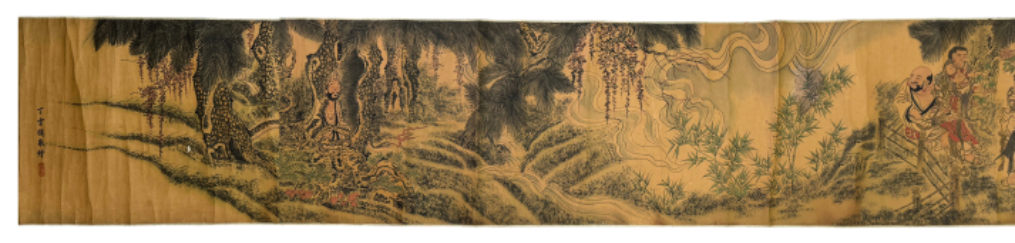
作为丁云鹏最擅长的题材,佛教人物的塑造在这幅画卷中达到了形神兼备的极致境界。画家深谙佛教造像的仪轨规范,对罗汉、菩萨、护法神等形象的刻画恪守法度,同时又融入了强烈的人文情感,打破了宗教人物 “高冷疏离” 的刻板印象。画面中的罗汉形象,或面容清癯祥和,眉眼间透着历经世事的通透;或形貌粗犷威严,神情中藏着护持佛法的坚定。画家以细腻的白描线条勾勒人物面部,丝发之间眉目意态毕具,通过眼神的流转、嘴角的微蹙与手势的变化,精准传递出不同罗汉的修行境界与性格特质。对于护法神与龙象等形象,丁云鹏则以刚劲顿挫的线条展现其威猛之势,龙鳞虎爪刻画入微,祥云瑞气环绕其间,既凸显了护法神的神圣力量,又赋予其灵动的艺术质感。这种 “于法度中见性情” 的人物塑造手法,既体现了丁云鹏深厚的佛学修养,也反映了晚明时期文人画家对佛教人物 “人性化” 表达的审美追求,让宗教人物不再是冰冷的神像,而是具有鲜活情感与精神内涵的艺术形象。
In the theme that Ding Yunpeng was best at, the shaping of Buddhist figures in this handscroll has reached the ultimate realm of combining form and spirit. The painter deeply understood the ritual norms of Buddhist statue creation, and the depiction of Arhats, Bodhisattvas, Dharma protectors and other images adhered to the rules. At the same time, he integrated strong human emotions, breaking the rigid impression of religious figures being "cold and distant". The Arhat images in the painting either have a thin and peaceful face, with eyes and eyebrows revealing the penetration of experiencing the world; or have a rough and majestic appearance, with firmness in protecting the Dharma hidden in their expressions. The painter sketched the figures' faces with delicate line drawing techniques, and the expressions between the silk and hair were fully displayed. Through the flow of eyes, slight frowns of the mouth and changes of gestures, the cultivation realm and personality traits of different Arhats were accurately conveyed. For the images of Dharma protectors, dragons and elephants, Ding Yunpeng showed their mighty momentum with sharp and frustrated lines, the dragon scales and tiger claws were depicted in detail, and the auspicious clouds surrounded them, which not only highlighted the sacred power of the Dharma protectors, but also endowed them with vivid artistic texture. This character shaping technique of "showing temperament within the rules" not only reflects Ding Yunpeng's profound attainments in Buddhism, but also reflects the aesthetic pursuit of humanized expression of Buddhist figures by literati painters in the late Ming Dynasty, making religious figures no longer cold god statues, but artistic images with vivid emotions and spiritual connotations.
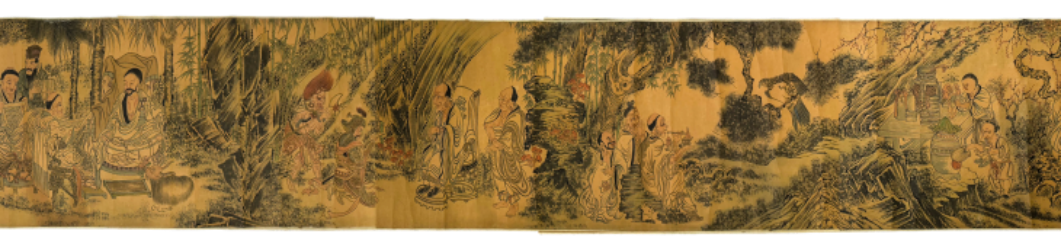
笔墨技法的精妙运用,是这幅画卷彰显艺术价值的核心所在,也是丁云鹏白描技艺登峰造极的有力佐证。丁云鹏的白描艺术融合了李公麟的高古游丝描与徽州版画的刻线技巧,形成了兼具刚柔之美的独特线描语言。在刻画人物衣纹时,他根据不同形象的特质调整线条的节奏与质感:罗汉的禅衣以细劲流畅的 “铁线描” 勾勒,线条连绵如游丝,既表现出僧衣的轻薄飘逸,又传递出修行者的清净淡泊;护法神的铠甲与服饰则以顿挫有力的 “折芦描” 描绘,线条粗细变化丰富,尽显铠甲的坚硬质感与护法神的威武之气。对于背景中的松石云水,画家则以兼毫皴擦,松针细密繁复,山石皴法兼具文徵明的隽秀与吴道子的豪放,墨色浓淡相宜,层次分明。设色方面,画卷以矿物颜料为主,朱红、石青、赭石等色彩沉稳古雅,与墨色相得益彰,既保持了佛教造像的庄严华贵,又契合了晚明文人画的清雅审美,实现了 “墨分五色” 与设色雅致的完美统一。这种笔墨与设色的高度融合,让整幅画卷既有宗教绘画的神圣庄重,又具文人绘画的雅致韵味,尽显丁云鹏炉火纯青的艺术功力。
The exquisite application of brush and ink techniques is the core of the handscroll's artistic value, and also a powerful proof that Ding Yunpeng's line drawing technique has reached its peak. Ding Yunpeng's line drawing art integrated the ancient fine line drawing of Li Gonglin and the line carving technique of Huizhou printmaking, forming a unique line drawing language with both hardness and softness. When depicting the figures' clothing patterns, he adjusted the rhythm and texture of the lines according to the characteristics of different images: the Zen robes of Arhats were sketched with the delicate and smooth "iron line drawing", the lines were continuous like silk, which not only showed the lightness and elegance of the monk's robes, but also conveyed the purity and indifference of the practitioners; the armor and clothing of the Dharma protectors were depicted with the frustrated and powerful "reed folding drawing", the lines had rich changes in thickness and thickness, fully showing the hard texture of the armor and the mighty spirit of the Dharma protectors. For the pines, stones, clouds and water in the background, the painter sketched with mixed hair brushes, the pine needles were dense and complicated, and the mountain stone sketching techniques combined the delicacy of Wen Zhengming and the boldness of Wu Daoyi, with suitable shades of ink and distinct layers. In terms of color application, the handscroll is mainly made of mineral pigments, with stable and elegant colors such as vermilion, azurite and ochre, which complement each other with ink color. It not only maintains the solemnity and luxury of Buddhist statues, but also conforms to the elegant aesthetic of literati paintings in the late Ming Dynasty, realizing the perfect unity of "five shades of ink" and elegant color application. The high integration of such brush and ink and color application makes the entire handscroll have both the solemnity of religious paintings and the elegant charm of literati paintings, fully showing Ding Yunpeng's consummate artistic skills.
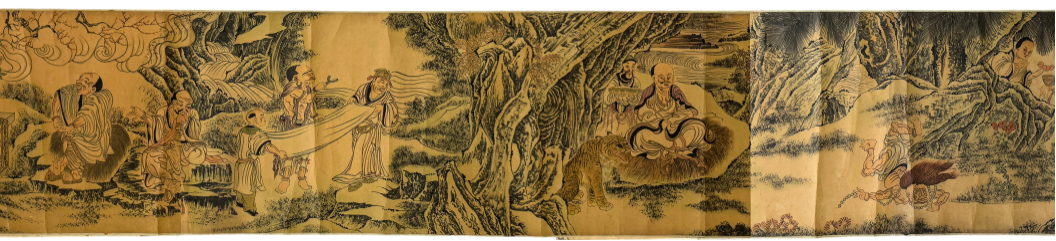
从文化内涵来看,这幅丁云鹏款佛教人物故事画卷,是晚明三教融合文化思潮的生动具象化表达。晚明时期,王阳明心学的兴起推动了个体精神体验的觉醒,禅宗、净土宗的复兴与儒家、道家思想深度交融,形成了 “三教合流” 的文化格局。丁云鹏作为虔诚的佛教徒,其笔下的佛教人物故事并非简单的宗教叙事,而是融入了儒道两家的精神内核。画面中罗汉的禅修悟道,既体现了佛教 “明心见性” 的修行宗旨,又暗含了儒家 “修身养性” 的道德追求与道家 “道法自然” 的处世哲学。同时,丁云鹏将文人画的审美意趣注入宗教绘画,不再执着于宗教仪轨的繁复堆砌,而是通过人物的神情姿态与山水意境的营造,传递出 “禅即生活” 的通透理念,让佛教故事更具人文温度与精神共鸣。这种文化融合的创作思路,既满足了当时社会对宗教信仰的精神需求,又契合了文人士大夫的审美取向,使得这幅画卷超越了单纯的艺术作品范畴,成为承载晚明文化精神的重要载体。
From the perspective of cultural connotation, this handscroll of Buddhist figure stories inscribed with Ding Yunpeng's signature is a vivid concrete expression of the cultural trend of the integration of Confucianism, Buddhism and Taoism in the late Ming Dynasty. In the late Ming Dynasty, the rise of Wang Yangming's School of Mind promoted the awakening of individual spiritual experience. The revival of Zen and Pure Land Buddhism deeply integrated with Confucian and Taoist thoughts, forming a cultural pattern of "integration of the three religions". As a devout Buddhist, Ding Yunpeng's Buddhist figure stories in the painting are not just simple religious narration, but integrate the spiritual core of Confucianism and Taoism. The Zen enlightenment of Arhats in the painting not only embodies the Buddhist purpose of "revealing nature through the mind", but also implies the moral pursuit of Confucianism of "cultivating one's moral character" and the life philosophy of Taoism of "Tao follows nature". At the same time, Ding Yunpeng injected the aesthetic interest of literati paintings into religious paintings. Instead of clinging to the cumbersome accumulation of religious rituals, he conveyed the thorough concept of "Zen is life" through the depiction of figures' expressions and the creation of artistic conception, making Buddhist stories more humanistic temperature and spiritual resonance. This creative idea of cultural integration not only met the spiritual needs of society for religious belief at that time, but also conformed to the aesthetic orientation of literati, making this handscroll beyond the scope of a simple artistic work and becoming an important carrier carrying the cultural spirit of the late Ming Dynasty.
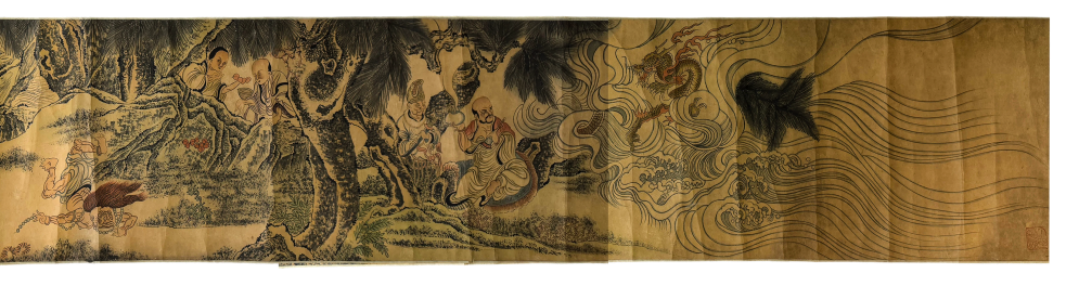
此外,这幅画卷还折射出丁云鹏作为职业画家的艺术探索与时代贡献。丁云鹏生活于徽派版画与制墨业高度发达的徽州,其早年曾为《程氏墨苑》《方氏墨谱》绘制插画,这段经历极大锤炼了他的线描功力,也让其绘画线条兼具严谨性与表现力。这幅佛教人物画卷中,线条的精准流畅、结构的清晰分明,均可见版画艺术的影响,而画家又将这种版画式的线描技法与传统文人画的笔墨意趣相融合,形成了独具特色的艺术风格。这种创作实践不仅推动了释道人物画的发展,也对新安木刻画的艺术提升产生了积极影响,成为连接绘画与版画两大艺术领域的桥梁。同时,丁云鹏的佛教人物画打破了早期宗教绘画的程式化束缚,以人性化的塑造与诗意的意境营造,赋予宗教题材新的艺术生命力,为清代佛画创作提供了重要的艺术范式,其艺术影响甚至远及海外,纳尔逊 - 阿特金斯艺术博物馆所藏其《龙王拜观音图》卷,便是其佛画艺术对外传播的重要见证。
In addition, this handscroll also reflects Ding Yunpeng's artistic exploration and contemporary contributions as a professional painter. Ding Yunpeng lived in Huizhou where Huizhou printmaking and ink-making industry were highly developed. In his early years, he painted illustrations for "Cheng's Ink Garden" and "Fang's Ink Manual". This experience greatly polished his line drawing skills, and also made his painting lines both rigorous and expressive. In this Buddhist figure handscroll, the precision and fluency of the lines and the clarity of the structure can all see the influence of printmaking art, and the painter integrated this printmaking line drawing technique with the brush and ink interest of traditional literati paintings, forming a unique artistic style. This creative practice not only promoted the development of Buddhist and Taoist figure paintings, but also had a positive impact on the artistic improvement of Xin'an printmaking, becoming a bridge connecting the two art fields of painting and printmaking. At the same time, Ding Yunpeng's Buddhist figure paintings broke the constraints of early religious paintings, endowed religious themes with new artistic vitality with humanized shaping and poetic artistic conception, and provided an important artistic paradigm for the creation of Buddhist paintings in the Qing Dynasty. Its artistic influence even spread overseas. The "Dragon King Worships Guanyin" handscroll collected by the Nelson-Atkins Museum of Art is an important testimony to the external communication of his Buddhist painting art.
纵观这幅丁云鹏款佛教人物故事画卷,其艺术价值与文化意义早已超越了一幅绘画作品本身。它既是丁云鹏白描技艺与笔墨素养的集大成之作,精准展现了其从工整秀雅到沉着古朴的风格演变;也是晚明三教融合文化思潮的鲜活载体,折射出当时社会的精神风貌与审美取向;更是中国传统释道人物画发展历程中的重要里程碑,为后世宗教绘画的创作提供了宝贵的艺术借鉴。在四百余年的岁月流转中,画卷虽历经沧桑,绢色微尘,但其蕴含的禅意精神、笔墨匠心与文化内涵,依旧熠熠生辉,让我们得以透过笔墨的痕迹,触摸明代画坛的艺术脉搏,体悟东方美学中 “禅墨相融” 的独特魅力,也让丁云鹏这位画坛巨匠的艺术成就,得以在岁月长河中持续传承与彰显。
Looking at this handscroll of Buddhist figure stories inscribed with Ding Yunpeng's signature, its artistic value and cultural significance have long gone beyond a single painting work. It is not only a masterpiece of Ding Yunpeng's line drawing skills and brush and ink literacy, accurately showing his style evolution from neat and elegant to calm and simple; it is also a vivid carrier of the cultural trend of the integration of Confucianism, Buddhism and Taoism in the late Ming Dynasty, reflecting the spiritual outlook and aesthetic orientation of the society at that time; it is an important milestone in the development of traditional Chinese Buddhist and Taoist figure paintings, providing valuable artistic reference for the creation of religious paintings in later generations. After more than years of vicissitudes, although the silk color of the handscroll has been slightly dusty, the Zen charm, brush and ink ingenuity and cultural connotation it contains are still shining. It allows us to touch the artistic pulse of the Ming Dynasty painting world through the traces of brush and ink, appreciate the unique charm of "integration of Zen and ink" in oriental aesthetics, and also make the artistic achievements of Ding Yunpeng, a master of painting, continue to be inherited and displayed in the long river of years.

猜你喜欢

携手黄鹤楼公园,共铸商业辉煌
 187
时代潮涌中的坚韧与筑梦:云南巨人地产的产业报国之路
130 植物养发引领品牌----蒙霸养发
191 功能性治愈1型糖尿病,中国深圳团队再创临床医学新高度
172 维生素 C 哪个品牌最有效果?推荐十大最好的维生素 C 品牌排名,口碑炸裂
120 FotileStyle纳木那尼系列斩获德国iF设计奖
73 为地球增添绿色,为生活注入橙味
140 创新中医袁洪:在守正中创新 推动中医药事业发展
52 齐一志《大吉大利事事如意》
97 总被小病拖累?2026年度专家共识:如何从根源修复易感体质、让免疫系统重回
82