

明代铜鎏金上师坐像:鎏金梵韵里的明代造像巅峰与藏传文脉
发布时间:2026-04-15 来源:网络 作者:admin 【 字体:大 中 小 】
明代铜鎏金上师坐像:鎏金梵韵里的明代造像巅峰与藏传文脉
在中国古代佛教造像的艺术谱系中,这件明代铜鎏金上师坐像,是凝萃着明代藏传佛教造像工艺、汉藏文化交融与佛教精神信仰的传世经典。它以精铜为胎、鎏金为饰、禅定为姿,将明代藏传造像“工艺精湛、气韵生动”的艺术特征、汉藏融合的文化特质与上师造像“传承法脉”的宗教内涵融为一体,在璀璨的鎏金与庄严的法相之间,诉说着“以像载佛、以金传韵”的造像文化逻辑,既是明代藏传佛教造像的代表性遗存,更是中华佛教艺术“工艺巅峰与信仰精神共生”的生动注脚。
In the artistic pedigree of ancient Chinese Buddhist statues, this Ming Dynasty gilt-bronze seated Guru statue is a handed-down classic that embodies the craftsmanship of Ming Dynasty Tibetan Buddhist statues, the integration of Han and Tibetan cultures, and the spiritual belief in Buddhism. Made of fine copper as the body, gilded as decoration, and in a meditative posture, it integrates the artistic characteristics of "exquisite craftsmanship and vivid charm" of Ming Dynasty Tibetan statues, the cultural characteristics of Han-Tibetan integration, and the religious connotation of "inheriting the Dharma lineage" of Guru statues. Between the brilliant gilding and solemn Dharma appearance, it conveys the cultural logic of "carrying the Buddha through the statue, conveying the charm through gold", serving as both a representative relic of Ming Dynasty Tibetan Buddhist statues and a vivid footnote to the "coexistence of craft peak and belief spirit" in Chinese Buddhist art.
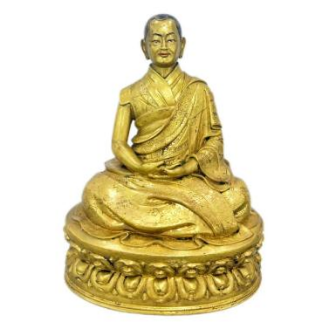
第四世夏玛巴(又称红帽法王),名为 却扎益西(藏文:ཆོས་གྲགས་ཡེ་ཤེས,1453年—1524年),是藏传佛教噶玛噶举派的重要领袖,羊八井寺的创建者。
生平与事迹
• 出生与认定
1453年诞生于康区,出生时有祥瑞之兆。1460年(7岁)被第四世噶玛巴确认为第三世夏玛巴的转世灵童。
• 佛法与政治
1471年(18岁)受比丘戒,博学多闻,精通显密教法。
与当时西藏实权家族仁蚌巴关系密切,曾协助其击败帕竹政权,影响深远。
46岁时一度成为西藏的实际统治者,以佛法治理政务。
• 兴建羊八井寺
1490年(37岁),在仁蚌巴家族支持下,于拉萨西北创建羊八井寺。自此,红帽系主寺从乃囊寺迁至此处,成为历代夏玛巴的驻锡地。
• 弘法与圆寂
足迹遍布西藏、不丹、尼泊尔等地,广建寺院、弘扬佛法。1524年圆寂,享年71岁。
Life and deeds
• Birth and recognition
He was born in Kang District in 1453, and there was an auspicious sign when he was born. In 1460 (7 years old), he was recognised by the seventh Karmapa as the reincarnation of the third Shamapa.
• Buddhism and politics
In 1471 (at the age of 18), he received the ordination of Bhikkhu, was knowledgable and knowledgable, and was proficient in esotericism.
He had a close relationship with Ren Bengba, a real power family in Tibet at that time, and once assisted him in defeating the Pazhu regime, which had a far-reaching influence.
At the age of 46, he once became the actual ruler of Tibet and governed government affairs with Buddhism.
• Construction of Yangbajing Temple
In 1490 (at the age of 37), with the support of the Renbenba family, Yangbajing Temple was established in the northwest of Lhasa. Since then, the main temple of the Red Riding Hood family has moved from Nainang Temple to here and has become the residence of Shamaba in successive dynasties.
• The spread of the law and the silence
His footprints are all over Tibet, Bhutan, Nepal and other places, building temples and promoting Buddhism. He died in 1524 and was 71 years old.
从形制与造像维度审视,这件铜鎏金上师坐像尽显“法相庄严、形神兼备”的明代藏传造像特质。造像整体呈跏趺坐姿,双腿盘坐于双层莲台之上,莲台饱满规整,莲瓣饱满圆润、排列整齐,莲瓣边缘起线清晰,尽显明代造像莲台的典型特征;上师面容慈悲祥和,双目微阖、神态宁静,眉间白毫凸显,唇间笑意温润,面部以矿物彩开脸,历经岁月依旧色泽温润,完美还原了上师的禅定之态与慈悲之相。造像身着藏式僧衣,衣纹流畅自然、褶皱层次分明,衣袍通体以錾刻工艺满饰缠枝莲纹与卷草纹,纹样细密精美、线条流畅利落,既彰显了明代造像“工不厌精”的工艺水准,又以衣纹的自然垂坠感,凸显了造像的立体感与写实性。双手结禅定印于腹前,手势规范、姿态端庄,是藏传佛教上师造像的经典仪轨。每一处法相的塑造、每一道衣纹的錾刻,都凝聚着明代造像工匠对佛教仪轨的精准把握与对造像神韵的深刻诠释,成为解析明代藏传佛教造像工艺的核心物质纽带。
From the perspective of shape and statue, this gilt-bronze seated Guru statue fully demonstrates the characteristic of "solemn Dharma appearance, perfect combination of form and spirit" of Ming Dynasty Tibetan statues. The statue is in the lotus position overall, sitting cross-legged on a double-layer lotus platform. The lotus platform is full and regular, with plump and round lotus petals arranged neatly, and clear lines at the edges of the lotus petals, fully showing the typical characteristics of Ming Dynasty statue lotus platforms; the Guru's face is compassionate and peaceful, with eyes slightly closed, a peaceful expression, a prominent urna between the brows, and a gentle smile on the lips. The face is colored with mineral pigments, and the color is still warm after years, perfectly restoring the Guru's meditative state and compassionate appearance. The statue is dressed in Tibetan monk's robes, with smooth and natural clothing lines and distinct fold layers. The entire robe is decorated with tangled lotus patterns and scroll grass patterns in chiseling craftsmanship, with fine and exquisite patterns and smooth lines, which not only highlights the craftsmanship level of "exquisite craftsmanship" of Ming Dynasty statues, but also highlights the three-dimensional sense and realism of the statue with the natural drape of the clothing lines. The hands are in the Dhyana mudra in front of the abdomen, with standard gestures and dignified posture, which is the classic ritual of Tibetan Buddhist Guru statues. Every shaping of the Dharma appearance and every chiseling of the clothing lines condenses the precise grasp of Buddhist rituals and the profound interpretation of the statue's charm by Ming Dynasty statue craftsmen, becoming a core material link for analyzing the craftsmanship of Ming Dynasty Tibetan Buddhist statues.
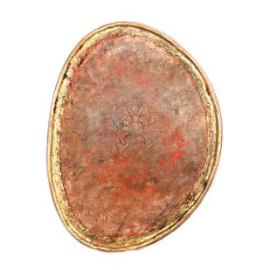
材质与工艺层面,这件铜鎏金上师坐像承载着“精铜为骨、鎏金为魂、禅定为韵”的造像追求。其材质选用明代标准高纯度精铜,铜胎厚重坚实、质地细密,经失蜡法整体铸造成型,造像完整无拼接、造型规整无偏差,尽显明代造像铸造工艺的巅峰水准;通体满鎏真金,鎏金层厚重饱满、色泽璀璨温润,金层附着力强,历经数百年岁月依旧金光熠熠,局部鎏金虽有自然磨损,更添古意沧桑之美,是明代铜鎏金造像的典型材质特征。工艺上融合失蜡法铸造、錾刻、鎏金、彩绘多种技法,以失蜡法塑造整体造型,以錾刻工艺刻画衣纹与莲台细节,以鎏金工艺赋予造像庄严华贵之气,以矿物彩为造像开脸,技法娴熟、工艺精湛,完美体现了明代藏传佛教造像“汉藏工艺融合”的巅峰水准。造像底部为封底设计,封底中央錾刻金刚杵纹,周围残留朱砂与彩绘痕迹,是明代藏传造像“装藏封底”的典型工艺特征,印证了其宗教造像的神圣属性。每一处铜胎的铸造、每一道鎏金的镀层、每一笔彩绘的开脸,都在无声诉说着明代造像工匠对工艺极致的追求,使造像既具宗教供奉的神圣功能,更具极高的艺术收藏价值。
In terms of material and craftsmanship, this gilt-bronze seated Guru statue embodies the creative pursuit of "fine copper as the bone, gilding as the soul, and meditation as the charm". Its material is selected from standard high-purity fine copper in the Ming Dynasty, with a thick and solid copper body and fine texture. It is integrally cast by the lost-wax method, with a complete statue without splicing and a regular shape without deviation, fully showing the peak level of Ming Dynasty statue casting craftsmanship; the entire body is fully gilded with real gold, with a thick and full gilding layer, brilliant and warm color, and strong adhesion of the gold layer. It is still shining brightly after hundreds of years. Although the local gilding has natural wear, it adds the beauty of ancient vicissitudes, which is a typical material characteristic of Ming Dynastygilt-bronze statues. In terms of craftsmanship, it integrates multiple techniques such as lost-wax casting, chiseling, gilding, and color painting. The overall shape is shaped by the lost-wax method, the details of clothing lines and lotus platforms are carved by chiseling, the statue is endowed with solemn and noble atmosphere by gilding, and the statue's face is colored with mineral pigments, with skilled techniques and exquisite craftsmanship, perfectly reflecting the peak level of "integration of Han and Tibetan craftsmanship" of Ming Dynasty Tibetan Buddhist statues. The bottom of the statue is a sealed base design, with a vajra pattern chiseled in the center of the base, and residual cinnabar and color painting traces around it, which is a typical craft characteristic of "sealed base with consecration" of Ming Dynasty Tibetan statues, confirming its sacred attribute as a religious statue. Every casting of the copper body, every plating of the gilding, and every stroke of the color painting silently tells the ultimate pursuit of craftsmanship by Ming Dynasty statue craftsmen, making the statue not only have the sacred function of religious worship, but also have extremely high artistic collection value.
文化价值与历史意义维度看,这件明代铜鎏金上师坐像是明代藏传佛教文化与汉藏文化交融的“微观镜像”。明代是中国藏传佛教造像艺术的鼎盛时期,朝廷设立“御用监”“佛作”等机构专门铸造藏传佛教造像,汉地精湛的铸造工艺与藏传佛教的造像仪轨深度融合,形成了“明代藏传造像”的独特艺术风格,这件上师坐像便是这一文化背景的典型样本——它既保留了藏传佛教上师造像的仪轨特征,又融入了汉地造像的写实工艺与审美情趣,是“汉藏文化深度交融”的直观体现。上师在藏传佛教中是法脉传承的核心,上师造像承载着“上师为佛”的信仰内涵,是藏传佛教信徒供奉的核心圣像,这件造像不仅是一件佛教艺术品,更是明代藏传佛教传播与发展的实物见证。在当代收藏语境下,它不仅是一件佛教造像,更是解析明代藏传佛教史、汉藏文化交流史、古代造像工艺史的关键标本:其价值不仅在于工艺的精湛与形制的经典,更在于它所承载的“明代藏传佛教文化记忆”,每一寸鎏金的肌理、每一道衣纹的錾刻,都在诉说着中国佛教造像艺术从宋元到明代的风格演变,成为连接明代藏传造像与中华佛教艺术巅峰的精神纽带。此外,明代铜鎏金藏传造像存世量极为稀少,尤其是这类工艺完整、品相完好、仪轨规范的上师造像,更成为佛教造像收藏领域的顶级瑰宝,其历史与艺术价值均不可估量。
From the perspective of cultural value and historical significance, this Ming Dynasty gilt-bronze seated Guru statue is a "micro mirror" of Ming Dynasty Tibetan Buddhist culture and the integration of Han and Tibetan cultures. The Ming Dynasty was the heyday of Chinese Tibetan Buddhist statue art. The court established institutions such as the "Imperial Supervisor" and "Buddha Workshop" to specially cast Tibetan Buddhist statues. The exquisite casting craftsmanship of the Han Dynasty and the statue rituals of Tibetan Buddhism were deeply integrated, forming a unique artistic style of "Ming Dynasty Tibetan statues". This Guru seated statue is a typical sample of this cultural background—it not only retains the ritual characteristics of Tibetan Buddhist Guru statues, but also integrates the realistic craftsmanship and aesthetic taste of Han statues, serving as an intuitive embodiment of "in-depth integration of Han and Tibetan cultures". In Tibetan Buddhism, the Guru is the core of Dharma lineage inheritance, and the Guru statue carries the belief connotation of "Guru is Buddha", and is the core sacred statue worshipped by Tibetan Buddhist believers. This statue is not only a Buddhist artwork, but also a physical witness to the spread and development of Ming Dynasty Tibetan Buddhism. In the contemporary collection context, it is not only a Buddhist statue, but also a key specimen for analyzing the history of Ming Dynasty Tibetan Buddhism, the history of Han-Tibetan cultural exchanges, and the history of ancient statue craftsmanship: its value lies not only in its exquisite craftsmanship and classic shape, but also in the "Ming Dynasty Tibetan Buddhist cultural memory" it carries. Every inch of gilded texture and every chiseling of clothing lines tells the stylistic evolution of Chinese Buddhist statue art from the Song and Yuan Dynasties to the Ming Dynasty, becoming a spiritual link connecting Ming Dynasty Tibetan statues and the peak of Chinese Buddhist art. In addition, the number of surviving Ming Dynasty gilt-bronze Tibetan statues is extremely scarce, especially such Guru statues with complete craftsmanship, good condition and standard rituals, which have become top treasures in the field of Buddhist statue collection, with immeasurable historical and artistic value.
当我们凝视这件明代铜鎏金上师坐像,璀璨的鎏金与庄严的法相在眼前交融,明代造像的工艺匠心与藏传佛教的信仰精神在方寸间碰撞,仿佛能触摸到明代佛作的铸造炉火、藏地寺院的诵经梵音,也能感受到中华佛教艺术“以像载佛、以金传韵”的深厚底蕴。它不仅是一件佛教造像,更是明代藏传造像工艺的艺术结晶、汉藏文化交融的物质凝结,在时光的摩挲中静静散发着佛教造像的古韵,以其独特的形制与文化内涵,让每一位观者都能读懂这份藏在鎏金造像里的明代记忆,感受那份融于铜金的信仰传承与艺术匠心。
When we gaze at this Ming Dynasty gilt-bronze seated Guru statue, the brilliant gilding and solemn Dharma appearance blend before our eyes, and the craftsmanship ingenuity of Ming Dynasty statues and the belief spirit of Tibetan Buddhism collide in a small space. It is as if we can touch the casting furnace fire of the Ming Dynasty Buddha Workshop and the chanting Sanskrit sounds of Tibetan temples, and feel the profound heritage of Chinese Buddhist art of "carrying the Buddha through the statue, conveying the charm through gold". It is not only a Buddhist statue, but also an artistic crystallization of Ming Dynasty Tibetan statue craftsmanship and a material condensation of the integration of Han and Tibetan cultures, quietly exuding the ancient charm of Buddhist statues in the touch of time. With its unique shape and cultural connotation, it allows every viewer to understand the Ming memory hidden in the gilded statue, and feel the belief inheritance and artistic ingenuity integrated into the copper and gold.

猜你喜欢

2026中俄蒙(内蒙古)国际石油天然气化工技术装备展览会
 87
踢球看球送豪礼!北京现代苏超之夜,车主直呼“超有戏”!
146 MetaLiveX:用AI重新定义直播互动的边界
194 第27届国际模特小姐大赛指定红酒赞助商强强联手再创辉煌
152 江云百货速寄:开启跨境贸易新征程,五折优惠震撼来袭!
116 共建无废商圈 共享绿色未来 浙江慈溪“无废游园会”推动商圈新生态
155 智能托管新范式,旭客“24小时智能管家服务”树立扬州民宿新标杆
182 怀化联通营业厅助客户识破积分兑换骗局
160 中华春节符号闪耀——百医传承·岐黄论道
135 阿勒泰地区开展"安全宣传咨询日"活动 推动全民安全素质提升
65