

王志清《神仙遨游》鱼趣四条屏:笔墨间的水中雅趣与文人禅意
发布时间:2026-04-18 来源:网络 作者:admin 【 字体:大 中 小 】
王志清《神仙遨游》鱼趣四条屏:笔墨间的水中雅趣与文人禅意
在中国传统花鸟画的艺术长河中,鱼趣题材以“连年有余”的吉祥寓意与“悠然自得”的禅意境界,成为历代文人画家钟爱的创作主题。王志清先生的《神仙遨游》鱼趣四条屏,正是当代鱼趣题材花鸟画的典范之作,以水墨设色的形式,将水中游鱼、荷塘景致与文人禅意融为一体,在笔墨流转间诉说着“以鱼寄情、以水载韵、以画藏禅”的东方美学逻辑,既是当代花鸟画艺术的创新实践,更是传统鱼趣题材与当代文人审美共生的生动注脚。
In the long river of traditional Chinese flower-and-bird painting art, the fish-themed paintings, with the auspicious meaning of "abundance year after year" and the Zen realm of "carefree and content", have become favorite creative themes of literati painters throughout the ages. Wang Zhiqing's Immortal Roaming fish-themed four-panel screen is a model work of contemporary fish-themed flower-and-bird paintings. In the form of ink and wash painting, it integrates swimming fish, pond scenery and literati Zen meaning, conveying the Oriental aesthetic logic of "expressing emotions through fish, carrying charm through water, and hiding Zen through painting" between flowing brush and ink. It is not only an innovative practice of contemporary flower-and-bird painting art, but also a vivid footnote to the coexistence of traditional fish themes and contemporary literati aesthetics.
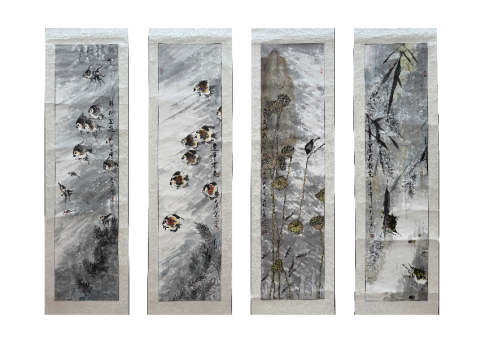
从形制与画面维度审视,这组四条屏尽显“构图精巧、意境悠远”的当代花鸟画特质。四条屏采用传统条屏形制,每幅独立成景又相互呼应,构成完整的鱼趣系列。第一幅《神仙遨游》,以水墨绘神仙鱼群游,鱼身以浓淡墨色晕染,鳍尾飘逸灵动,如水中仙子般悠然自得,题字“神仙遨游”点明主题;第二幅《连年有鱼》,绘金鱼群游,以淡彩设色,红、黄、黑三色相间,鱼身饱满圆润,寓意“年年有余”;第三幅《寒香映水》,绘枯荷与游鱼,残荷以淡墨勾勒,莲蓬、荷叶的枯荣尽显禅意,小鸟停栖于荷梗之上,为画面增添生机;第四幅《芦花戏鱼》,绘芦苇与鳜鱼,芦苇以浓墨绘枝干、淡墨绘花絮,鳜鱼身形矫健,题字“芦花戏鱼”,营造出“鱼戏芦苇间”的悠然意境。每幅画面构图疏密得当,游鱼或聚或散、或动或静,与水草、荷花、芦苇等景物相映成趣,背景以淡墨渲染水面,留白处似水波荡漾,营造出“水天一色、悠然自得”的悠远意境,尽显当代花鸟画“以形传神、以简驭繁”的艺术风格。每一处鱼鳍的勾勒、每一笔墨色的晕染,都凝聚着画家对鱼趣题材的极致追求,成为解析当代水墨鱼趣画的核心物质纽带。
From the perspective of form and composition, this four-panel screen fully demonstrates the characteristics of "exquisite composition and far-reaching artistic conception" of contemporary flower-and-bird paintings. Adopting the traditional vertical screen form, each panel forms an independent scene while echoing each other, constituting a complete fish-themed series. The first panel, Immortal Roaming, depicts schools of angelfish swimming in ink and wash. The fish bodies are rendered with varying shades of ink, with elegant and flowing fins and tails, carefree like immortals in the water. The inscription "Immortal Roaming" clarifies the theme; the second panel, Abundance Year After Year, depicts schools of goldfish swimming, painted with light colors, alternating red, yellow and black. The fish bodies are plump and round, implying "abundance every year"; the third panel, Cold Fragrance Reflected in Water, depicts withered lotus and swimming fish. The withered lotus is outlined with light ink, with the withered and prosperous lotus pods and leaves fully showing Zen meaning, and a small bird perches on the lotus stem, adding vitality to the picture; the fourth panel, Fish Playing Among Reeds, depicts reeds and mandarin fish. The reeds are painted with thick ink for branches and light ink for catkins, and the mandarin fish are vigorous in shape. The inscription "Fish Playing Among Reeds" creates the carefree artistic conception of "fish playing among reeds". The composition of each panel is well-proportioned. The swimming fish gather or scatter, move or stay, forming a delightful contrast with water plants, lotus flowers and reeds. The background renders the water surface with light ink, and the blank space seems to be rippling water waves, creating the far-reaching artistic conception of "water and sky integrated, carefree and content", fully showing the artistic style of contemporary flower-and-bird paintings of "conveying spirit through form, simplifying complexity with simplicity". Every outline of fish fins and every rendering of ink color condense the painter's ultimate pursuit of fish-themed subjects, becoming a core material link for analyzing contemporary ink and wash fish paintings.
笔墨与技法层面,这组四条屏承载着“水墨为骨、设色为魂、禅意为韵”的创作追求。王志清先生的笔墨技法兼具传统与创新,游鱼的绘制采用“没骨法”与“勾勒法”结合,先以淡墨勾勒鱼身轮廓,再以浓淡墨色晕染,鱼身的鳞片、纹理自然天成,鳍尾以飘逸的线条勾勒,尽显游鱼的灵动之美;设色上,《连年有鱼》采用淡彩设色,红、黄、黑三色相互映衬,既保留了水墨的清雅,又增添了吉祥喜庆的氛围;《寒香映水》与《芦花戏鱼》则以水墨为主,淡墨渲染背景,浓墨绘景物,形成“浓淡相宜、虚实相生”的视觉效果,尽显传统水墨的“留白”之美。尤为精妙的是,画家对水的表现,未着一笔却满纸是水,通过游鱼的姿态、水草的摇曳与背景的淡墨渲染,营造出“鱼在水中游,水在画中流”的意境,尽显中国传统水墨画“计白当黑、无中生有”的艺术精髓。每一幅作品的落款题字,采用行书书写,笔力遒劲、线条流畅,与画面的笔墨相得益彰,题字内容与画面主题呼应,进一步升华了作品的意境,形成“诗书画印一体”的传统文人画风格。每一笔墨色的晕染、每一条线条的勾勒,都在无声诉说着画家对传统花鸟画技法的极致理解,使这组四条屏兼具艺术审美与吉祥寓意的双重价值。
In terms of brushwork and techniques, this four-panel screen embodies the creative pursuit of "ink and wash as the bone, color setting as the soul, and Zen meaning as the charm". Wang Zhiqing's brushwork techniques combine tradition and innovation. The drawing of swimming fish adopts a combination of "boneless method" and "outline method". First, the outline of the fish body is outlined with light ink, then rendered with varying shades of ink. The scales and textures of the fish body are naturally formed, and the fins and tails are outlined with elegant lines, fully showing the agility of the swimming fish; in terms of color setting, Abundance Year After Year adopts light color setting, with red, yellow and black complementing each other, retaining the elegance of ink and wash while adding a festive and auspicious atmosphere; Cold Fragrance Reflected in Water and Fish Playing Among Reeds are mainly ink and wash, with light ink rendering the background and thick ink painting the scenery, forming a visual effect of "well-balanced light and shade, virtual and real complementing each other", fully showing the beauty of "blank space" in traditional ink and wash painting. What is particularly exquisite is the painter's expression of water. Without a single stroke, the whole paper is full of water. Through the posture of the swimming fish, the swaying of water plants and the light ink rendering of the background, the artistic conception of "fish swimming in water, water flowing in the painting" is created, fully showing the artistic essence of traditional Chinese ink and wash painting of "using blank space as black, creating something out of nothing". The inscriptions on each work are written in running script, with powerful brushstrokes and smooth lines, complementing the brush and ink of the picture. The content of the inscriptions echoes the theme of the picture, further sublimating the artistic conception of the works, forming the traditional literati painting style of "integration of poetry, calligraphy, painting and seal". Every rendering of ink color and every outline of lines silently tells the painter's ultimate understanding of traditional flower-and-bird painting techniques, making this four-panel screen have dual values of artistic aesthetics and auspicious meaning.
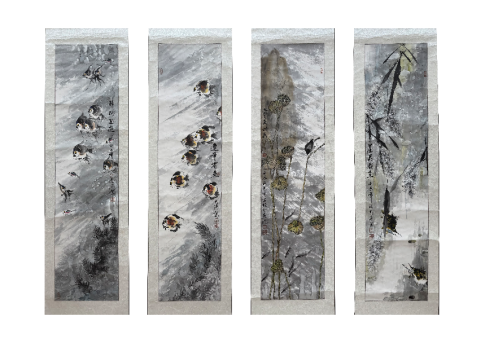
文化价值与历史意义维度看,王志清《神仙遨游》鱼趣四条屏是当代花鸟画艺术与传统鱼趣文化的“微观镜像”。鱼趣题材作为中国传统花鸟画的经典题材,自唐宋以来便备受文人画家推崇,承载着“连年有余”的吉祥寓意与“悠然自得”的禅意境界;而王志清先生的四条屏,以当代水墨设色的形式,将传统鱼趣题材与当代文人审美相结合,既保留了传统鱼趣画的笔墨韵味与吉祥寓意,又融入了当代艺术的创新表达,是传统题材在当代语境下的传承与创新。在当代艺术语境下,这组四条屏不仅是一件花鸟画作,更是解析当代花鸟画史、鱼趣题材演变史、传统文人画风格传承史的关键标本:其价值不仅在于笔墨的精湛与画面的意境悠远,更在于它所承载的“传统鱼趣文化与当代艺术共生”的时代记忆,每一笔墨色的晕染、每一条游鱼的姿态,都在诉说着中国花鸟画从传统到当代的传承与演变,成为连接传统鱼趣文化与当代花鸟画艺术的精神纽带。此外,王志清先生的鱼趣四条屏存世量有限,尤其是这类题材完整、笔墨精湛、品相完好的珍品,更是当代书画收藏领域的稀有瑰宝,其艺术与收藏价值均不可估量。
From the perspective of cultural value and historical significance, Wang Zhiqing's Immortal Roaming fish-themed four-panel screen is a "micro mirror" of contemporary flower-and-bird painting art and traditional fish culture. As a classic theme of traditional Chinese flower-and-bird painting, fish-themed subjects have been highly praised by literati painters since the Tang and Song dynasties, carrying the auspicious meaning of "abundance year after year" and the Zen realm of "carefree and content"; Wang Zhiqing's four-panel screen, in the form of contemporary ink and wash painting, combines traditional fish-themed subjects with contemporary literati aesthetics, retaining the brush and ink charm and auspicious meaning of traditional fish paintings while integrating the innovative expression of contemporary art, which is the inheritance and innovation of traditional themes in the contemporary context. In the contemporary art context, this four-panel screen is not only a flower-and-bird painting, but also a key specimen for analyzing the history of contemporary flower-and-bird painting, the evolution history of fish-themed subjects, and the inheritance history of traditional literati painting styles: its value lies not only in the exquisite brushwork and far-reaching artistic conception of the picture, but also in the era memory of "the symbiosis of traditional fish culture and contemporary art" it carries. Every rendering of ink color and every posture of swimming fish tells the inheritance and evolution of Chinese flower-and-bird painting from tradition to contemporary times, becoming a spiritual link connecting traditional fish culture with contemporary flower-and-bird painting art. In addition, the surviving quantity of Wang Zhiqing's fish-themed four-panel screen is limited, especially such treasures with complete themes, exquisite brushwork and good condition, which are rare treasures in the field of contemporary calligraphy and painting collection, with immeasurable artistic and collection values.
当我们欣赏王志清先生的《神仙遨游》鱼趣四条屏,水墨设色的游鱼与悠远的水面意境在眼前交融,传统鱼趣题材的吉祥寓意与当代文人的禅意审美在方寸间碰撞,仿佛能触摸到水中游鱼的悠然姿态、荷塘水面的微波荡漾,也能感受到中国传统花鸟画“以鱼寄情、以画藏禅”的深厚底蕴。这组四条屏不仅是当代花鸟画的典范之作,更是传统鱼趣文化与当代艺术融合的艺术结晶,在笔墨的流转中静静散发着传统文人画的古韵,以其独特的形制与文化内涵,让每一位观者都能读懂这份藏在鱼趣里的东方禅意,感受那份融于笔墨的历史传承与匠心精神。
When we appreciate Wang Zhiqing's Immortal Roaming fish-themed four-panel screen, the ink and wash swimming fish and the far-reaching water surface artistic conception blend before our eyes, and the auspicious meaning of traditional fish-themed subjects and the Zen aesthetics of contemporary literati collide in a small space. It is as if we can touch the carefree posture of the swimming fish in the water and the rippling waves on the pond surface, and feel the profound heritage of traditional Chinese flower-and-bird painting of "expressing emotions through fish, hiding Zen through painting". This four-panel screen is not only a model work of contemporary flower-and-bird painting, but also an artistic crystallization of the integration of traditional fish culture and contemporary art. It quietly exudes the ancient charm of traditional literati painting in the flowing brush and ink. With its unique form and cultural connotation, it allows every viewer to understand the Oriental Zen meaning hidden in the fish theme and feel the historical inheritance and ingenuity integrated into the brush and ink.

猜你喜欢

青花三清图双耳瓶
 53
AMCAP集团:AI为股市提供了上行支撑
106 精品推荐 ——中央银行壹萬圆
90 生态运营重构产业价值,BioGBA树立专业生物医药产业园标杆
81 小罐茶入局茶饮赛道,这波操作将引发行业哪些震荡?
111 强生电生理:引领心脏健康新航向
106 《张建武:民间中医的“神”韵传奇,辨体调理的杏林圣手》
66 跑出逆周期“加速度”,2024年金领冠领航中国婴配粉产业新发展
189 新春走基层丨天鹅湖畔的“蓝焰守翼人”
166 夏氏棕绷受邀出席2024企业家博鳌论坛平行论坛健康未来论坛
115 



