

徐悲鸿《奔马图》:笔墨奔马里的时代风骨
发布时间:2026-06-24 来源:网络 作者:admin 【 字体:大 中 小 】
在中国近现代美术史上,徐悲鸿以写实主义国画革新、独创的奔马形象屹立于画坛之巅,马既是他最钟爱的创作题材,也是其艺术理想与家国情怀的精神载体。这幅徐悲鸿所作单匹奔马立轴作品,以水墨写意绘骏马昂首前行,辅以多段名家题诗题跋,融西画造型结构、东方水墨笔墨、文人题跋文化于一体,在酣畅淋漓的笔墨之间,诠释“以马喻人、以画明志、以艺报国”的艺术内核,既是徐悲鸿马题材作品的经典范本,也是解读近代文人画家精神追求的珍贵书画遗存。
In the history of modern Chinese fine arts, Xu Beihong stands at the pinnacle of the painting circle with his innovative realistic traditional Chinese painting and original galloping horse images. The horse is not only his favorite creative theme, but also the spiritual carrier of his artistic ideals and patriotism. This vertical scroll painting of a single galloping horse created by Xu Beihong depicts a steed striding forward with its head raised in freehand ink wash, supplemented with numerous poems and inscriptions inscribed by famous literati. It integrates Western realistic modeling structure, oriental ink brush charm and Chinese scholar inscription culture. Between bold and unrestrained brushstrokes, it interprets the artistic core of "taking horses as metaphor for people, expressing aspirations through paintings, and serving the nation with art". It is not only a classic model of Xu Beihong’s horse-themed works, but also a precious painting and calligraphy relic for understanding the spiritual pursuit of modern literati painters.
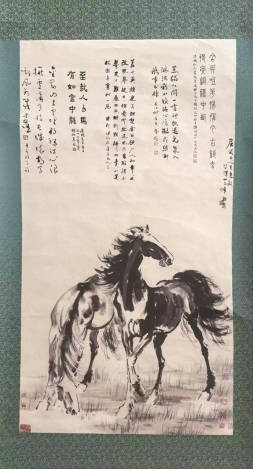
从画面造型、笔墨技法与版式布局来看,此作完整展现了徐悲鸿画马独有的艺术范式。画面主体为一匹昂首骏马,体态矫健昂扬,四肢稳健有力,肌肉骨骼结构精准严谨,借鉴西方素描解剖学原理,打破了传统国画画马重神韵轻形体的固有局限,让骏马的躯体兼具真实立体感与国画写意美感。画家以浓淡干湿变化丰富的焦墨勾勒鬃毛与长尾,笔触奔放洒脱、一气呵成,马尾与马鬃随风飞扬,极具动态张力;马身以淡墨晕染,虚实相生,简练的笔墨精准塑造出马的筋骨体量,形神兼备。背景极简,仅以浅淡几笔荒草衬底,留白辽阔空旷,将视觉重心完全聚焦于骏马本身,以极简环境反衬奔马自由豪迈的气势。画作上方大面积排布多处诗词题跋,历代文人题诗层层排布,字体风格各异,诗文咏马抒怀,与画面骏马相互呼应,诗、书、画、印四位一体,是典型的中式文人书画完整形制。每一处骨骼塑造、每一笔墨色晕染、每一段题跋诗文,都凝结着徐悲鸿融汇中西的深厚艺术功底,是研究其绘画技法革新的核心实物依据。
Judging from the picture modeling, brushwork techniques and layout, this work fully presents the exclusive artistic paradigm of Xu Beihong’s horse paintings. The main subject is a vigorous steed holding its head high, with sturdy limbs and precise anatomical muscle and bone structure. Drawing on Western sketch anatomy theories, it breaks the inherent limitation of traditional Chinese horse paintings that value artistic conception over physical form, endowing the steed’s body with both realistic three-dimensional sense and freehand charm of traditional Chinese painting. The painter uses thick, dry and wet dark ink to depict the mane and long tail with bold, unrestrained continuous strokes; the horse’s hair and tail flutter in the wind, full of dynamic tension. The horse’s body is rendered with light ink in a virtual-real contrast way, and concise brushstrokes accurately shape the physique and bones of the horse, achieving perfect unity of form and spirit. The background is extremely minimalist, only dotted with a few faint strokes of wild grass, leaving vast blank space to focus all visual attention on the horse itself, using the simple environment to set off the free and heroic momentum of the galloping steed. A large area above the painting is filled with multiple poetic inscriptions in various calligraphy styles. The poems eulogize horses and express aspirations, echoing the painted steed perfectly. The integrated combination of poetry, calligraphy, painting and seals adopts the classic form of Chinese literati painting. Every anatomical depiction, every ink rendering stroke and every inscribed poem embodies Xu Beihong’s profound artistic attainments integrating Chinese and Western art, serving as vital physical evidence for researching his innovative painting techniques.
文化内涵与创作思想层面,这幅奔马作品承载着“写实技法为骨,家国情怀为魂”的创作内核。在民国动荡的时代背景下,徐悲鸿笔下的马早已脱离普通动物描摹的范畴,成为精神符号的化身。传统文化中马象征锐意进取、自强不息,而徐悲鸿赋予奔马全新的时代内涵:矫健不屈的骏马,隐喻历经苦难却奋勇前行的中华民族,寄托了画家期盼家国觉醒、民族奋起、自强不息的宏大理想。他摒弃旧式文人画的空洞程式,引入西画写实技法改造传统国画,践行“改良国画、以艺救国”的毕生主张,让传统书画贴合时代、承载现实精神。画作之上的诸多题跋诗文,历代文人借马咏志的经典佳句与徐悲鸿画作相融,延伸了作品的文化底蕴,将个人志向、文人风骨与民族命运融为一体。从起笔塑形、墨色渲染到题跋落款,整幅作品层层递进,外在是奔马潇洒雄健的姿态,内里是画家滚烫的爱国初心。
In terms of cultural connotation and creative philosophy, this galloping horse work carries the creative core of realistic craftsmanship as the foundation and patriotism as the soul. Against the turbulent social background of the Republic of China, the horses painted by Xu Beihong went beyond mere animal depiction and evolved into spiritual symbols. In traditional culture, the horse symbolizes forging ahead unswervingly and constantly striving for self-improvement, while Xu Beihong endowed galloping horses with brand-new contemporary connotations. The unyielding vigorous steed is a metaphor for the Chinese nation striving forward amid hardships, embodying the painter’s grand aspiration for national awakening, revitalization and perseverance. He abandoned the empty formulas of old-style literati painting, introduced Western realistic techniques to reform traditional Chinese painting, and practiced his lifelong proposition of "reforming Chinese painting and saving the nation through art", making traditional painting fit the times and carry realistic spirit. The multiple inscriptions on the painting integrate classic poems expressing aspirations via horses and Xu Beihong’s artwork, extending the cultural heritage of the piece and combining personal ideals, literati integrity and national destiny as a whole. From initial modeling and ink rendering to inscriptions and seals, the whole work progresses layer by layer: the exterior shows the bold and powerful posture of the galloping horse, while the interior embodies the painter’s sincere patriotic devotion.
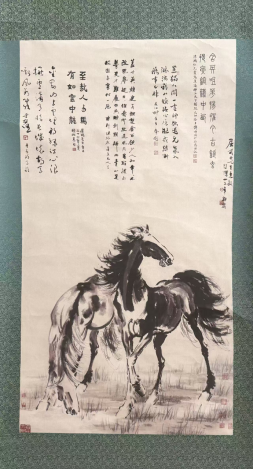
艺术与收藏价值维度,徐悲鸿奔马图是近代国画革新的标志性缩影。作为徐悲鸿标志性题材作品,此幅奔马凭借成熟的中西融合技法、深刻的精神内涵、完整的诗书画印形制,成为近现代书画领域公认的经典珍品,兼具美术史研究价值、人文精神价值与传世收藏价值。徐悲鸿真迹存世有限,带有完整名家题跋的精品立轴更是稀缺,在收藏市场具备极高的认可度。这件作品不再只是一幅国画,而是串联近代美术革新、文人精神、家国文化的重要载体,为近现代美术史研究提供一手实物资料。观赏这幅奔马图,飞扬的鬃毛、挺拔的骏马跃然纸上,观者得以透过笔墨感悟徐悲鸿的艺术革新理念,读懂一匹奔马背后深藏的民族气节,感受近代国画突破传统、走向新生的磅礴艺术力量。
From the perspective of artistic and collection value, Xu Beihong’s Galloping Horse is an iconic miniature of modern Chinese painting innovation. As a representative themed work of Xu Beihong, this galloping horse painting is a recognized classic treasure in modern painting and calligraphy circles for its mature integrated Chinese-Western techniques, profound spiritual connotation and complete integrated form of poetry, calligraphy, painting and seals, possessing art historical research value, humanistic spiritual value and heritage collection value. Authentic works by Xu Beihong are limited in quantity, and fine vertical scrolls with complete famous inscriptions are particularly scarce, enjoying high recognition in the collection market. Far more than a simple painting, this work serves as an important carrier connecting modern art innovation, literati spirit and national culture, providing first-hand physical materials for the research of modern art history. When appreciating this painting, the fluttering mane and upright steed come vividly on paper. Viewers can perceive Xu Beihong’s artistic innovation philosophy through brush and ink, understand the national integrity hidden behind the galloping horse, and experience the powerful artistic vitality of modern Chinese painting breaking through traditions and embracing new development.

猜你喜欢

全球视觉内容巨头Getty和Shutterstock合并,视觉中国迎来发展新机遇
 130
百城地推 精准触达 ,2025沈阳种业博览会地推邀观行动持续推进中
98 世界阿尔茨海默病日 | 早防早治,守护认知:胞磷胆碱在阿尔茨海默病管理中的
53 中华春节符号图片巡回展暨帅立功精品展在广州成功举办
94 精耕人才方阵,赋能高质发展
122 在南海之滨,聆听世界潮音 2025日月尘光世界音乐节即将启幕
145 宫门口八宝粘豆包荣获“非物质文化遗产传承名品”称号
174 甬工向新记 0.08毫米精度背后:一座工匠学院的创新密码
60 【田蜜蜜番禺之约甜度爆表!影院邂逅现场太炸了!】
79 曹操出行换电网络覆盖43城 补能体系支撑规模化运营
198 



